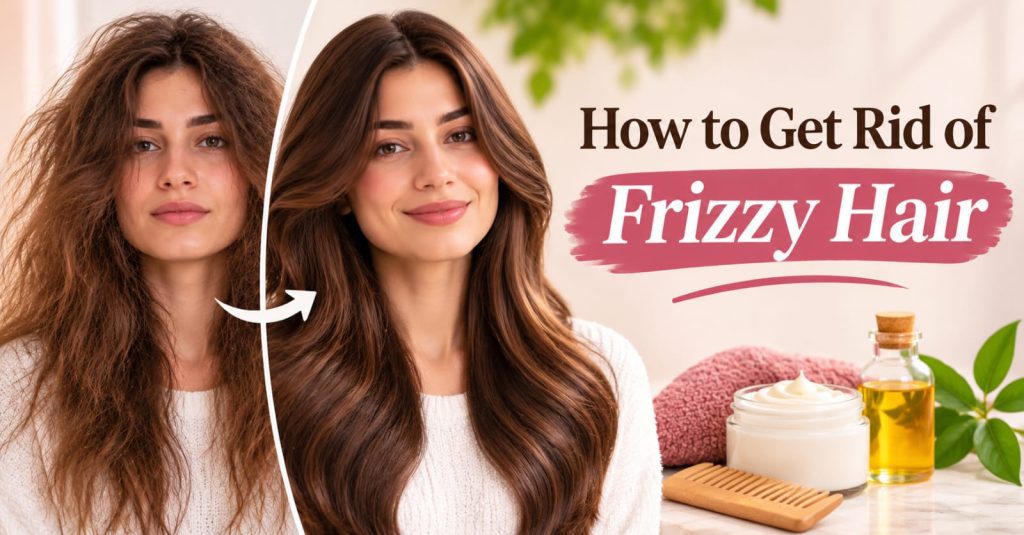
You style your hair in the morning, step outside, and by lunchtime it’s puffy, rough, and impossible to smooth down. If that sounds familiar, you’re not alone, and you’re probably searching for how to get rid of frizzy hair once and for all.
Frizz comes from a mix of humidity, dryness, friction, hair texture, and damage. The good news is that most of those are things you can manage with the right habits.
This guide shows how to get rid of frizzy hair with ten practical ways, daily routines, advice for your hair type, and the mistakes that make it worse. You’ll also learn what causes frizz in the first place.
What Is Frizzy Hair?
Frizzy hair looks puffy, rough, and unruly instead of smooth and defined. It happens when strands stand away from each other instead of lying together.
Every strand is covered by a cuticle, made of tiny overlapping scales. When those scales lie flat, hair reflects light and feels smooth. When they lift, or when the strand swells, the surface turns rough and uneven, and that’s what you see as frizz.
Frizz isn’t quite the same as dryness, flyaways, or breakage. Dryness is a lack of moisture, flyaways are short wispy hairs that float off your head, and breakage is when strands snap. They often show up together, so it helps to know which one you’re dealing with. That difference matters for how to get rid of frizzy hair, because each problem needs a different fix.
What Causes Frizzy Hair?
Before you can learn how to get rid of frizzy hair, you need to know what’s triggering it, since the best fix depends on the cause.
Humidity and Moisture in the Air
Hair absorbs water from humid air, which makes the strand swell and the cuticle lift. Some hair types react more than others. Curly and dry hair tend to soak up more moisture, which is why you may notice puffiness the moment you step outside. This is the trigger behind most questions about how to get rid of frizzy hair in summer.
Dryness and Moisture Loss
Dry hair reaches for moisture in the air and tangles easily, so it frizzes fast. Conditioners and moisturizing products help here. Keep in mind that dry hair and damaged hair aren’t the same thing. Hair can be dry but healthy, or damaged even when it feels soft.
Hair Damage From Heat Styling
Blow-dryers, flat irons, and curling irons roughen the cuticle, especially when you use them often or at high temperatures. A rough cuticle doesn’t lie flat, so frizz follows.
Chemical Treatments and Coloring
Bleaching, coloring, relaxing, and chemical straightening all change the hair fiber. With repeated processing, hair becomes more porous and more prone to frizz.
Friction From Brushing, Towels and Pillowcases
Rubbing wet hair with a rough towel, brushing aggressively, and sleeping on cotton all create friction that lifts the cuticle. It’s a small thing, but it happens every day. Fixing friction is one of the cheapest parts of how to get rid of frizzy hair.
High Hair Porosity
Porosity describes how easily your hair absorbs and releases moisture. Highly porous hair, often the result of damage, takes in water quickly and loses it just as fast, and that constant swing fuels frizz.
Static Electricity and Environmental Factors
Static makes strands repel each other and stand away from your head. Dry indoor air, wind, and seasonal changes make it worse. Hard water and product buildup can also leave hair feeling rough and dull. For a quick fix, smooth a drop of serum over the surface or switch to a wooden or anti-static comb.
How to Get Rid of Frizzy Hair: 10 Effective Ways
Here is how to get rid of frizzy hair in ten practical steps. You don’t need to try them all at once, so start with a few and build from there.
- Use a Moisturizing Shampoo
Choose a gentle cleanser that doesn’t strip your hair. Focus the shampoo on your scalp and let the suds rinse through the lengths. Pick a formula that suits your texture and scalp. The right shampoo is the base of how to get rid of frizzy hair, since the wrong one can undo everything else.
- Always Use a Conditioner
Apply conditioner to the mid-lengths and ends, where hair is driest. Fine hair does best with a lightweight formula, while thick or coarse hair can handle something richer. Conditioner adds slip, which makes hair smoother and easier to manage.
- Apply a Deep Conditioning Hair Mask
Use a mask about once a week. It’s a good idea when hair feels especially dry or rough. A mask improves softness and manageability, but it doesn’t repair damage inside the strand.
- Use a Leave-In Conditioner
Apply it to damp hair after washing. A leave-in helps with detangling and holds moisture in. Lightweight sprays suit fine hair, and richer creams suit thick, curly, or coily hair.
- Apply an Anti-Frizz Serum
Smoothing ingredients coat the hair and calm flyaways. Use a small amount on damp or dry hair, focusing on the ends. Start with a drop or two, since too much will leave hair greasy. If you’re searching for how to get rid of frizzy hair in five minutes, serum on dry ends is your quickest option.
- Use Hair Oil Correctly
Oils soften hair and help seal in moisture, but they don’t add moisture themselves. Water-based products hydrate, and oils lock that hydration in. Use lightweight oils for fine hair, heavier ones for thick hair, and keep the amount small.
- Reduce Heat Styling
Let your hair air-dry when you can, and turn the temperature down when you can’t. Avoid passing a hot tool over the same section again and again. If you’re wondering how to get rid of frizzy hair without products, cutting back on heat is one of the best places to start.
- Always Apply Heat Protectant
Spray it on before you blow-dry or use a hot tool. A protectant lowers the risk of heat damage, but it doesn’t remove it entirely, so it works best alongside lower temperatures.
- Dry Hair Gently
Skip the rough towel. Squeeze out extra water with a microfiber towel or a soft cotton T-shirt, and press instead of rubbing. This simple switch cuts friction right away.
- Trim Damaged Ends Regularly
Split ends look frayed and stick out, which adds to frizz. A trim removes those damaged ends. It won’t fix frizz that starts at the roots, though, so combine it with the other steps. A trim alone isn’t how to get rid of frizzy hair, but it helps every other step work better.
Best Haircare Routine for Frizzy Hair
Knowing how to get rid of frizzy hair is easier when you have a routine. Here’s one you can adjust.
Morning Haircare Routine
If your hair needs a refresh, lightly mist it with water or a leave-in. Add a pea-sized amount of serum or oil, and style according to your texture. Short on time? A five-minute fix is a leave-in on damp hair and a gentle air-dry.
Wash-Day Routine
Shampoo gently, condition thoroughly, and detangle with a wide-tooth comb while the conditioner is still in. Apply a leave-in and style while your hair is damp, because frizz is easier to prevent than to fix once hair is dry.
Nighttime Routine
Sleep with your hair in a loose braid or a soft protective style. A satin or silk pillowcase reduces friction. Avoid tight styles that pull at your hair. If you toss and turn, a silk bonnet or scarf works too.
Between-Wash-Day Care
Refresh curls or waves with a little water and a bit of leave-in. Smooth flyaways with a dab of serum. If your hair is already dry and frizzy, dampen your hands and press them over the surface. Avoid layering heavy products day after day.
How to Control Frizzy Hair Based on Your Hair Type
Your texture changes how to get rid of frizzy hair in practice, so one routine doesn’t fit everyone.
How to Get Rid of Frizzy Hair in Straight Hair
Straight hair usually frizzes as flyaways and static. Use a lightweight conditioner, and skip heavy oils, which weigh hair down fast. A tiny bit of smoothing serum on the ends keeps static under control.
How to Manage Frizzy Wavy Hair
Wavy hair does well with lightweight leave-ins and soft styling creams. Apply them to damp hair, scrunch gently, and let your hair air-dry or diffuse it on low heat. Try not to touch it while it dries. Wavy hair needs a lighter touch than curly hair when you work out how to get rid of frizzy hair.
How to Control Frizzy Curly Hair
Curly hair needs plenty of hydration. Use a moisturizing conditioner, then a curl cream or gel on wet hair. Detangle while it’s wet, and avoid brushing dry curls, which breaks up the curl pattern and creates frizz. That’s how to get rid of frizzy hair here without flattening your curls.
How to Manage Frizzy Coily Hair
Coily hair is naturally dry, so it often needs richer conditioning. Detangle gently, choose protective styles that don’t pull, and reduce how often you handle it. Less manipulation means less frizz.
Patience matters most when learning how to get rid of frizzy hair with this texture.
Salon Treatments for Frizzy Hair
Hairdressers use a few methods for how to get rid of frizzy hair beyond what you can do at home. Smoothing and keratin-style treatments coat and relax the hair so it frizzes less for weeks or months. Deep conditioning treatments and glosses can also smooth the cuticle without changing your texture.
If you don’t want straight hair, ask for a treatment that reduces frizz without straightening. Always tell your stylist about past color or chemical services, and ask what’s in the product before you book.
Best Ingredients for Frizzy Hair
Ingredient lists can be hard to read, but they matter when you’re learning how to get rid of frizzy hair. This table shows what common ingredients do for frizz:
| Ingredient | Main purpose |
| Glycerin | Humectant that attracts water |
| Panthenol | Conditioning and moisture support |
| Dimethicone | Smoothing and friction reduction |
| Argan oil | Emollient conditioning |
| Jojoba oil | Softness and lubrication |
| Shea butter | Rich emollient conditioning |
| Hydrolyzed proteins | Temporary conditioning and film formation |
| Ceramides | Support conditioning and hair-fiber care |
Ingredients don’t work the same for everyone. Your hair texture, the formula, and the weather all matter, so be ready to adjust. For example, glycerin can feel great in dry air but may make hair puff up in very humid weather.
Common Mistakes That Make Frizzy Hair Worse
Even the best plan for how to get rid of frizzy hair can backfire if you’re making one of these slips.
Washing Hair Too Frequently
Washing too often can strip away natural oils and leave hair dry. Wash only as often as your scalp needs.
Using Excessive Heat
High heat roughens the cuticle, and frizz returns quickly. Lower the temperature and use heat less often.
Brushing Curly Hair When Dry
Dry brushing breaks up curl clumps and creates a halo of frizz. Detangle when hair is wet and coated with conditioner.
Rubbing Hair With a Rough Towel
Scrubbing lifts the cuticle. Squeeze or press with a soft towel instead.
Applying Too Much Hair Oil
More oil doesn’t mean less frizz. Too much leaves hair limp and greasy.
Skipping Conditioner
Conditioner is the base of any anti-frizz routine. Without it, hair is rougher and harder to manage.
Using Products That Are Too Heavy for Your Hair
A rich cream can work wonders on coily hair and flatten fine hair. Choose products that match your hair’s weight.
How to Prevent Frizzy Hair in Humid Weather
Humidity is the hardest test of how to get rid of frizzy hair. These steps help:
- Use anti-humidity styling products on damp hair
- Apply leave-in conditioner as part of your routine
- Avoid touching or brushing hair during the day
- Choose styles that suit the weather, like braids or a sleek bun
- Dry hair completely before spending time in humidity
- Adjust your routine to the season
On very humid days, less is often more. Layering too many products can leave hair sticky and puffy, so apply a thin layer of leave-in and a light sealing product, then leave your hair alone.
When Should You See a Dermatologist?
Frizz is usually a styling issue. Talk to a dermatologist if you notice:
- Sudden changes in hair texture
- Unusual breakage or heavy shedding
- Scalp irritation, itching, or scaling
- Hair changes along with other symptoms, like fatigue or weight changes
Persistent changes can have causes beyond ordinary frizz, and no tip on how to get rid of frizzy hair will fix a medical issue. Severe nutrient deficiencies can affect hair, but they’re rarely the only cause of frizz, so don’t start supplements without checking with a professional.
Frequently Asked Questions About Frizzy Hair
How can I get rid of frizzy hair permanently?
The honest answer on how to get rid of frizzy hair permanently is that you can’t change your natural texture, but you can keep frizz low with a steady routine. Salon smoothing treatments can reduce frizz for weeks to months. Ask your stylist what’s in them, since some contain formaldehyde-releasing ingredients.
What is the fastest way to get rid of frizzy hair?
Smooth a small amount of serum or leave-in over the surface, then gently press it in. For a longer-lasting result, use a deep conditioner and let your hair air-dry.
Why is my hair so frizzy after washing?
Harsh shampoo, rough towel drying, or skipped conditioner can all lift the cuticle. Use a gentle shampoo, condition, and squeeze hair dry.
How do I stop my hair from getting frizzy in humidity?
Seal in moisture with a leave-in and a light layer of anti-humidity product on damp hair. Then avoid touching it throughout the day.
Is frizzy hair a sign of damaged hair?
Sometimes. Damage can cause frizz, but natural texture, humidity, and dryness can cause it too. Hair that also breaks or looks frayed is likely damaged.
Does oil help with frizzy hair?
Yes, in small amounts. Oil softens hair and seals in moisture, but too much leaves it greasy.
How often should I use a hair mask for frizzy hair?
Once a week works for most people. Dry or damaged hair may like two uses a week for a short stretch.
What is the best ingredient for controlling frizz?
There isn’t just one. Conditioning agents, humectants, and smoothing ingredients each play a role, and the best mix depends on your hair.
How do I get rid of frizzy hair naturally?
Here’s how to get rid of frizzy hair naturally: dry gently, cut back on heat, use a silk pillowcase, and condition with a simple mask. Some people also use a light touch of natural oil on the ends.
Why does my hair become frizzy when it dries?
As water leaves the strand, the cuticle can lift and strands separate. Styling hair while damp, with a leave-in or cream, helps it dry smoother.
Conclusion
Frizz comes from humidity, dryness, damage, friction, and your natural texture. The right approach depends on which ones affect your hair most.
Focus on gentle cleansing, regular conditioning, careful drying, and styling products that suit your hair. Those habits are the real answer to how to get rid of frizzy hair, and they work better than any single product.
Start with two or three changes this week, and your hair will start to feel smoother. Remember that frizz is your hair telling you something, so adjust as you go and give each change a few weeks before judging the results.
If you want to read more about this, check out our detailed guide here:https://zaisufbeauty.com/best-night-cream-for-wrinkles/