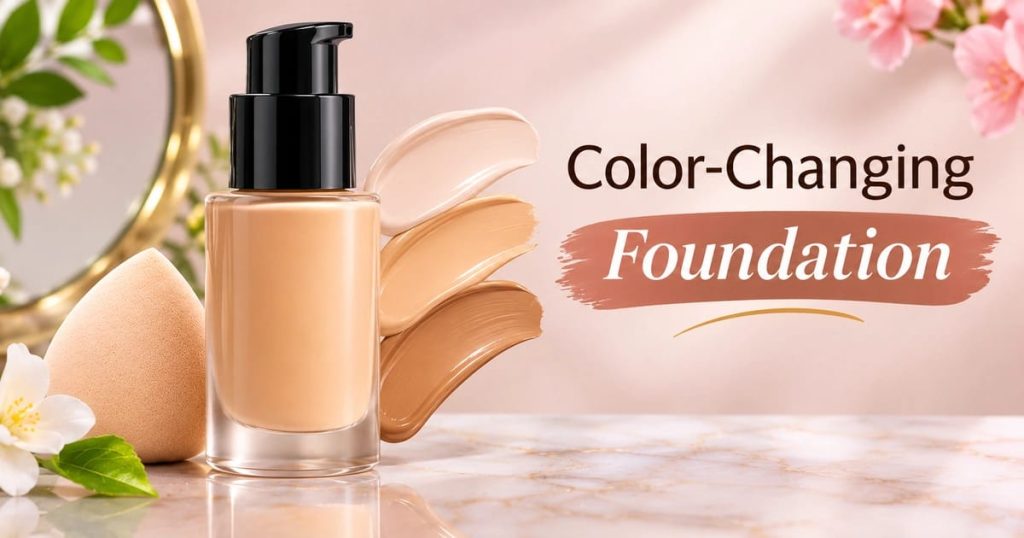
Finding your exact foundation shade can feel like a part-time job. You swatch three colors, step into the daylight, and none of them look quite right. That frustration is why color changing foundation has taken off. It goes on white or cream, and it’s supposed to turn into your skin tone as you blend.
The idea is appealing, but the reality is more nuanced. A shade-adapting foundation can work well for some people, especially in the light-to-medium range, and it can disappoint others who end up orange or ashy.
This guide explains how the technology works, compares three options I could verify, and helps you decide whether the concept is right for you.
Which Color Changing Foundation Is Best? The Quick Answer
If you want the short version, here it is. Almay Smart Shade is the budget-friendly pick, Prime Prometics is a mid-priced option with a dewy finish, and Hailey Beauty Rebelle is the splurge with a natural, adjustable finish.
Here’s a side-by-side look. Prices are the listed prices I found while researching. They change often, so check the current price before you buy.
| Product | Best for | Coverage | Finish | SPF | Listed price |
| Almay Smart Shade Skintone Matching Makeup | Budget shoppers | Medium, buildable | Natural, luminous | 15 | $13.69 |
| Prime Prometics Color Changing Foundation | Fair to medium skin, dewy look | Buildable | Dewy | Not listed | $35.20 (regular$44) |
| Hailey Beauty Rebelle Foundation | A natural, adjustable finish | Medium, adjustable | Natural | 15 | $49.99 |
A quick honesty note. I’m sharing what brands, retailers, and published reports say. I haven’t tested these myself, so I won’t claim before-and-after results. Shade matching depends heavily on your skin, so your result may differ.
What Is Color Changing Foundation?
A color-adapting foundation is a liquid or cream foundation that looks white, beige, or pale when it comes out of the bottle. When you rub it into your skin, the color changes and blends toward a more skin-like shade.
You’ll also see it called color-adapting, color-adjusting, or self-adjusting foundation. The marketing often promises a “one shade fits all” result, and that’s the claim worth thinking about carefully.
How Does Color Changing Foundation Work?
The science is simpler than it sounds. These formulas typically contain tiny capsules or beads of pigment suspended in a white base. When you rub the product into your skin, the capsules break and release the color.
According to a published explainer on the topic, the pigments are usually a mix of titanium dioxide, red, yellow, and black iron oxides, and some formulas add mica for a soft glow. That’s very different from “mood” products that respond to your skin’s pH. The color release comes from friction, not your skin’s chemistry.
Is It Different From Regular Foundation?
Yes, in how it’s made, but not in what it’s trying to do. Here’s how it compares with similar products.
| Type | How it works | Main goal |
| Regular foundation | Pre-mixed color in each shade | Match a specific shade |
| Color-adapting foundation | Pigment capsules break as you blend | Adapt to a range of skin tones |
| Color-correcting foundation | Tinted to cancel specific tones, like redness | Neutralize discoloration |
| CC cream | Light coverage with some correcting | Even tone with a skincare feel |
Color-adapting foundation and color-correcting makeup aren’t the same thing, so don’t mix them up when you shop.
Does It Actually Adjust to Your Skin Tone?
Only to a degree. It’s tempting to think the formula “reads” your skin and picks the right color. In reality, it releases a fixed set of pigments, and what you see depends on how much you apply and how you blend.
Cosmetic chemists quoted in a Yahoo Life report on the science say these products don’t truly match every skin tone. The color and coverage can shift somewhat, but darker and very fair skin tones are often underserved. That’s the honest starting point for any color-adapting foundation.
3 Best Color Changing Foundations to Consider
I didn’t want a long list of look-alike products. So I picked three with different price points and finishes, and I included only products I could find published details for. Each review below lists who may like it and what to consider.
- Almay Smart Shade Skintone Matching Makeup: Best Budget Pick
This is the most affordable option at $13.69 for one fluid ounce. Target describes it as a lightweight liquid with a natural finish that starts out white and adjusts to your skin tone as you blend.
Coverage is medium and buildable, with a luminous glow, and it includes SPF 15.
The listing describes it as dermatologist tested, hypoallergenic, fragrance-free, and non-comedogenic. The sunscreen actives are titanium dioxide and zinc oxide.
**Who may like it:**
- Shoppers on a budget
- People with light to medium skin tones
- Anyone who wants SPF in their foundation
**Things to consider:**
- The page describes six shades but lists only four in the selector, so confirm the range
- Reviews are mixed. Many people say it matches well, but others with cool undertones report it looks orange
- Some reviewers report dryness, irritation, or breakouts, which shows that even a “hypoallergenic” label isn’t a guarantee
- The ingredient list includes parabens and alcohol denat, so check it if you avoid those
- SPF 15 shouldn’t replace your regular sunscreen
- Prime Prometics Color Changing Foundation: Best for a Dewy Finish
Prime Prometics sells this foundation for $35.20 for one ounce, marked down from $44 at the retailer I checked. It uses pigments that shift toward your skin tone as you blend, and it’s marketed for fair to medium skin. Coverage is buildable, and the finish is dewy. The brand claims 12-hour wear and labels it hypoallergenic and dermatologist-approved.
The ingredient highlights include jojoba oil, squalane, niacinamide, and peptides. The page lists about 4.6 stars from nearly 4,000 reviews, with reviewers praising the shade match, light feel, and coverage of fine lines and redness.
**Who may like it:**
- People with fair to medium skin
- Those who prefer a dewy, skin-like finish
- Shoppers who like skincare-style ingredients
**Things to consider:**
- Several critical reviews say the foundation turned orange on their skin
- Because it’s marketed for fair to medium tones, deeper skin tones may not get a good match
- The page didn’t list SPF, shade options, or a full ingredient list
- The brand’s separate brush gets mixed feedback in reviews, so you may prefer fingers or a sponge
- Hailey Beauty Rebelle Foundation: Best Splurge
Hailey Beauty’s Rebelle Foundation is described as a white, color changing formula with
micro-pearls that claim to adapt to your skin tone. It was listed at $49.99 in a published product test, and it comes in a 30 ml bottle.
A retailer listing describes it as a fluid, light liquid with medium, adjustable coverage, a natural finish, and SPF 15. It’s marketed for all skin types and said to use hypoallergenic and
non-comedogenic active ingredients.
**Who may like it:**
- People who want a natural, adjustable finish
- Those who like building coverage slowly
- Shoppers who prefer a premium brand
**Things to consider:**
- It’s the most expensive option here
- I couldn’t confirm the shade count or a full ingredient list from the pages I checked
- The “adapts to all skin tones” claim is a brand claim, and as explained above, very fair and very deep complexions often have a harder time
- The retailer page I checked listed it as out of stock, so confirm availability
Color-Adapting Foundation Comparison
Here’s a more detailed look at the three products.
| Factor | Almay Smart Shade | Prime Prometics | Hailey Beauty Rebelle |
| Price | $13.69 | $35.20 | $49.99 |
| Size | 1 fl oz | 1 oz | 30 ml |
| Coverage | Medium, buildable | Buildable | Medium, adjustable |
| Finish | Natural, luminous | Dewy | Natural |
| SPF | 15 | Not listed | 15 |
| Skin type | Not specified | Fair to medium | All skin types (brand claim) |
| Main plus | Lowest price | Skincare ingredients | Adjustable coverage |
| Main limit | Orange tone in some reviews | Orange tone in some reviews | Price and unconfirmed shade details |
Do Color Changing Foundations Really Work?
The honest answer is “sometimes.” It’s not pure marketing, because the technology is real. But it’s also not magic, and it doesn’t work equally well for everyone.
What Results Can You Expect?
When it works, the formula blends into a natural-looking shade, often with light-to-medium coverage. Many people like that they can skip the shade hunt.
When it doesn’t work, the result can look orange, yellow, or ashy. The shade also may look different after a few minutes, as the formula settles or oxidizes.
Why It Doesn’t Match Everyone
There are a few reasons:
- **Limited pigment range:** A formula releasing a small set of pigments can only reach so many shades
- **Undertone mismatch:** A pigment mix that suits a warm undertone may look orange on a cool one
- **Very fair and deep tones:** These are often the hardest to match with a single formula
- **Lighting and technique:** How much you apply and how well you blend changes the result
Is It Just a Marketing Trend?
Partly. The technology exists, and for some people it makes shopping easier. But universal-shade claims are often exaggerated. A color-adapting foundation can be a helpful option for some shoppers, and it’s wise to be skeptical of any product promising a perfect match for every complexion.
How to Choose a Color Changing Foundation for Your Skin Type
The technology matters, but your skin type affects how it feels and looks.
Oily Skin
Look for lightweight formulas, natural-matte finishes, and non-comedogenic claims, if available. A dewy finish can look shiny in the T-zone, so you may need powder.
Dry Skin
A hydrating, creamy formula with a natural or dewy finish usually looks more comfortable. Prep with moisturizer so the product doesn’t cling to dry patches.
Mature Skin
Choose a lightweight formula and apply thin layers so makeup doesn’t settle into lines. Medium, buildable coverage tends to look softer than heavy coverage.
Sensitive Skin
Check fragrance information and ingredient lists, and patch test first. Labels like hypoallergenic don’t guarantee that a product won’t bother you.
Combination Skin
Look for a balanced finish. You may need more hydration on the cheeks and a light dusting of powder on the T-zone.
How to Choose the Right Shade and Undertone
Even with this type of foundation, undertone matters. Skin tone is how light or deep you are, and undertone is the warm, cool, neutral, or olive hue beneath it.
Does One Shade Really Fit Everyone?
No. “One shade fits all” is a marketing phrase, not a guarantee. Many products offer a few shade options, and choosing the closest one matters.
How to Test It Before Buying
Here are some practical tips:
- Apply a small amount along your jawline, not your hand
- Blend it fully, since the color won’t change until you rub it in
- Check the result in natural daylight
- Compare it with your neck
- Wait several minutes to see how it settles or oxidizes
- When buying online, check the return policy
If it looks orange after settling, try a different shade or a different formula.
How to Apply Color-Adapting Foundation Correctly
Technique matters more with this type of foundation, because blending is what releases the color.
Step-by-Step Application Guide
- Cleanse and moisturize your face.
- Apply a primer only if it suits your skin type.
- Start with a small amount, about a pump or a dime-sized drop.
- Blend evenly with fingers or a damp sponge until the color develops.
- Give the formula a minute to settle, following its directions.
- Check the shade in natural light.
- Add another thin layer where you need more coverage.
Common Application Mistakes
- Using too much product at once
- Not blending long enough for the color to develop
- Checking the shade only under artificial lighting
- Applying over dry or unprepared skin
- Assuming every formula works with the same technique
Pros and Cons of Color-Adapting Foundation
Pros
- Convenient and often quick to apply
- May simplify shade selection
- Some formulas offer buildable coverage
- Available in different textures and finishes
Cons
- Limited shade adaptability
- Not a perfect match for every complexion
- Coverage may be lighter than expected
- Some formulas may not suit oily or dry skin
- Universal-shade marketing can be misleading
Where to Buy Color-Adapting Foundation in the USA
You’ll find these products in a few types of places.
Official Brand Websites
Brand sites usually list current prices, shade options, and return policies. They’re also the best place to confirm a product is authentic.
Online Retailers
Amazon, Walmart, Ulta, and other retailers carry some of these products. Check that the seller is the brand or an authorized retailer, since counterfeits and unfamiliar sellers can be a risk with trending products.
What to Check Before Purchasing
- Seller authenticity
- Recent reviews, especially from people with your skin tone
- Ingredient list
- Return policy
- Shipping costs
Frequently Asked Questions
Is there a color-adapting foundation that actually works?
It can work for some people, particularly in the light-to-medium range. Results vary, so check reviews from people with similar skin.
Do color-adapting foundations really work?
The technology is real, but it doesn’t match every skin tone. Expect some shade adjustment, not a perfect match for everyone.
What foundation changes color when applied?
Products like Almay Smart Shade, Prime Prometics, and Hailey Beauty Rebelle are marketed as color changing or color adapting.
Does color-adapting foundation work on all skin tones?
Brands often claim so, but chemists say very fair and very deep tones are often underserved.
Is color-adapting foundation good for oily skin?
It depends on the formula. Natural or matte finishes may suit oilier skin better than dewy ones.
Does color-adapting foundation provide full coverage?
Most are light to medium and buildable, so they may not provide full coverage.
Can color-adapting foundation turn orange?
Yes. Several reviews mention an orange tone, especially on cooler undertones.
Is color-adapting foundation suitable for mature skin?
It can be, if you choose a lightweight formula and apply thin layers.
How long does color-adapting foundation last?
Wear time varies. Brands claim up to 12 hours for some formulas, but your skin and prep affect the result.
Does color-adapting foundation oxidize?
Some formulas may darken or shift after application, so test the shade and wait a few minutes.
What’s the difference between color changing and color-correcting foundation? Color changing formulas adapt to your skin tone as you blend, while color-correcting products are tinted to cancel specific discoloration, like redness.
Final Verdict: Which Color Changing Foundation Should You Choose?
If you want an inexpensive way to try a color-adapting foundation, Almay Smart Shade is the easiest place to start. Prime Prometics is a good option if you like a dewy finish and fall in the fair-to-medium range, and Hailey Beauty Rebelle is worth considering if you want a premium, adjustable formula.
Keep your expectations realistic. This type of foundation can simplify shopping, but it won’t suit every undertone. Test it in daylight, check reviews from people with similar skin, and don’t be afraid to return it. Always confirm the current price and shade options before you buy.