
When you have a breakout, makeup can feel like a trap. You want to cover the redness and bumps, but you also worry that the wrong base will clog your pores or make things worse. Finding the best foundation for pimple prone skin is really about balance: enough coverage to feel confident, and a formula that feels light and comfortable on skin that is already under stress.
This guide narrows the crowded market down to three foundations that are widely sold in the US and consistently positioned for acne prone skin. You will also learn what labels like “non-comedogenic” and “oil-free” really mean, how to choose a formula for your skin type, and how to apply and remove makeup so you give your skin the best chance.
How We Chose These Foundations
There are dozens of foundations that claim to be good for breakouts. Instead of listing all of them, we chose three that each solve a different problem, so you can find the best foundation for pimple-prone skin for your own skin, budget, and routine.
Here is what we looked at for every product:
- Formula claims: Is it described as oil-free, non-comedogenic, or fragrance-free by the brand?
- Coverage and finish: Can it cover pimples and redness without looking heavy?
- Skin-type fit: Is it better suited to oily, combination, or sensitive skin?
- Shade range: Are there enough shades for different undertones and depths?
- Value: Is the price fair for what you get?
Two honest notes. First, this is a research-based guide, not a laboratory or hands-on test, and we do not claim to have worn each product for weeks. Second, no label can promise that a product will never cause a breakout. Individual reactions vary, and formulas and prices change, so always check the current ingredient list before you buy.
Quick Picks: Best Foundation for Pimple-Prone Skin at a Glance
| Foundation | Best for | Coverage | Finish | Budget level |
| Clinique Acne Solutions Liquid Makeup | Best overall for oily and combination skin | Moderate, buildable | Natural matte | Premium |
| Foundation | Best for | Coverage | Finish | Budget level |
| Neutrogena SkinClearing Liquid Makeup | Best drugstore treatment-style pick | Medium, buildable | Natural, semi-matte | Budget-friendly |
| Maybelline Fit Me Matte + Poreless | Best budget matte with a wide shade range | Medium | Matte | Budget-friendly |
Use the table as a shortcut, then read the reviews to see which trade-offs matter to you.
- Clinique Acne Solutions Liquid Makeup: Best Overall
Best for: Oily and combination skin that wants coverage and a skincare-style formula.
Clinique’s Acne Solutions Liquid Makeup is built around a simple idea: a foundation that also contains an acne-fighting ingredient. According to the brand, it is an oil-free liquid with 0.5% salicylic acid and a probiotic-style ingredient called Lactobacillus ferment. It is also described as fragrance-free,
paraben-free, and dermatologist tested.
The coverage is described as moderate and buildable, with a natural matte finish. That is a good match for pimples, redness, and uneven tone when you want a clean, even look without a mask-like feel. The brand lists it for dry-combination, combination-oily, and oily skin, and it comes in an extended range of 24 shades.
What we like
- Contains 0.5% salicylic acid, so it is positioned as a treatment foundation
- Oil-free and fragrance-free according to the brand
- Buildable coverage that helps blur blemishes and redness
- Natural matte finish that controls shine
Keep in mind
- It is the most expensive option in this guide
- Some reviewers find it drying, especially on dry skin
- Salicylic acid can add to irritation if you already use other strong acne products, so go slowly
- Shade range is better than before, but you should compare swatches carefully if you have a deep skin tone
Who should buy it: If you want the best foundation for pimple prone skin that also feels like part of your skincare routine, and oily or combination skin is your main concern, this is a strong choice.
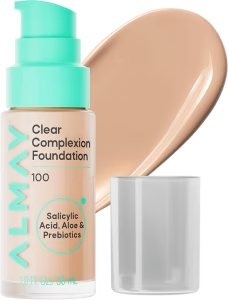
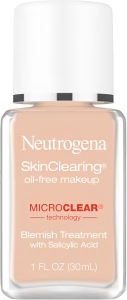
- Neutrogena SkinClearing Liquid Makeup: Best Drugstore Treatment-Style Pick
Best for: Budget shoppers who want a foundation that contains salicylic acid.
Neutrogena SkinClearing Liquid Makeup has been a drugstore staple for years. The brand lists 0.5% salicylic acid as the active ingredient and says the formula uses its MicroClear technology to help the acid work. It is described as oil-free, hypoallergenic, and non-comedogenic, and it offers natural, buildable, medium coverage with a semi-matte look.
It is also one of the most affordable products on this list, which makes it an easy way to try a salicylic acid foundation without much risk. Customers often praise how natural it looks when applied in thin layers.
What we like
- Very affordable and easy to find
- 0.5% salicylic acid, according to the brand
- Natural, breathable look with buildable coverage
- Described as oil-free and non-comedogenic
Keep in mind
- The brand lists a smaller shade range than some competitors, so check whether your shade is available
- The bottle has no pump, so it is easy to pour out too much
- The salicylic acid may feel drying on dry or sensitive skin
- It is an acne medication as well as a makeup product, so follow the directions on the label
Who should buy it: If you want a treatment-style option and believe the best foundation for
pimple-prone skin should not cost much, this is a practical pick for oily, combination, or normal skin.
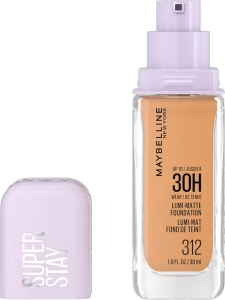
- Maybelline Fit Me Matte + Poreless: Best Budget Matte With a Wide Shade Range
Best for: Oily skin and anyone who wants an affordable, everyday matte base.
Maybelline’s Fit Me Matte + Poreless is not an acne treatment, but it is one of the most popular drugstore foundations for shine-prone skin. The brand describes it as an oil-free, lightweight liquid that gives medium coverage with a natural matte look. It lists the formula as non-comedogenic,
fragrance-free, dermatologist tested, and allergy tested, and promises up to 12 hours of shine control.
The biggest advantage is the shade range. Fit Me comes in 40 shades, which makes it easier to find a close match across light, medium, and deep skin tones. That matters because a mismatched foundation can make redness and blemishes look more obvious.
What we like
- Very affordable and widely available
- 40 shades with many undertones
- Medium coverage that looks natural, not heavy
- Fragrance-free and described as non-comedogenic by the brand
Keep in mind
- It does not contain an acne-fighting ingredient
- It is designed for normal to oily skin, so dry skin may find it too matte
- Medium coverage may need a concealer for stubborn marks
Who should buy it: If you want a simple, budget-friendly matte base and need the best foundation for pimple-prone skin to come in plenty of shades, this is an easy choice.
What Do “Non-Comedogenic” and “Oil-Free” Really Mean?
Labels can be helpful, but they are not guarantees. Here is what the common terms mean in plain language.
- Oil-free: The formula does not include added oils, according to the brand. It does not automatically mean it will not clog pores.
- Non-comedogenic: The formula is designed not to clog pores. This is a brand claim, and it does not mean every person will be breakout-free.
- Non-acnegenic: The brand says the formula is designed not to cause acne. The same caution applies.
- Fragrance-free: No added fragrance. This can matter if your skin is sensitive.
The takeaway is simple. Treat these labels as useful clues, not promises. Your own skin is the final test, which is why patch testing and slow introduction are smart.
How to Choose the Best Foundation for Pimple-Prone Skin
The right foundation depends on your skin, your goals, and your routine. Walk through these factors before you buy.
Match the formula to your skin type
- Oily skin: Look for matte or natural-matte formulas described as shine-controlling. Clinique and Maybelline are strong places to start.
- Combination skin: A natural finish is often the most forgiving. Apply more product on oily areas and sheer it out on drier areas.
- Dry or dehydrated skin: Matte and salicylic acid formulas may feel drying. Prep with a gentle moisturizer and choose a lighter, more flexible formula.
- Sensitive skin: Check for fragrance-free formulas and keep the ingredient list short. Patch test first and introduce one new product at a time.
Choose the right coverage
Not everyone needs full coverage. Light to medium coverage looks natural and suits most routines. If you need more coverage on active pimples or marks, build in thin layers or use a small amount of concealer on top. Thick, heavy layers can emphasize texture and feel uncomfortable.
Pick a finish you can live with
A matte finish controls shine but can look flat, while a natural or semi-matte finish usually looks more like skin. If your skin gets dry in patches, avoid very matte formulas.
Do not skip shade matching
A bad shade match makes redness and blemishes more obvious. Look for the shade that matches your jawline in natural light, and compare undertones carefully.
Skin Prep Basics for Breakout-Prone Skin
Good makeup starts with calm, comfortable skin. Foundation sits better on skin that is cleansed gently, moisturized lightly, and not over-treated. If you use acne products such as salicylic acid, benzoyl peroxide, or retinoids, introduce them one at a time and follow the label directions.
Layering many strong products at once can leave skin dry, flaky, and irritated, which makes any foundation look patchy. If your skin feels tight or stings, simplify your routine before you add more coverage on top.
Liquid vs. Powder vs. Skin Tint
Foundation comes in several forms, and each behaves differently on blemish-prone skin.
- Liquid foundation: The most flexible option, with buildable coverage. It works well for most people.
- Powder foundation: Lightweight and good for oil control, but it can cling to dry patches and may not cover redness as well.
- Skin tint: Sheer and comfortable, but it will not hide active pimples or marks on its own.
Powder foundation and setting powder are not the same product, so do not use them interchangeably. If you like a very natural look, you can pair a skin tint with a small amount of concealer where you need it.
How to Cover Pimples and Redness Without a Cakey Look
Heavy layers are the most common reason foundation looks cakey on acne-prone skin. These tips help you get coverage without the heaviness.
Step 1: Cleanse and moisturize
Start with a gentle cleanser and a lightweight, non-comedogenic moisturizer. Dry skin grabs foundation and makes it look patchy, even on oily skin types.
Step 2: Use sunscreen, then wait
In the morning, apply a broad-spectrum sunscreen and let it settle for a few minutes. Foundation with SPF is a bonus, not a replacement for sunscreen.
Step 3: Use less foundation than you think
Dot a small amount on your cheeks, forehead, nose, and chin. Blend outward and add more only where you need it.
Step 4: Spot conceal
Use a small amount of concealer on individual pimples or marks. Pat it on gently instead of rubbing, which can irritate skin.
Step 5: Set lightly
If you get shiny, press a small amount of powder on your T-zone. Skip the dry areas.
Makeup Removal and Brush Hygiene
What you do at night matters as much as what you apply in the morning. Remove makeup every night with a gentle cleanser or an oil-free makeup remover, and avoid scrubbing, which can irritate blemishes.
Dirty tools can transfer oil and bacteria to your skin, so wash sponges and brushes regularly with a gentle soap and let them dry fully. Replace sponges often and avoid sharing makeup tools. Also check expiration dates, because old makeup is more likely to irritate skin.
Troubleshooting Common Problems
If your foundation is not working for you, the cause is often simple. Use this table to find a fix.
| Problem | Likely cause | What to try |
| Looks cakey | Too much product or too many layers | Use thin layers and blend with a damp sponge |
| Dry patches stand out | Matte formula over unprepped skin | Moisturize and choose a more flexible formula |
| Shine by midday | Oil production | Blot gently and press powder only on the T-zone |
| Shade looks off | Wrong undertone | Test on your jawline in daylight and try a different shade |
| Skin feels irritated | Ingredient sensitivity or too many active products | Stop using it and patch test before trying again |
| Pimples still show | Coverage too light | Build gently and use concealer on spots |
If a product seems to make breakouts worse, stop using it and give your skin a break. A foundation can support your routine, but it is not a replacement for medical care.
When to See a Dermatologist
Foundation is cosmetic coverage, not acne treatment. If your acne is painful, widespread, leaves scars, or does not improve with over-the-counter care, talk to a dermatologist. They can recommend treatment that makeup cannot provide.
Frequently Asked Questions
What is the best foundation for pimple-prone skin?
There is no single winner for everyone. Clinique Acne Solutions Liquid Makeup is our top overall pick for oily and combination skin, Neutrogena SkinClearing is a strong drugstore choice with salicylic acid, and Maybelline Fit Me is a budget matte with a wide shade range.
What foundation covers pimples best?
Look for medium, buildable coverage rather than a thick formula. Use a thin layer of foundation and a small amount of concealer on spots, which usually looks more natural than layering heavy foundation everywhere.
How do I find the best foundation for pimple-prone skin?
Start with your skin type, then decide how much coverage you need. Look for oil-free or
non-comedogenic formulas, fragrance-free options if you are sensitive, and a shade that matches your jawline. Then introduce one product at a time and watch how your skin responds for a couple of weeks.
Is non-comedogenic foundation always better?
It can be a helpful clue, but it is not a guarantee. Individual skin reactions vary, so patch test new products and introduce them slowly.
Is powder or liquid foundation better for acne-prone skin?
Neither is better for everyone. Liquid foundation offers more coverage and flexibility, while powder can help with oil control but may cling to dry patches.
Is matte foundation good for acne-prone skin?
Matte foundation can help control shine on oily skin, but it may feel drying on dry or sensitive skin. Choose the finish that feels comfortable on your skin.
Can foundation cause breakouts?
Some people find that certain formulas worsen congestion or irritation. If you notice a pattern, stop using the product and try a different formula, and speak with a dermatologist about persistent breakouts.
Should I use foundation with salicylic acid?
It can be a good option for some people, but salicylic acid can be drying and may add to irritation if you also use other strong acne products. Follow the directions on the label.
Final Thoughts: Which Foundation Should You Buy?
The best foundation for pimple-prone skin is the one that gives you enough coverage to feel confident while staying comfortable on your skin. If you want a treatment-style foundation with a skincare feel and can spend more, Clinique Acne Solutions Liquid Makeup is a polished choice for oily and combination skin.
On a budget, Neutrogena SkinClearing Liquid Makeup gives you salicylic acid at a low price, while Maybelline Fit Me Matte + Poreless offers a simple matte base with a big shade range. Whichever you choose, remember the basics: prep gently, use thin layers, remove makeup every night, and keep your tools clean.
Have a favorite foundation for acne-prone skin we did not include? Share it in the comments, and we will consider it for a future update.