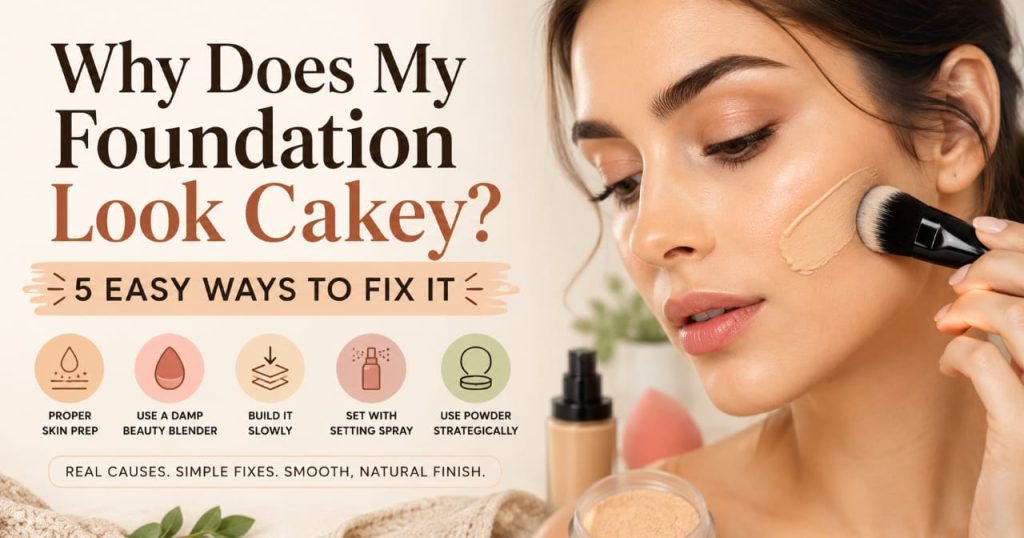
If you have ever finished your makeup, looked in the mirror, and wondered, “Why does my foundation look cakey?”, the problem is usually not one bad product. Cakey foundation can happen when dry or dehydrated skin, too much makeup, incompatible layers, excess powder, or application technique work against each other.
The good news is that you usually do not need to remove your entire face and start over. This guide gives you 5 practical fixes for the most common causes of cakey foundation, including dry patches, heavy coverage, primer problems, powder buildup, oily areas, and makeup that becomes cakey after a few hours.
Quick Answer: Why Does My Foundation Look Cakey?
Foundation usually looks cakey when too much product sits on the skin, the surface is dry or textured, layers have not settled, the primer and foundation do not work well together, or powder has been over-applied.
Before adding another layer, diagnose the finish. If the base is dry, improve moisture rather than adding more foundation. If it is oily, blot instead of piling on powder. If it is simply too thick, a clean damp sponge can help press and lift excess product.
What Does Cakey Foundation Actually Look Like?
Cakey foundation tends to look thicker, heavier, or more obvious than natural skin. You may notice foundation collecting around the nose or mouth, settling into fine lines, emphasizing pores, clinging to flaky patches, or becoming powdery after setting.
Cakey, patchy, dry, and separated makeup are not exactly the same problem. A patchy base has uneven coverage or visible gaps. A dry base may look flaky or tight. Separated foundation appears to break apart or move away from certain areas. Knowing the difference matters because adding more foundation can make several of these problems worse.
Cakey vs. Patchy vs. Dry vs. Separated Foundation
| Problem | What you may see | Common trigger | First move |
| Cakey | Thick, heavy, layered finish | Too much product or powder | Soften or lift excess |
| Dry | Flakes, tightness, rough texture | Dehydration or excess powder | Hydrate and reduce powder |
| Separated | Base breaks apart or moves | Oil, sweat, or incompatible layers | Blot and reassess layers |
5 Easy Ways to Fix Cakey Foundation
1. Fix Your Skin Prep Before Adding More Makeup
One of the most common reasons foundation looks cakey is that the skin underneath is too dry, dehydrated, flaky, or textured for the amount and type of makeup being applied.
When the surface is dry, foundation can cling to flakes and make rough areas more visible. This is especially noticeable with very matte or high-coverage formulas. Instead of covering a dry patch with another layer, apply an appropriate moisturizer and let it settle before makeup.
Your pre-makeup routine does not need to be complicated. Cleanse according to your skin’s needs, moisturize, and give skincare enough time to settle. If you use sunscreen or several skincare layers, avoid immediately covering a still-wet surface with primer and foundation.
Should You Exfoliate Before Foundation?
Not aggressively. If you regularly deal with flakes or rough texture, a consistent skincare routine is more useful than a last-minute scrub immediately before makeup.
The American Academy of Dermatology Association advises choosing an exfoliation method according to your skin type, being gentle, moisturizing afterward, and avoiding over-exfoliation. That matters because irritated skin can make makeup look less smooth rather than more smooth.
**Internal link opportunity:** Read our Best Moisturizer for Dry Skin guide for more help choosing a prep step for dry, makeup-prone skin.
2. Use Less Foundation and Build Coverage Gradually
More foundation does not automatically create a smoother complexion. A thick first layer can make the base look heavy before you even add concealer, cream blush, bronzer, or powder.
Start with a small amount and spread a thin layer over the center of the face, then blend outward. Add tiny amounts only where redness, discoloration, or unevenness still needs coverage.
This approach is especially useful around the nose, mouth, and under-eye area, where too much product can quickly settle into lines or emphasize texture.
Why Does Too Much Foundation Look Cakey?
Foundation is designed to create an even layer, not completely erase the natural texture of skin. When several layers overlap, the finish can become visibly thick.
A simple rule is: start thin, then build only where needed. If a particular spot needs more coverage, add product to that spot instead of applying another full layer across the face.
Check Your Shade and Formula Too
A poor shade match can make makeup look heavier even when the texture is fine. Too light, too dark, too warm, or too cool can make the complexion look unnatural.
Formula matters as well. A very matte, high-coverage foundation may emphasize dry texture, while a richer formula may move more easily on an oily T-zone. Match the formula to your skin type, desired coverage, and finish.
3. Make Sure Your Primer, Skincare, and Foundation Work Together
Primer can help makeup apply more evenly, but it cannot guarantee a non-cakey finish. Too much primer, skincare that has not settled, or layers that do not cooperate can cause pilling, sliding, or visible texture.
Use a thin amount of primer and allow it to settle before applying foundation. If you are trying a new primer with a foundation you already own, test the combination on one side of your face first.
If one side begins pilling, sliding, or becoming textured while the other looks smooth, the combination may be part of the problem.
Do You Need Primer to Prevent Cakey Foundation?
No. Primer is optional. Some people get a smoother result from well-prepped skin, a compatible foundation, thin layers, and targeted powder.
If primer seems to make your base worse, simplify the routine. You may only need primer on areas where you want smoothing, grip, or pore-blurring rather than applying it across the entire face.
Give Skincare Time to Set
A common mistake is moving directly from serum to moisturizer to sunscreen to primer to foundation without allowing the layers to settle.
You do not need a complicated waiting routine. The practical goal is simply to avoid applying the next layer while the previous one still feels excessively wet, slippery, or tacky.
4. Control Powder and Oil Without Building Up Layers
Powder can help control shine, but too much powder can turn a smooth base into a dry, powdery, textured one.
If your makeup looks good before setting and suddenly looks cakey afterward, powder may be the tipping point. Instead of automatically powdering the entire face, focus on the areas that actually need it.
For many people, that means the T-zone, around the nose, or areas where makeup tends to crease or move.
Why Does My Foundation Look Cakey After a Few Hours?
If your makeup looks great in the morning and becomes cakey by lunchtime, consider what changed during wear.
Oil and sweat can break down foundation. Humidity can make makeup move. Dry indoor air can make dehydrated areas more obvious. Facial movement can push product into lines around the nose and mouth. Repeatedly adding powder can then turn a small problem into visible buildup.
Blot first if the area is oily. Do not automatically add another layer of powder over oil. If the base looks dry, lightly mist or use a clean damp sponge to soften the appearance. Reapply foundation only where coverage has actually disappeared.
Why Does My Foundation Look Cakey on My Nose?
The nose is a common trouble spot because it can be oilier than the cheeks, have visible pores, become flaky around the nostrils, and receive more touching throughout the day.
Use less foundation on the nose than on larger areas of the face. Press it into the skin instead of repeatedly dragging it. If the nose becomes shiny, blot first, then use a small amount of powder only where necessary.
5. Change Your Application Technique and Rescue the Base When It Cakes
The tool and the way you move it across the skin can change the finish. Dragging a large amount of foundation around the face can move product rather than creating a thin, even layer.
A clean damp makeup sponge can be useful for pressing product into the skin and lifting excess. A foundation brush can provide controlled coverage. Neither tool is automatically better; the goal is controlled, thin application.
How to Apply Foundation Without It Looking Cakey
- Cleanse and moisturize according to your skin’s needs.
- Let important skincare layers settle.
- Apply primer only if it helps your routine.
- Start with a small amount of foundation.
- Blend from the center outward.
- Build coverage only where needed.
- Use concealer selectively instead of covering everything twice.
- Powder strategically rather than coating the whole face.
- Give the makeup time to settle before deciding it needs more.
- Stop when the finish already looks even.
How to Fix Cakey Foundation Without Starting Over
If you are already wearing makeup, do not panic.
Step 1: Stop adding product. Put the foundation and powder down.
Step 2: Diagnose the finish. Is it dry, oily, patchy, separated, or simply too thick?
Step 3: Blot if oily. Press a blotting sheet gently onto shiny areas.
Step 4: Soften the base. If it looks dry, use a light mist or another appropriate method to add a little moisture.
Step 5: Press with a clean damp sponge. Tap rather than rub. This can soften edges and lift excess product.
Step 6: Reapply only where necessary. If coverage was removed, add a tiny amount to that spot rather than rebuilding the entire face.
Step 7: Set selectively. Use minimal powder only where the makeup still needs help staying in place.
Why Does My Foundation Look Cakey in Different Situations?
Why Does My Makeup Look Cakey and Dry?
Cakey and dry makeup usually points to a combination of dehydration, surface texture, a drying formula, and too much powder. If your skin already feels tight or flaky before makeup, adding more foundation will rarely solve the problem.
Try a simpler base: moisturizer, time to settle, a thin foundation layer, targeted concealer, and minimal powder. If dryness appears only later, consider your powder, weather, indoor heating or air conditioning, and how often you touch up.
Why Does My Foundation Look Cakey Even With Primer?
Primer cannot override dry skin, too much foundation, incompatible layers, or excessive powder. Use less primer, allow it to settle, and test the primer with your foundation before applying a full face.
If the combination pills or separates, consider whether you need a different primer, a thinner layer, or no primer at all.
Why Does My Makeup Look Cakey After Setting Powder?
If your makeup looks fine until powder goes on, the powder may be the tipping point. Use a small amount only where shine or movement requires it. Tap off excess and avoid repeatedly adding powder over oil.
10 Amazon Products That Can Help Build a Smoother Base
These products are supporting options, not magic fixes for cakiness. You do not need all 10. Choose based on your skin type, preferred finish, and existing routine.
1. La Roche-Posay Toleriane Double Repair Face Moisturizer
Best for: Normal, combination, dry, and sensitive skin
Why it fits: A hydration-first moisturizer option for skin that makes foundation cling to dry patches.

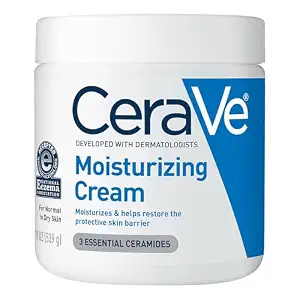
2. CeraVe Moisturizing Cream
Best for: Dry skin
Why it fits: A richer moisturizer option when dryness is making foundation catch on flakes. Use a small amount and let it settle.
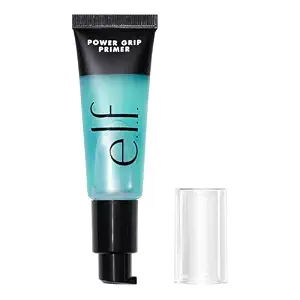
3. e.l.f. Power Grip Primer
Best for: Makeup grip
Why it fits: A gripping primer option. A thin layer is usually enough; allow it to settle before foundation.
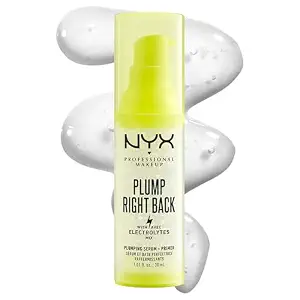
4. NYX Plump Right Back Primer + Serum
Best for: Hydrating primer users
Why it fits: A hydrating primer option for readers who want an extra prep step without automatically piling on product.
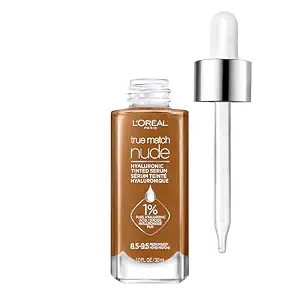
5. L’Oréal Paris True Match Nude Hyaluronic Tinted Serum
Best for: Lightweight, radiant coverage
Why it fits: A lighter complexion option for readers who prefer a skin-like finish instead of a heavy foundation layer.
6. Maybelline Fit Me Matte + Poreless Foundation
Best for: Normal-to-oily skin
Why it fits: A matte foundation option for readers who want shine control. Apply a thin layer and build only where needed.
7. Laura Mercier Translucent Loose Setting Powder Ultra-Blur
Best for: Strategic setting
Why it fits: A setting powder option for targeted shine and crease control. Use selectively rather than coating the entire face.
8. Milani Make It Last Setting Spray
Best for: Finishing makeup
Why it fits: A finishing step for readers who use setting spray. It should finish a balanced base, not cover a heavy one.
9. Real Techniques Miracle Complexion Sponge
Best for: Pressing and blending
Why it fits: A damp sponge can help distribute a thin layer and soften excess product. Press or bounce rather than rub.
10. Beautyblender Original Makeup Sponge
Best for: Complexion blending
Why it fits: A dedicated makeup sponge for pressing and blending complexion products while controlling how much product stays on the skin.
Product Comparison: Which Type of Product Helps With Which Problem?
| Problem | What to look for | Product type |
| Dry or flaky base | Comfortable hydration | Moisturizer |
| Heavy coverage | Lightweight or buildable formula | Tinted serum/foundation |
| Oily T-zone | Controlled setting | Setting powder |
| Makeup breakdown | Light finishing step | Setting spray |
| Uneven application | Pressing and controlled blending | Damp sponge |
FAQs
Why does my foundation look cakey after a few hours?
Oil, sweat, humidity, facial movement, dry patches, and product buildup can change the finish during the day. Blot and refresh instead of automatically adding more foundation or powder.
How do I fix cakey foundation without removing my makeup?
Stop adding product, identify whether the problem is dryness, oil, separation, or excess product, then blot or lightly mist as appropriate. Press with a clean damp sponge and reapply only where needed.
Why does my makeup look cakey even with primer?
Primer cannot compensate for dry skin, too much foundation, poor formula compatibility, or excessive powder. Use less primer, let it settle, and test the primer with your foundation before applying a full face.
Why does my makeup look cakey and dry?
Dehydrated skin, a drying formula, over-powdering, and too many layers are common causes. Improve hydration and reduce the amount of foundation and powder.
Why does my foundation look cakey on my nose?
The nose can be oilier and more textured than other areas. Use less foundation, press it into the skin, blot excess oil, and powder only where necessary.
Too much powder can emphasize dryness and texture. Use a small amount only where shine or movement requires it, and blot oil before adding more.
Can too much foundation make makeup look cakey?
Yes. A thick layer can create a heavy appearance, especially when concealer and powder are added on top. Start with less and build coverage gradually.
How can I avoid cakey makeup without primer?
Use appropriate skin prep, allow skincare to settle, choose a suitable foundation formula, apply thin layers, blend gently, and set only where needed.
How do beginners avoid cakey foundation?
Keep the routine simple, use less foundation, build coverage gradually, avoid excessive powder, and give each layer time to settle before adding another.
Final Thoughts
If you keep asking, “Why does my foundation look cakey?”, the answer is often not that you need more makeup. In many cases, the smoother solution is less product, better preparation, more controlled layers, and a technique that works with your skin’s natural texture.
Start by diagnosing the problem. Fix skin prep if the base is dry. Reduce product if it looks heavy. Check compatibility if it pills or separates. Use powder strategically if shine is the issue. And when cakiness appears during the day, refresh instead of stacking more layers on top.
The goal is a base that looks even, comfortable, and believable in real life—not a thick layer that hides every trace of natural skin.