This post may contain affiliate links. If you purchase through a link on this page, we may earn a small commission at no extra cost to you
.Finding the best vitamin C serum for sensitive skin is less about choosing the strongest formula and more about choosing a form, concentration, texture, and supporting ingredient profile your skin can tolerate consistently. That matters because vitamin C is an antioxidant ingredient with evidence for supporting brighter-looking skin and collagen-related benefits, but traditional L-ascorbic acid formulas are often made at a low pH that can be uncomfortable for reactive skin.
Current 2026 search results also show that shoppers are looking specifically for vitamin C serums—not generic vitamin C creams. For that reason, this updated guide focuses on real serum products and explains the differences between L-ascorbic acid and gentler derivatives such as tetrahexyldecyl ascorbate (THD), sodium ascorbyl phosphate (SAP), and 3-O-ethyl ascorbic acid.
Table of Contents
- Quick Answer
- How We Selected These Products
- Vitamin C Derivatives Explained
- Ingredients to Avoid for Sensitive Skin
- Supporting Ingredients That Help
- Comparison Table
- Top 1 0 Vitamin C Creams for Sensitive Skin
- Which Cream Is Right for You
- How to Patch Test Vitamin C Cream
- General Dermatology Guidance
- Common Mistakes to Avoid
- How Long Until You See Results
- Who Should Avoid Vitamin C Cream
- Buying Guide
- frequently Asked Questions
- Final Thoughts
Quick Answer
For sensitive skin, look for a vitamin C serum that combines a well-tolerated vitamin C form with a simple, barrier-conscious formula. Vanicream Vitamin C Face Serum is particularly relevant for shoppers who want a sensitive-skin-focused formula, while Skinfix Brighten + Firm 15% Vitamin C Serum uses THD ascorbate and is specifically positioned for sensitive skin. CeraVe Skin Renewing Vitamin C Serum offers 10% pure vitamin C alongside three essential ceramides and hyaluronic acid. More advanced options such as Medik8 C-Tetra Advanced and Alastin C-Radical Defense are better suited to shoppers who want a more specialized antioxidant routine.
How We Selected These Products
This is an editorial comparison based on current product information, ingredient/formulation details, current 2026 beauty coverage, retailer availability, and the needs commonly associated with sensitive skin. We did not treat a brand’s marketing statement as proof that a product will never irritate someone. Individual reactions vary.
- Vitamin C form and formulation stability
- Suitability for sensitive or reactive skin
- Fragrance and potential irritation considerations
- Barrier-supporting or hydrating ingredients
- Skin-type fit and texture
- Availability through major U.S. retailers/Amazon
- Useful trade-offs rather than a one-size-fits-all winner
Why Vitamin C Can Be Tricky for Sensitive Skin
L-ascorbic acid is the best-studied topical form of vitamin C, but it is typically formulated at an acidic pH. That low pH can be more noticeable on a compromised or reactive skin barrier. Vitamin C derivatives can be easier to formulate at skin-friendlier pH levels, although the scientific evidence for many derivatives is less extensive than for pure L-ascorbic acid. A peer-reviewed review of topical ascorbic acid and its derivatives notes that stability and clinical-evidence differences are important considerations when comparing these forms.
That does not mean L-ascorbic acid is automatically unsuitable for sensitive skin. A lower-strength formula may be easier to tolerate than a high-strength formula, and tolerance is highly individual. The practical goal is consistency: a formula you can use regularly without persistent burning, redness, or barrier disruption.
L-Ascorbic Acid vs. Gentler Vitamin C Derivatives
| Form | What to Know | Sensitive-Skin Consideration | Common Use | Watch For |
| L-Ascorbic Acid | Pure vitamin C; strongest clinical track record | Can sting when formulated at low pH | Brightening, antioxidant support | Stinging, dryness if poorly tolerated |
| THD Ascorbate | Oil-soluble, stable derivative | Often chosen for a more comfortable feel | Brightening + antioxidant support | Higher price; product-specific evidence varies |
| SAP | Stable water-soluble derivative | Often a gentler starting point | Brightening and tone support | Less extensive clinical evidence than LAA |
| MAP | Stable magnesium salt derivative | Generally used in gentler formulas | Brightening and antioxidant support | Product formulations differ |
| 3-O-Ethyl Ascorbic Acid | Stable derivative used in modern formulas | Often formulated around a less acidic environment | Brightening and tone support | Check full formula, not just the derivative |
10 Best Vitamin C Serums for Sensitive Skin
Skinfix Brighten + Firm 15% Vitamin C Serum
Best overall for sensitive-skin-focused shoppers A current 2026 standout designed specifically around sensitive-skin concerns. It uses 15% tetrahexyldecyl ascorbate (THD) plus peptides, glycerin, ferulic acid and vitamin E.
What to know: 15% THD ascorbate; 2% tetrapeptide solution; 2% PGA peptide solution; 1% antioxidant blend; 5% glycerin. The brand says it is fragrance-free, hypoallergenic, non-comedogenic and accepted by the National Eczema Association.
Pros: Sensitive-skin positioning, stable vitamin C derivative, hydrating support, strong ingredient story.
Cons: Premium price and a more active formula may still not suit every reactive complexion.
Best for: Sensitive skin wanting a modern, barrier-conscious vitamin C serum.
Why it made the list: It directly addresses the exact intent of this article rather than simply being a general vitamin C bestseller.
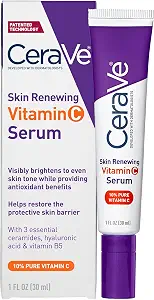
Vanicream Vitamin C Face Serum
Best simple sensitive-skin option Vanicream’s serum is specifically formulated for sensitive skin and uses 5% tetrahexyldecyl ascorbate with ceramides.
What to know: 5% THD ascorbate; lightweight milky texture; airless pump; free of dyes, fragrance, masking fragrance, lanolin, parabens and formaldehyde releasers according to the retailer listing.
Pros: Sensitive-skin-focused formulation, modest vitamin C strength, protective packaging
Cons: It may feel too conservative for shoppers seeking a high-strength vitamin C treatment.
Best for: Beginners and highly cautious vitamin C users.
Why it made the list: Its product positioning is unusually specific to sensitive skin, making it a strong semantic match for this query.
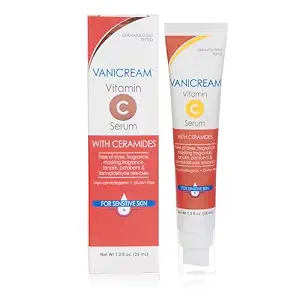
CeraVe Skin Renewing Vitamin C Serum
Best for barrier-supporting ingredients CeraVe combines 10% pure vitamin C with three essential ceramides, hyaluronic acid and vitamin B5.
What to know: 10% L-ascorbic acid; three essential ceramides; hyaluronic acid; vitamin B5; fragrance-free.
Pros: Recognizable sensitive-skin brand, barrier-supportive ingredients, accessible price point.
Cons: Because it uses pure L-ascorbic acid, very reactive users should introduce it gradually
Best for: Sensitive skin that wants L-ascorbic acid plus barrier support.
Why it made the list: It fills an important gap between gentle-derivative products and traditional vitamin C formulas.
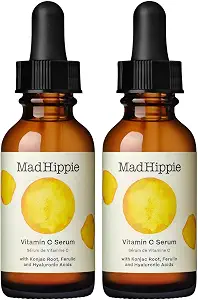
Mad Hippie Vitamin C Serum
Best SAP-based choice Mad Hippie’s formula uses sodium ascorbyl phosphate (SAP), a stable vitamin C derivative the brand positions as suitable for sensitive and acne-prone skin.
What to know: SAP; oil-free formula; designed for all skin types, including sensitive and acne-prone skin.
Pros: Gentle derivative, lightweight feel, useful for people who have not tolerated traditional L-ascorbic acid.
Cons: The brand’s claims should still be treated as product-specific rather than a guarantee of zero irritation.
Best for: Sensitive or acne-prone skin that prefers SAP.
Why it made the list: It gives readers a recognizable alternative to acidic L-ascorbic acid.
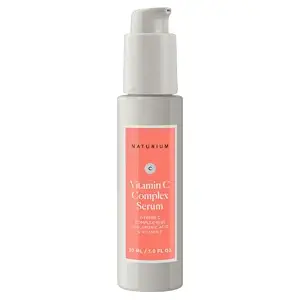
Naturium Vitamin C Complex Serum
Best balanced formula Naturium combines stable L-ascorbic acid with sodium ascorbyl phosphate and a hydrating fruit-based complex. The current formula is fragrance-free and developed at a pH of 5.5–6.5.
What to know: Stable L-ascorbic acid + SAP; glycerin; glutathione; fruit extracts; sodium hyaluronate; fragrance-free.
Pros: Uses multiple vitamin C forms, hydrating ingredients, and a less acidic pH than many classic L-ascorbic acid serums.
Cons: It still contains ascorbic acid, so extremely reactive skin should patch test.
Best for: Shoppers wanting a hybrid vitamin C formula at a moderate price.
Why it made the list: It bridges the gap between pure vitamin C and gentler derivative-only products.
Medik8 C-Tetra Advanced 20% Vitamin C Gel-Serum
Best advanced derivative formula This high-end gel-serum uses 20% stabilized tetrahexyldecyl ascorbate with phyto exosomes and acetyl zingerone.
What to know: 20% THD ascorbate; phyto exosomes; acetyl zingerone; lightweight gel-serum.
Pros: Stable derivative, elegant lightweight texture, advanced antioxidant positioning.
Cons: Premium price and higher active load make it less appropriate as a first experiment for very reactive skin.
Best for: Experienced vitamin C users with sensitive or combination skin.
Why it made the list: Current 2026 coverage highlights it as a sensitive-skin option while the brand provides detailed formulation and clinical information.
Dr. Loretta Antioxidant Repair Serum
Best lightweight option A dermatologist-founded brand’s lightweight antioxidant serum using 3% tetrahexyldecyl ascorbate, marine algae and lilac stem cell extract.
What to know: 3% THD ascorbate; marine algae; lilac stem cell extract; lightweight emollients.
Pros: Low disclosed THD concentration, lightweight texture, useful for oily or combination skin.
Cons: Premium price and lightly floral scent may not suit fragrance-sensitive shoppers.
Best for: Sensitive skin that dislikes heavy or greasy serums.
Why it made the list: It covers a need often missed by rich sensitive-skin vitamin C products: a light texture.
Paula’s Choice RESIST Super Antioxidant Concentrate Serum
Best for dry or mature sensitive skin A concentrated antioxidant treatment frequently included in sensitive-skin vitamin C coverage and useful for shoppers who want a richer, treatment-style serum.
What to know: Antioxidant-focused formula with vitamin C and supporting ingredients; check the current product label for the latest ingredient list.
Pros: Strong brand reputation, antioxidant focus, suitable positioning for dry or mature skin routines.
Cons: Concentrated treatments can be more noticeable on reactive skin; patch testing remains important.
Best for: Dry, mature, or environmentally stressed skin.
Why it made the list: It adds a different texture and use case to the list rather than repeating ten similar products.
ALASTIN C-Radical Defense Antioxidant Serum
Best premium mature-skin option A premium antioxidant serum using sodium ascorbate in an encapsulated delivery system, with a broader antioxidant blend.
What to know: Sodium ascorbate in an encapsulated system; CoQ10; ergothioneine; green tea; pomegranate.
Pros: Premium antioxidant system and a strong fit for mature-skin routines.
Cons: Very high price compared with drugstore alternatives.
Best for: Mature sensitive skin prioritizing a comprehensive antioxidant routine.
Why it made the list: Current 2026 expert coverage identifies it as a sensitive-skin and mature-skin option, making it a useful premium comparison.
Remedy For Daily Defense 15% Vitamin C Complex Brightening Serum
Best value advanced derivative This 15% vitamin C complex uses 3-O-ethyl ascorbic acid with antioxidant and barrier-supporting ingredients.
What to know: 15% vitamin C complex centered on 3-O-ethyl ascorbic acid; ferulic acid; vitamin E; panthenol; allantoin; cica; ectoin; glycerin; squalane.
Pros: Stable derivative, extensive supporting ingredients, strong value positioning.
Cons: A 15% active complex may still be too much for a person with a severely compromised barrier.
Best for: Sensitive skin wanting more brightening power without jumping directly to classic low-pH L-ascorbic acid.
Why it made the list: It directly answers the “gentle but effective” gap visible across the 2026 SERP.
Comparison Table
| Product | Vitamin C form | Best for | Texture / profile | Main trade-off |
| Skinfix Brighten + Firm | 15% THD | Sensitive skin | Hydrating serum | Premium |
| Vanicream Vitamin C | 5% THD | Beginners | Light milky serum | Lower strength |
| CeraVe Skin Renewing | 10% LAA | Barrier support | Light serum | Acidic LAA |
| Mad Hippie Vitamin C | SAP | Sensitive/acne-prone | Lightweight | Less traditional LAA |
| Naturium Vitamin C Complex | LAA + SAP | Balanced routine | Hydrating | Contains LAA |
| Medik8 C-Tetra Advanced | 20% THD | Advanced users | Gel-serum | Premium/high active |
| Dr. Loretta Repair | 3% THD | Lightweight use | Silky serum | Premium/fragrant |
| Paula’s Choice RESIST | Vitamin C + antioxidants | Dry/mature | Concentrated | May feel rich |
| ALASTIN C-Radical | Sodium ascorbate | Mature skin | Antioxidant treatment | Very expensive |
| Remedy 15% Complex | 3-O-ethyl ascorbic acid | Sensitive + brightening | Multi-antioxidant | Active formula |
How to Choose a Vitamin C Serum for Sensitive Skin
- If you have never used vitamin C: start with a lower-strength or derivative-based product and use it only a few mornings per week.
- If L-ascorbic acid has stung before: consider THD ascorbate, SAP, or 3-O-ethyl ascorbic acid instead.
- If your skin is dry: prioritize glycerin, hyaluronic acid, ceramides, squalane or other barrier-supporting ingredients.
- If your skin is oily or combination: a lightweight gel or fluid serum is usually easier to layer than a rich oil-based treatment.
- If fragrance is a known trigger: prioritize fragrance-free options and read the current ingredient list because formulas can change.
- If your main concern is dark spots: vitamin C can support a brightening routine, but daily broad-spectrum sunscreen is still essential.
- If your skin barrier is actively irritated: simplify your routine first instead of adding multiple active ingredients.
How to Patch Test and Introduce Vitamin C
- Apply a small amount to a limited area according to the product’s directions.
- Observe for persistent burning, itching, swelling or significant redness.
- If the product is tolerated, begin with two or three applications per week.
- Increase frequency gradually if your skin remains comfortable.
- Use moisturizer as needed and wear broad-spectrum sunscreen during the day.
- Do not keep pushing through persistent irritation just because a product is labeled gentle.
Can You Use Vitamin C With Retinol or Acids?
You can use vitamin C and retinoids in the same overall skincare routine, but sensitive skin does not need every active at once. A simple approach is vitamin C in the morning and retinoid at night. Similarly, if you are already using exfoliating acids, introduce vitamin C on a separate schedule until you know how your skin responds. The goal is to reduce cumulative irritation rather than maximize the number of actives.
Vitamin C and Sunscreen
Vitamin C is not a replacement for sunscreen. For a daytime brightening routine, apply the serum as directed, follow with moisturizer if needed, and finish with a broad-spectrum sunscreen. Consistent sun protection is especially important when uneven tone and dark spots are part of your reason for using vitamin C.
How Long Does Vitamin C Take to Work?
Do not judge a vitamin C serum after one or two applications. Hydration and immediate glow can be noticeable quickly, but changes in the appearance of uneven tone and pigmentation generally require consistent use over time. Product studies vary substantially in design and outcome measures, so a fixed promise such as “results in exactly four weeks” is not appropriate for every serum.
Buying Guide: What Actually Matters
- Vitamin C form: choose based on tolerance, not marketing strength alone.
- Packaging: light and air exposure can affect vitamin C stability, so protective packaging can be useful.
- Fragrance: if fragrance is a known trigger, choose fragrance-free rather than assuming a “clean” label means gentler.
- Supporting ingredients: ceramides, glycerin, panthenol, hyaluronic acid and similar ingredients can make a formula more comfortable.
- Price: expensive does not automatically mean more effective. Compare the vitamin C form and complete formula.
- Amazon listing: check the current seller, size, formulation, and return information before buying because marketplace listings can change.
Frequently Asked Questions
What is the best vitamin C serum for sensitive skin?
There is no single formula that is best for every sensitive complexion. Current 2026 options worth comparing include Skinfix Brighten + Firm, Vanicream Vitamin C Face Serum, CeraVe Skin Renewing Vitamin C Serum, Mad Hippie Vitamin C Serum, and other derivative-based formulas in this guide.
Which vitamin C is gentlest for sensitive skin?
THD ascorbate, SAP, MAP and 3-O-ethyl ascorbic acid are commonly used in formulas designed around better tolerability. The complete formula still matters, and individual reactions vary.
Can sensitive skin use L-ascorbic acid?
Yes. Some people with sensitive skin tolerate it, especially at lower concentrations and with gradual introduction. However, low-pH L-ascorbic acid can be more irritating for some reactive users.
Is fragrance-free vitamin C better for sensitive skin?
If fragrance is a personal trigger, fragrance-free is a sensible preference. It does not guarantee that the whole formula will be irritation-free.
Should I use vitamin C every day?
Many people do, but beginners with sensitive skin can start two or three times per week and increase only if comfortable.
Can vitamin C help dark spots?
Vitamin C is used for antioxidant and brightening benefits and may help improve the appearance of uneven pigmentation over time. Daily sunscreen remains important.
Can I use vitamin C with retinol?
Yes, but sensitive skin often benefits from separating them—vitamin C in the morning and retinol at night.
Can I use vitamin C with niacinamide?
They can generally be used in the same routine. The old claim that niacinamide and vitamin C cannot be combined is not a useful blanket rule for modern formulations.
What if vitamin C burns my skin?
Stop the product if you experience persistent burning or significant irritation. Let your skin recover and consider a simpler, gentler formula after the reaction resolves.
Is vitamin C serum safe during pregnancy?
Product safety during pregnancy can depend on the complete formula and individual circumstances. Ask your obstetric clinician or dermatologist if you are pregnant or breastfeeding and want personalized guidance.
The best vitamin c cream for sensitive skin typically uses a gentler, more stable derivative like sodium ascorbyl phosphate, magnesium ascorbyl phosphate, or ascorbyl glucoside instead of pure L-ascorbic acid, which is more effective but
also more likely to sting or irritate reactive skin. Look for a fragrance-free formula that pairs vitamin C with barrier-supporting ingredients like ceramides,
niacinamide, or panthenol, patch test before applying it to your full face, and introduce it gradually, starting with two to three uses per week.
How We Selected These Products
Every cream on this list was evaluated using a consistent set of criteria:
Derivative type, prioritizing gentler forms of vitamin C over high-concentration pure L-ascorbic acid
Fragrance and formulation, favoring fragrance-free or minimally fragranced options
Supporting ingredients, checking for barrier-supportive additions like ceramides, niacinamide, or hyaluronic acid
Verified reviews, cross-checked specifically for mentions of irritation, redness, or tolerability on sensitive skin
Value for money, based on jar size and price per use
We did not rely on marketing claims alone. A cream labeled “gentle” was only included if its actual ingredient list supported that claim.
Vitamin C Derivatives Explained
Not all vitamin C is the same once it’s in a jar, and for sensitive skin, the specific derivative matters enormously.
L-Ascorbic Acid
This is the purest, most researched, and most potent form of vitamin C, but it’s
also the most acidic, typically formulated at a low pH. That acidity is exactly what makes it effective at penetrating skin, but it’s also why it’s the form most likely to cause stinging or redness on reactive skin.
Sodium Ascorbyl Phosphate (SAP)
SAP is a stable, water-soluble derivative that converts to active vitamin C once absorbed into the skin. It’s generally considered one of the gentler options and is often recommended as a starting point for sensitive or acne-prone skin.
Magnesium Ascorbyl Phosphate (MAP)
Similar to SAP, MAP is a water-soluble, pH-neutral derivative that tends to be well-tolerated. It’s slightly less potent than pure L-ascorbic acid but carries a much
lower irritation risk.
Ascorbyl Glucoside
This derivative combines vitamin C with glucose, creating a stable compound that slowly converts to active vitamin C over time. It’s considered one of the mildest options available, making it a reasonable choice for very reactive skin.
THD Ascorbate (Tetrahexyldecyl Ascorbate)
An oil-soluble derivative known for being both stable and relatively gentle, while still offering meaningful antioxidant benefits. It’s often used in richer, cream-based formulas rather than lightweight serums.
For sensitive skin, SAP, MAP, and ascorbyl glucoside are generally the safest starting points, while THD ascorbate is a reasonable middle ground if you want a bit more potency without jumping straight to pure L-ascorbic acid.
Ingredients to Avoid for Sensitive Skin
Beyond the vitamin C derivative itself, a few common formulation ingredients are worth watching for if your skin reacts easily:
Alcohol denat., which can be drying and disruptive to an already compromised skin barrier
Artificial fragrance, one of the most common triggers of contact irritation in skincare
Essential oils, which some sensitive skin types tolerate poorly, even though they’re technically natural
Harsh acids layered into the same formula, which can compound irritation when combined with vitamin C
High-concentration L-ascorbic acid, particularly above 1 5-20%, which is more likely to sting reactive skin
Sulfates, though less common in creams than cleansers, can still contribute to barrier disruption if present
Supporting Ingredients That Help
A well-formulated sensitive-skin vitamin C cream usually pairs the active
ingredient with compounds that support the skin barrier and offset potential irritation:
Ceramides help reinforce the skin’s natural moisture barrier, which is especially useful if your barrier is already compromised
Niacinamide supports tone evening and barrier function, and generally pairs well with gentler vitamin C derivatives
Panthenol (Pro-Vitamin B5) has soothing, moisture-retaining properties
Hyaluronic acid adds hydration without heaviness
Allantoin is a calming ingredient often included to counteract potential irritation
Aloe vera offers additional soothing benefit, particularly helpful for reactive or redness-prone skin
Ferulic acid is sometimes paired with vitamin C to help stabilize it and enhance antioxidant activity
Vitamin E works alongside vitamin C as a complementary antioxidant