.As an Amazon Associate, I earn from qualifying purchases. This means if you click a link and make a purchase, I may earn a small commission at no extra cost to you.
If you’ve been searching for the best raw honey for face, you’ve probably noticed that the answer changes depending on what you actually want honey to do. Some people want a simple raw honey for occasional DIY skincare. Others are looking for Manuka honey, a honey-based face mask, a hydrating serum, or a product that fits into a regular routine without the mess of a kitchen ingredient.
Not all honey is equal when it comes to skincare. The honey in a plastic squeeze bear from the grocery store and a UMF-certified Manuka honey are genuinely
different products, with different levels of the natural enzymes and antibacterial
compounds that make honey useful for skin in the first place. Figuring out which one is actually worth buying, and for what purpose, is where most guides fall short.
This guide compares the main types of honey used in skincare, breaks down what UMF and MGO ratings actually mean, and recommends specific options by skin type and budget.
Table of Contents
- Quick Answer
- Honey Type Comparison
- Understanding UMF and MGO Ratings
- How to Identify Pure, Quality Honey
- Best Honey for Face by Skin Type
- Top Picks by Budget
- Common Buying Mistakes
- Frequently Asked Questions
- Final Thoughts
Quick Answer
The best honey for face is generally raw honey for everyday use, since it retains more natural enzymes than processed honey, while Manuka honey (ideally UMF 1 0+ or MGO 250+) is worth the extra cost specifically for acne-prone or easily
irritated skin, thanks to its stronger antibacterial properties. For most people starting out, a quality raw honey is enough; save Manuka for a targeted concern rather than assuming it’s automatically necessary for everyone.
Best honey for face depends on your skin type and your skincare goals. If you want daily hydration, raw honey is usually the best honey for face, while Manuka honey is a better choice for acne-prone or irritated skin because of its stronger antibacterial properties
The best honey for face is the one that matches your skin type and skincare goals. While raw honey is the best honey for face for everyday hydration, certified Manuka honey is often the preferred option for acne-prone or irritated skin because of its stronger antibacterial properties.
Raw Honey vs. Manuka Honey for Face
| Factor | Raw Honey | Manuka Honey |
| What it describes | Processing style; often raw/unfiltered | Floral source/type associated with mānuka |
| Main skincare appeal | Humectant and soothing properties | Humectant properties plus characteristic antimicrobial activity |
| Typical price | Usually lower | Usually higher |
| Shopping signals | Pure ingredients, raw/unfiltered label | UMF/MGO, origin, reputable seller |
| Best fit | Simple, budget-friendly honey option | Readers specifically interested in Manuka |
| Important caveat | Food-grade honey is not standardized for facial use | A higher UMF/MGO number is not a guarantee of better facial results |
Why Manuka Honey Gets So Much Attention
Manuka honey is produced from nectar associated with the mānuka plant in New Zealand and contains methylglyoxal (MGO), a compound associated with its non-peroxide antibacterial activity. UMF is a certification system that evaluates several markers used to characterize and authenticate Manuka honey. ConsumerLab’s current review explains that UMF considers markers including MGO, leptosperin, HMF, and DHA.
This is why shoppers often see labels such as UMF 10+, MGO 263+, UMF 15+, or MGO 500+. A commonly used approximate equivalence is UMF 10+ to MGO 263+, but the numbers should be treated as product-quality information rather than a promise about what will happen to your face.
It is also worth remembering that Manuka honey is much more expensive than ordinary honey. A 2026 Raw Honey Guide catalog analysis found that Manuka jars averaged substantially more than most other floral varieties.
What Does Honey Actually Do for Skin?
Honey’s most straightforward cosmetic role is hydration support. As a humectant, it can help attract water to the skin surface. Honey also contains a mixture of sugars, organic acids, enzymes, and plant-derived compounds, so its exact behavior depends on the source and processing.
- Helps support a hydrated, softer-feeling surface
- Can be soothing in some skincare formulas
- Provides antimicrobial activity that is stronger in some honey types than others
- Works well in masks, moisturizers, toners, serums, and balms
- Can be paired with ingredients such as glycerin, ceramides, panthenol, or hyaluronic acid in formulated skincare
The evidence should still be kept in perspective. Healthline’s 2026 review notes that some honey research is based on laboratory or animal studies and that human evidence varies by condition.
What Honey Should NOT Be Expected to Do
Honey is not a universal acne cure, scar treatment, or dark-spot remover. Healthline notes that research on honey for skin is limited in several areas, while Cleveland Clinic similarly explains that honey may soothe a pimple but does not reliably prevent acne or address the clogged pores that cause it.
- Do not use honey as a substitute for prescribed or established acne treatment.
- Do not assume a high MGO number will erase acne scars or dark spots.
- Do not assume “natural” means irritation-free.
- Do not use ordinary food honey as if it were a medical-grade wound product.
Food-Grade Honey vs. Formulated Honey Skincare
This is one of the most useful additions to the original article. A jar of honey from the grocery aisle is a food product. A facial serum, mask, toner, or moisturizer is a cosmetic formulation built around a specific texture, preservation system, concentration, and combination of ingredients.
NBC News’ September 2026 dermatologist coverage makes this distinction especially clear: experts interviewed for the article preferred properly formulated skincare rather than recommending pantry honey directly on the face.
That does not mean raw honey has no cosmetic use. It means the reader should understand what they are buying and what kind of consistency to expect.
Which Honey Is Best for Different Skin Types?
Dry Skin
Hydration should be the priority. Honey-based moisturizers, masks, and serums can be easier to use than raw honey. Look for formulas that also include glycerin, ceramides, hyaluronic acid, or other barrier-supporting ingredients.
Sensitive Skin
Keep the ingredient list simple and patch-test first. If you already know that you react to honey, pollen, bee venom, propolis, or other bee-derived ingredients, skip those products.
Oily or Combination Skin
Honey does not replace an oil-control or acne routine. A lightweight honey-containing serum or toner may fit better than a heavy mask. Look for a formulation appropriate for your skin rather than assuming pure honey is automatically non-comedogenic.
Acne-Prone Skin
Manuka honey has antimicrobial activity, but it should be considered complementary skincare. Persistent, painful, or scarring acne needs evidence-based treatment.
Mature Skin
Focus on hydration and barrier support. Honey can be one ingredient in that routine, but it is not a stand-alone anti-aging treatment.
Dull-Looking Skin
A hydrating honey mask or serum may temporarily make skin look fresher by improving surface hydration. Do not promise that honey will permanently lighten pigmentation.
10 Honey & Manuka Skincare Products to Consider
The products below are selected to cover different search intents: raw honey, organic honey, certified Manuka, honey masks, honey/propolis toner, and Manuka serum. Prices shown in shopping results are snapshots and can change on Amazon. Use the button under each product to check the current Amazon listing before publishing a price claim.
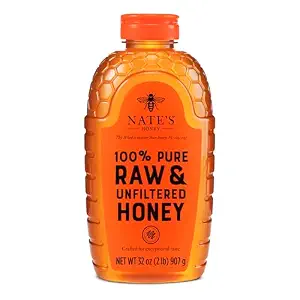
1. Nature Nate’s 100% Pure, Raw & Unfiltered Honey — 32 oz
A simple raw-honey option for readers who specifically want a pantry-style raw and unfiltered product. Current shopping data shows the 32-oz product around $14.47 at Walmart; Amazon pricing may differ
Best for: shoppers searching for an affordable raw honey.
2. Nature Nate’s Organic 100% Pure, Raw & Unfiltered Honey
An organic raw-honey option for readers who want organic labeling in addition to raw/unfiltered processing. Check the current Amazon size and seller because packaging can vary.
Best for: shoppers who prioritize organic raw honey.
3. Y.S. Eco Bee Farms Raw Honey — 22 oz
Y.S. Eco Bee Farms offers a raw, unfiltered honey option. Current shopping data shows a 22-oz listing around $17.86, though Amazon offers and sellers can change
Best for: readers looking for traditional raw honey.
4. Comvita UMF 10+ Raw Manuka Honey — 8.8 oz
A certified Manuka option for shoppers who want a clear UMF rating. Current shopping results identify UMF 10+ / MGO 263+ as the product specification
Best for: readers comparing certified Manuka honey.
5. Manukora Raw Manuka Honey
Manukora is a recognizable Manuka-focused brand. ConsumerLab’s current Manuka comparison includes Manukora products among the products evaluated in its 2025 testing set
Best for: readers specifically researching Manukora.
6. New York Biology Dead Sea Mud Mask with Manuka Honey
A formulated face mask rather than food-grade honey. It combines Dead Sea mud with Manuka honey and other skincare ingredients, making it a strong match for the “best honey skin care products” intent.
Best for: readers who want a ready-to-use honey facial mask.
7. COSRX Full Fit Propolis Synergy Toner
A lightweight skincare product featuring propolis and honey extract. The product listing describes 72.6% black bee propolis extract and 10% honey extract.
Best for: readers who prefer a honey-derived toner over raw honey.
8. TONYMOLY I’m Honey Sheet Mask
A convenient honey-themed sheet mask for readers who want a short-contact skincare product. Current shopping data lists the mask at about $3 from Macy’s; Amazon pricing can vary.
Best for: affordable, convenient honey-mask use.
9. Earth to Skin Manuka Honey Facial Serum
A lightweight Manuka honey serum containing honey and glycerin. Current shopping data lists it at $16.99 from Earth to Skin; Amazon availability and price may differ.
Best for: readers who want Manuka in a serum format.
10. Farmacy Honey Potion Plus Ceramide Hydration Mask
A formulated honey face mask that combines honey with ceramides, cica, and other ingredients designed around hydration and the moisture barrier. Current retail shopping data lists it around $45.
Best for: readers who want a premium formulated honey mask.
Product Comparison Table
Use this table near the product list for readers who want a quick comparison before clicking through to Amazon.
| Product | Format | Main Search Intent | Approx. Current Retail Price* | Amazon |
| Nature Nate’s Raw & Unfiltered 32 oz | Raw honey | Best raw honey for face | ~$14.47 | Check current price |
| Nature Nate’s Organic Raw Honey | Raw/organic honey | Organic raw honey | ~$17.98 | Check current price |
| Y.S. Eco Bee Farms Raw Honey 22 oz | Raw honey | Raw honey | ~$17.86 | Check current price |
| Comvita UMF 10+ | Manuka honey | Best Manuka honey for face | ~$32.51+ | Check current price |
| Manukora Raw Manuka | Manuka honey | Manuka comparison | Varies | Check current price |
| New York Biology Manuka Mud Mask | Face mask | Honey skincare products | Varies | Check current price |
| COSRX Propolis Synergy Toner | Toner | Honey/propolis skincare | ~$17–22 | Check current price |
| TONYMOLY I’m Honey | Sheet mask | Budget honey mask | ~$3 | Check current price |
| Earth to Skin Manuka Serum | Serum | Manuka skincare serum | ~$16.99 | Check current price |
| Farmacy Honey Potion Plus | Face mask | Premium honey skincare | ~$45 | Check current price |
*Retail prices are snapshots from current shopping data and are not guaranteed Amazon prices. Always use the live Amazon link to verify the current price, seller, size, and availability.
How to Use Honey on Your Face
- Start with clean, dry skin.
- Patch-test a new honey or honey-based product on a small area first.
- If using a formulated product, follow its directions rather than copying a DIY routine.
- If using food-grade honey cosmetically, use a small amount and avoid the eye area.
- Rinse thoroughly if the product is intended as a wash-off treatment.
- Follow with moisturizer if your skin needs additional hydration.
- Stop if you develop burning, swelling, itching, hives, or persistent redness.
How Often Should You Use Honey on Your Face?
There is no universal frequency that works for every person or every honey product. A sheet mask, serum, moisturizer, and food-grade honey are very different formats. Start with the manufacturer’s directions for formulated products. If you are experimenting with raw honey cosmetically, use it cautiously rather than assuming daily application is necessary.
The important thing is consistency and tolerance. If your skin becomes more irritated, more congested, or uncomfortable, stop using the product and reassess the rest of your routine.
Can Honey Help Acne?
This is one of the biggest reasons people search for the best Manuka honey for acne. Manuka honey has antimicrobial activity, but that does not mean it replaces acne medication. Healthline notes that evidence for many cosmetic uses of honey remains limited, while dermatology guidance emphasizes established acne care for persistent breakouts.
A reasonable way to frame honey is as a complementary skincare ingredient. If you have occasional blemishes and enjoy a honey-based product, it may fit into a gentle routine. If you have painful cysts, scarring, or persistent acne, a dermatologist can help you choose evidence-based treatment.
Can Honey Help Dry or Sensitive Skin?
Honey can support hydration because it is a humectant, and honey-based products may feel soothing. But sensitive skin is also the skin type most likely to punish a complicated DIY routine. Keep things simple, patch-test first, and avoid products containing ingredients you already know irritate you.
For dry skin, a formulated honey moisturizer or mask can be more practical than raw honey because it can combine honey with other moisturizing and barrier-supporting ingredients.
Honey for a Glow: What to Expect
Honey may make skin look temporarily more fresh or plump when it improves surface hydration. That is different from permanently changing pigmentation. Do not market honey as a proven dark-spot treatment unless you have specific evidence for the exact finished product and claim.
Common Buying Mistakes
Buying the highest MGO just because the number is bigger: Potency information can be useful, but higher does not automatically mean better for your particular cosmetic goal.
Confusing raw, Manuka, organic, and medical-grade: These terms describe different characteristics and should not be treated as interchangeable.
Buying an unrated Manuka jar from an unclear seller: For Manuka, reputable sourcing and verifiable grading matter.
Using pantry honey as a substitute for acne medication: Honey can be complementary; persistent acne needs appropriate treatment.
Ignoring the rest of a skincare formula: A product with honey plus ceramides, glycerin, panthenol, or other ingredients may behave very differently from pure honey.
Skipping a patch test: Natural ingredients can still cause irritation or allergy.
Copying DIY recipes with harsh extras: Avoid turning a simple honey article into a recipe collection with potentially irritating ingredients such as lemon juice or undiluted essential oils.
Frequently Asked Questions
What is the best raw honey for face?
Choose a pure, clearly labeled raw/unfiltered honey from a reputable seller if you specifically want raw honey. For routine facial skincare, a formulated honey product may be easier and more predictable.
Is Manuka honey better than raw honey for face?
They are not directly interchangeable terms. Raw describes processing, while Manuka describes a specific honey type. Your choice depends on whether you want simple raw honey or the characteristics and grading systems associated with Manuka.
What is the best Manuka honey for face?
Look for reputable sourcing and clear UMF or MGO information. Comvita is one example of a widely available graded Manuka product.
What is the best honey for skin?
There is no single honey that is right for every skin type. For hydration, honey-based masks, moisturizers, toners, and serums can be convenient. For readers who specifically want raw honey, choose a pure raw product.
What are the best honey skin care products?
The category includes masks, toners, serums, moisturizers, and balms. The best format depends on your routine and skin goal. Products such as COSRX Propolis Synergy Toner, TONYMOLY I’m Honey Mask, and Manuka honey serums provide alternatives to applying food-grade honey directly.
What is the best Manuka honey for acne?
Manuka has antimicrobial activity, but it should be considered complementary skincare rather than a replacement for proven acne treatment.
Can I put raw honey directly on my face?
Some people do, but dermatologist guidance reported by NBC News favors properly formulated skincare because food-grade honey is not standardized for facial use.
Can honey clog pores?
The full formulation matters more than simply seeing the word honey. If you are acne-prone, choose products designed for your skin type and stop if you notice congestion or irritation.
Is organic honey better for skin?
Organic certification does not automatically mean stronger skincare performance. Organic and raw describe different product characteristics.
How do I know if Manuka honey is genuine?
Look for reputable sourcing and recognizable UMF or MGO information. Be cautious with products that simply say “Manuka” without useful authenticity or grading information.
How often should I use honey on my face?
There is no one schedule for every product. Follow directions for formulated products and start cautiously with any DIY use.
Is Manuka honey safe for sensitive skin?
It may be tolerated by some people, but sensitive skin can react to many ingredients. Patch-test first and avoid honey or bee-derived ingredients if you know you are allergic.
Final Thoughts
The best raw honey for face is not automatically the most expensive honey or the highest-rated Manuka jar. The better question is what type of product fits your goal. A pure raw honey can appeal to shoppers who want a simple ingredient, while Manuka makes sense for readers who specifically want its distinctive composition and grading systems. Formulated honey skincare can be the most convenient route for people who want a predictable texture and an ingredient blend designed for the face.
If you are shopping, compare the full ingredient list, product format, size, seller, and current price rather than focusing on one marketing claim. And if you have persistent acne, severe irritation, or another ongoing skin problem, treat honey as a cosmetic ingredient—not a replacement for professional care.