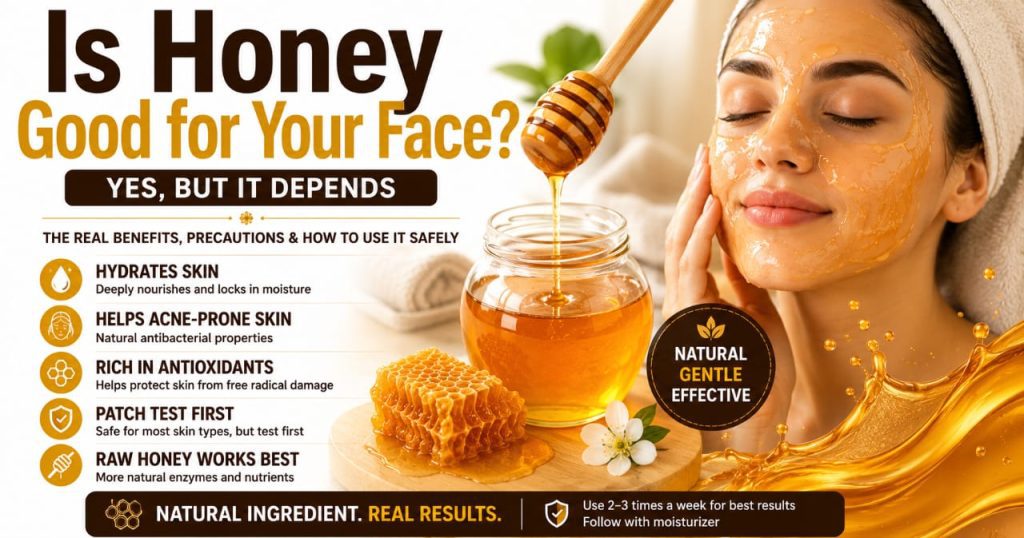
Is honey good for your face? Yes, for most people. Honey is generally good for your face because it naturally hydrates the skin, has antibacterial and anti-inflammatory properties, and may help support a healthy-looking complexion. However, the benefits depend on your skin type, the type of honey you use, and how you apply it. This guide explains everything you need to know.
Many beginners ask, is honey good for your face before trying DIY skincare. The answer depends on your skin type, but high-quality raw honey is usually the better choice than heavily processed honey.
Table of Contents
- Quick Answer
- What Honey Actually Does for Skin
- The Science, Explained Simply
- Benefits vs Limitations: A Balanced Look
- Is Honey Good for Your Skin Type?
- Raw vs Manuka vs Organic vs Processed Honey
- Who Should Be Cautious or Avoid Honey
- How to Use Honey on Your Face
- Common Mistakes
1 0. Frequently Asked Questions
1 1 . Final Thoughts
Quick Answer
Yes, honey is good for your face for most people, thanks to its natural humectant, antibacterial, and anti-inflammatory properties, which support hydration, calm
minor irritation, and may help with wound healing and mild acne support. It works especially well for dry, sensitive, or acne-prone skin, is generally fine for oily and combination skin in smaller amounts, and should be patch tested first by anyone with a known bee product allergy or very reactive skin.
Is honey good for your face? Yes, for most people it can be a helpful addition to a skincare routine. When used correctly, raw honey may support hydration, calm minor irritation, and leave skin looking healthier.
What Honey Actually Does for Skin
Honey brings a genuinely useful combination of properties to skincare, which is part of why it’s held up as a home remedy for centuries rather than fading out like most kitchen skincare trends:
It hydrates. Honey is a natural humectant, meaning it draws moisture into the skin rather than just sitting on the surface, which helps relieve dryness and gives skin a fuller, more hydrated look.
It has antibacterial properties. This is honey’s most well-researched skin benefit;
medical-grade honey has genuinely been used in wound care, including historically in field hospitals when other treatments weren’t available.
It’s anti-inflammatory. This contributes to honey’s calming effect on minor redness and irritation.
It contains antioxidants. These help protect skin cells from environmental stress, contributing to a healthier-looking complexion over time.
What honey does not reliably do is permanently lighten skin tone or dramatically fade deep, stubborn dark spots. Current research doesn’t support honey as a genuine skin-lightening treatment, despite this claim circulating widely online.
The Science, Explained Simply
Humectant action: Honey’s sugar content pulls water from the surrounding air (or from deeper skin layers) into the outer layer of skin, keeping it hydrated.
Antibacterial mechanism: Honey has a naturally low water activity and produces small amounts of hydrogen peroxide, both of which make it a difficult
environment for many bacteria to thrive in, which is part of why it’s historically been used on wounds and why it may offer mild support for acne-prone skin.
Anti-inflammatory effect: Compounds in honey, particularly raw and Manuka varieties, appear to help calm inflammatory responses in skin, contributing to its soothing reputation.
Antioxidant content: Honey contains various plant-derived compounds that help neutralize free radicals, which are a contributing factor in premature skin aging from environmental exposure.
None of these mechanisms involve altering melanin production, which is why honey supports skin health and appearance broadly rather than functioning as a targeted brightening or whitening treatment.
If someone asks, is honey good for your face, it is important to explain that honey supports healthy-looking skin but should not replace dermatologist-recommended treatments for serious skin conditions.
Benefits vs Limitations: A Balanced Look
Benefits:
Genuinely effective, well-documented hydration support
Real, historically-validated antibacterial and wound-healing properties
Calming effect on minor redness and irritation
Gentle enough for most skin types when used properly
Affordable and widely accessible
Limitations:
Not a proven treatment for significant acne, and shouldn’t replace a dedicated acne treatment if you need one
No reliable evidence supporting permanent skin lightening or dramatic dark spot removal
Can feel heavy on very oily skin if overused
Sticky texture and cleanup can be a genuine practical downside for some people
Allergy risk exists, particularly for anyone with a known bee product sensitivity
A useful way to think about it: honey is a solid, low-risk supporting player in a skincare routine, not a replacement for targeted treatments when you’re dealing
with a specific, more serious skin concern.
Many people ask, is honey good for your face if they have dry or sensitive skin. In most cases, the answer is yes, provided you patch test first and choose high-quality raw honey.
Another reason people search is honey good for your face is because honey contains natural antioxidants and antibacterial compounds that may help improve the overall appearance of the skin.
Is Honey Good for Your Skin Type?
Skin Type | Is HoneyGood? | Recommendation |
Dry skin | Yes, excellent | Honey’s humectant properties are especially valuable here; 1 5-20 minutes works well |
Oily skin | Yes, in moderation | A thin layer works better than a thick one, which can feel heavy |
| Combination skin | Yes | Standard application works well across most combination skin |
Sensitive skin | Yes, with caution | Patch test first; start with a shorter application time |
| Acne-proneskin | Yes, for many people | Useful supporting ingredient, but not a replacement for dedicated acne treatment |
Raw vs Manuka vs Organic vs Processed Honey
Raw honey is unfiltered and unprocessed, retaining more of its natural enzymes and beneficial compounds, making it generally the best all-around choice for skincare use.
Manuka honey comes from bees pollinating the Manuka bush and is particularly well-studied for its antimicrobial and anti-inflammatory properties, making it a strong choice for acne-prone or easily irritated skin specifically.
Organic honey is produced without certain pesticides, which is a reasonable consideration for some buyers, though it doesn’t necessarily offer stronger skincare benefits than standard raw honey.
Processed honey, the kind typically found in squeeze bottles, is often heated and filtered in ways that reduce its natural enzyme content, making it a less ideal, though still usable, choice compared to raw or Manuka varieties.
If you still wonder, is honey good for your face, remember that results depend on your skin type, the quality of the honey, and how often you use it.
After reading this guide, you should have a clear answer to is honey good for your face and know how to use honey safely, how often to apply it, and when to avoid it.
Who Should Be Cautious or Avoid Honey
Anyone with a known bee product allergy should avoid honey entirely, regardless of skin type or use case
Very reactive or eczema-prone skin should patch test carefully and consider starting with a shorter application time
 Skin with open wounds, active infections, or recent professional treatments
like chemical peels should generally wait until skin has settled before introducing honey
Anyone expecting honey to replace medical treatment for a diagnosed skin condition should talk to a dermatologist rather than relying on honey alone
How to Use Honey on Your Face
- Cleanse your face so honey makes direct contact with clean skin.
- Apply a thin, even layer with clean fingers, avoiding the eye area.
- Leave it on for the appropriate amount of time for your use case, generally 1 0-20 minutes for a standard mask.
- Rinse thoroughly with lukewarm water.
- Follow with your regular moisturizer.
For the complete step-by-step process, including routine order and morning versus night timing, see our full guide on how to apply honey on face. For
guidance on how often to use it, check out can I apply honey on my face every day, and for exact timing by use case, see how long should you leave honey on your face.
Dermatologists generally agree that is honey good for your face is a reasonable question because honey has several well-known skincare benefits, but it should not replace medical treatment for serious skin conditions.
Common Mistakes
Mixing in harsh ingredients like baking soda for extra exfoliation — this is a widely repeated tip, but it can be harsh enough to cause micro-tears in
sensitive facial skin; a gentler exfoliant is a safer choice if you want that effect
Using heavily processed, low-quality honey — this reduces the beneficial enzyme content that makes honey effective in the first place
Skipping the patch test — even though honey is generally low-risk, allergic reactions are still possible
Expecting it to whiten or dramatically lighten skin tone — this isn’t supported by current evidence and can lead to disappointment or overuse chasing a result that isn’t realistic
Leaving honey on the skin before bed without rinsing — dirt and lint can stick to it overnight, so it’s better rinsed off before sleep unless you’re specifically doing an intentional, occasional overnight treatment
Frequently Asked Questions
Is honey good for your face?
Yes, for most people. Its hydrating, antibacterial, and anti-inflammatory properties make it a genuinely useful, low-risk addition to a skincare routine.
Is honey good for all skin types?
Generally yes, though oily skin should use a thinner layer and sensitive skin should patch test first.
Can I use honey on my face every day?
Yes, for most people, though two to three times a week is a common, sustainable starting point. See our daily use guide for a full breakdown by skin type.
Does honey help acne?
It may offer some antibacterial and calming support, but evidence is mixed on how much it actually helps, and it shouldn’t replace a dedicated acne treatment if you need one.
Is honey good for wrinkles?
Its hydrating and antioxidant properties can support a plumper, more youthful-looking appearance, though it isn’t a substitute for evidence-based anti-aging treatments for deeper wrinkles.
Can honey clog pores?
Honey itself is not typically pore-clogging, though thorough rinsing after use matters.
Is raw honey better than regular honey for your face?
Yes, raw honey retains more of its natural beneficial enzymes compared to heavily processed, filtered honey.
Can I leave honey on my face overnight?
Occasionally, though it’s better as an occasional treatment than a nightly habit.
See our full timing guide for use-case specific recommendations.
Can honey brighten skin?
It can support a healthier, brighter-looking complexion through hydration, but it doesn’t permanently lighten natural skin tone.
Should I moisturize after using honey?
Yes, this helps lock in the hydration honey provides.
Scientific research shows that honey may help support healthy skin because of its natural antibacterial and moisturizing properties. However, it should not replace professional medical treatment for serious skin conditions. According to the American Academy of Dermatology (AAD), a consistent skincare routine is important for maintaining healthy skin. You
Final Thoughts
Is honey good for your face? For most people, yes, genuinely. It offers real hydration, antibacterial, and anti-inflammatory benefits that hold up to actual scrutiny, not just skincare folklore. The key is using it with realistic expectations, patch testing if you’re new to it or have reactive skin, and treating it as a supporting player in your routine rather than a miracle fix for serious skin concerns.
For more on how to use honey effectively, explore our full cluster of guides: how to apply honey on face, can I apply honey on my face every day , how long should y ou leave honey on your face, and how to use honey for skin whitening.
Disclaimer: This article is for general informational purposes. Individual skin reactions vary, and a patch test is recommended before trying any new ingredient. If you have a known honey or bee product allergy, or a diagnosed skin condition, consult a dermatologist before use.