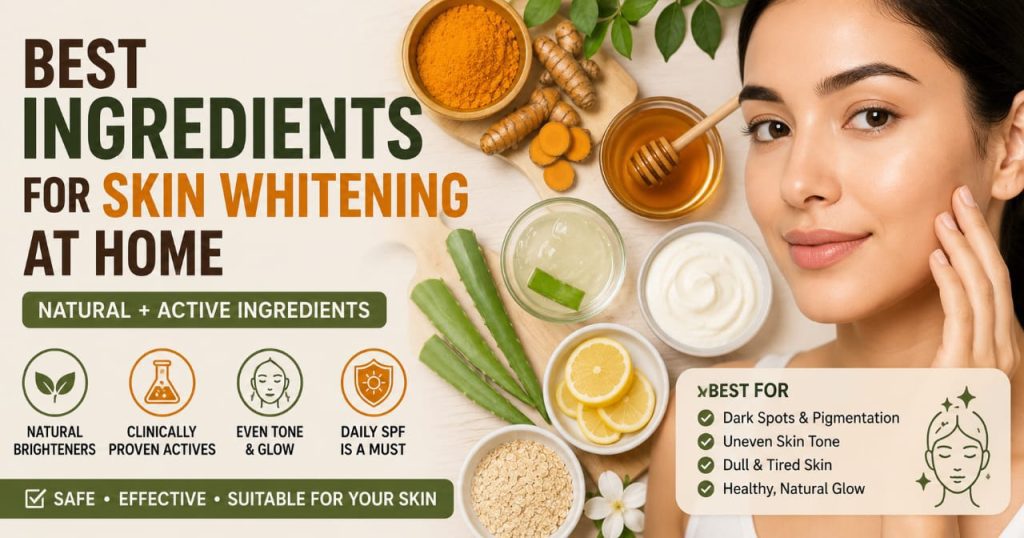
If you have been searching for the best ingredients for skin whitening at home, you have probably noticed that most articles either stick to old-fashioned kitchen remedies or jump straight into clinical ingredient names without explaining how any of it actually works, or which option is right for your specific skin.
This guide brings both worlds together. We will cover the natural, kitchen-cabinet ingredients people have used for generations, alongside the modern, research-backed actives dermatologists actually recommend, and we will be honest about what realistically works, what is mostly folklore, and what genuinely needs a doctor’s involvement rather than a DIY approach.
Table of Contents
- Quick Answer
- What Causes Uneven Skin Tone and Dark Spots?
- Natural vs Active Ingredients: What Is the Difference?
- Comparison Table: Best Ingredients by Type
- Top Natural Ingredients for Skin Brightening
- Top Active Ingredients for Skin Brightening
- Best Ingredient by Skin Type
- Best Ingredient by Skin Concern
- DIY Recipes Using Natural Ingredients
1 0. How Long Results Actually Take
1 1 . Common Mistakes to Avoid
1 2. Who Should Avoid Certain Ingredients
1 3. Frequently Asked Questions
1 4. Final Thoughts
Quick Answer
The best ingredients for skin whitening at home fall into two categories: natural options like aloe vera, turmeric, and yogurt, which offer mild brightening and are
gentle enough for daily use, and active ingredients like Vitamin C, Niacinamide, Alpha Arbutin, and Kojic Acid, which are more clinically studied and effective for stubborn hyperpigmentation. For most people, a combination approach, using a gentle natural remedy alongside one well-formulated active ingredient, produces the most noticeable and lasting results in improving overall skin tone.
Finding the best ingredients for skin whitening at home is not about changing your natural skin color. Instead, the goal is to reduce dullness, improve skin clarity, and achieve a healthier, more even-looking complexion through safe skincare practices.
What Causes Uneven Skin Tone and Dark Spots?
Uneven skin tone and dark spots are almost always related to melanin, the pigment your skin produces to protect itself from UV damage. When skin experiences sun exposure, inflammation, acne, or hormonal changes, an enzyme called tyrosinase becomes more active, triggering melanocytes to produce excess melanin in localized areas. This shows up as dark spots, post-acne marks, or general dullness and unevenness across the complexion.
Understanding this process matters because it explains why sun protection is non-negotiable in any skin brightening routine. Without daily SPF, active melanin production continues, and even the best brightening ingredients will struggle to keep up with new pigmentation forming faster than existing spots fade.
Anyone looking for the best ingredients for skin whitening at home should focus on ingredients that are supported by scientific research rather than viral social media trends. Safe, consistent skincare habits usually produce better long-term results.
Natural vs Active Ingredients: What Is the Difference?
Natural ingredients, like aloe vera, honey, and turmeric, generally work through mild antioxidant, anti-inflammatory, or gentle exfoliating effects. They are widely accessible, low-risk, and pleasant to use, but their brightening effects tend to be subtle and gradual.
Active ingredients, such as Vitamin C, Niacinamide, Alpha Arbutin, Kojic Acid, and Azelaic Acid, are individual compounds that have been studied for their specific effects on melanin production or exfoliation. They are typically more concentrated and consistent in their results, though they also require more careful introduction into a routine, since they can cause irritation if used incorrectly or combined poorly.
Neither category is inherently better. Natural ingredients are excellent for daily maintenance and general glow, while active ingredients are usually necessary for genuinely stubborn hyperpigmentation or post-inflammatory marks.
Comparison Table: Best Ingredients by Type
| Ingredient | Type | Best For | Skin Type Suitability |
| Aloe Vera | Natural | Soothing, mild brightening | All skin types |
| Turmeric | Natural | Dullness, uneven tone | Oily, combination |
| Honey | Natural | Hydration, mild antibacterial | All skin types |
Yogurt | Natural | Gentle exfoliation,brightening | Normal, dry |
| Licorice Root | Natural | Pigmentation, dark spots | All skin types |
| Vitamin C | Active | Antioxidant brightening | All skin types |
| Niacinamide | Active | Tone, texture, oil control | Oily, acne-prone |
| AlphaArbutin | Active | Targeted dark spot fading | All skin types |
| Kojic Acid | Active | Hyperpigmentation | Normal, oily |
Azelaic Acid | Active | Acne marks, redness | Acne-prone,sensitive |
Top Natural Ingredients for Skin Brightening
Aloe Vera
Aloe vera contains aloin, a compound with mild depigmenting properties, along with soothing and hydrating benefits. It works well for calming irritated skin while offering subtle brightening over time, making it one of the gentlest natural remedies for everyday use.
Turmeric
Turmeric’s active compound, curcumin, has anti-inflammatory and antioxidant properties that may help with dullness and mild unevenness. It is best used sparingly and briefly, since it can temporarily stain lighter skin tones if left on too long or used too frequently.
Honey
Honey’s humectant and mild antibacterial properties support hydration and can contribute to an overall brighter-looking complexion, particularly when combined with gentle exfoliating ingredients like yogurt or oatmeal.
Yogurt
Plain yogurt contains lactic acid, a gentle alpha hydroxy acid that provides mild exfoliation, helping to fade the look of dullness and support a more even skin tone over consistent use.
Licorice Root Extract
Licorice root contains glabridin, a compound studied for its ability to inhibit tyrosinase activity, making it a genuinely useful natural option specifically for pigmentation and dark spots.
Top Active Ingredients for Skin Brightening
Vitamin C
Vitamin C is one of the most researched brightening ingredients available, working as an antioxidant that helps fade the look of dark spots while also protecting skin from environmental damage. Most effective formulas use 1 0 to 20 percent L-ascorbic acid.
Niacinamide
Niacinamide helps regulate oil production while also reducing the appearance of dark spots and improving overall skin tone and texture. It is well tolerated by most skin types, including sensitive and acne-prone skin.
Alpha Arbutin
Alpha arbutin is a gentler, more stable derivative of hydroquinone that works by inhibiting tyrosinase activity, making it effective for targeted dark spot fading without the risks associated with stronger prescription options.
Kojic Acid
Kojic acid, derived from fungi during the fermentation process, is another tyrosinase inhibitor commonly used for hyperpigmentation. It can be slightly more irritating than alpha arbutin, so it is often introduced gradually.
Azelaic Acid
Azelaic acid is particularly useful for acne-related dark marks and redness, offering both mild exfoliation and anti-inflammatory benefits, making it a strong dual-purpose option for acne-prone skin dealing with post-inflammatory pigmentation.
A Note on Prescription-Strength Options
Ingredients like hydroquinone and prescription-strength retinoids are sometimes recommended by dermatologists for more severe or stubborn pigmentation.
These require medical supervision due to their potency and potential side effects, and are not something to self-prescribe or use without professional guidance.
Best Ingredient by Skin Type
Oily Skin: Niacinamide and turmeric-based masks work particularly well, since they help manage shine while addressing tone.
Dry Skin: Aloe vera, honey, and Vitamin C in a hydrating base formula help brighten without further dehydrating the skin.
Combination Skin: Alpha arbutin and licorice root are versatile enough to work across both oily and dry zones without causing imbalance.
Sensitive Skin: Azelaic acid and aloe vera tend to be the gentlest, well-tolerated options, while stronger acids like kojic acid should be introduced slowly, if at all.
Acne-Prone Skin: Azelaic acid and niacinamide address both active breakouts and the resulting dark marks simultaneously.
Best Ingredient by Skin Concern
Sun Damage and Tanning: Vitamin C paired with daily sunscreen is the most effective combination for addressing sun-induced pigmentation.
Post-Acne Marks: Azelaic acid and alpha arbutin are particularly well suited for fading post-inflammatory hyperpigmentation.
General Dullness: Yogurt, turmeric, and gentle exfoliation provide the most noticeable improvement for overall dull-looking skin.
Stubborn Dark Spots: Kojic acid and alpha arbutin, used consistently over several weeks, tend to show the most measurable fading.
DIY Recipes Using Natural Ingredients
Turmeric and Yogurt Mask: Mix a small pinch of turmeric with one tablespoon of plain yogurt. Apply for 1 0 minutes, then rinse thoroughly to avoid temporary staining.
Aloe Vera and Honey Mask: Combine one tablespoon of pure aloe vera gel with one tablespoon of raw honey for a soothing, hydrating brightening treatment.
Licorice and Rice Flour Mask: Mix licorice root powder with rice flour and enough water to form a paste for a gentle, exfoliating brightening mask.
How Long Results Actually Take
Natural ingredients typically show subtle improvements in overall glow and hydration within one to two weeks, though meaningful changes to dark spots or pigmentation usually require four to six weeks of consistent use. Active ingredients like Vitamin C, niacinamide, and alpha arbutin generally show visible fading of dark spots within six to twelve weeks, since melanin turnover in the skin is a gradual process that cannot realistically be rushed regardless of the ingredient used.
Before trying new remedies, remember that the best ingredients for skin whitening at home work best when paired with daily sunscreen and a gentle skincare routine. Without sun protection, dark spots can continue to develop despite using brightening ingredients
Common Mistakes to Avoid
Skipping sunscreen — active melanin production from sun exposure can outpace any brightening ingredient’s effects
Expecting overnight results — skin whitening ingredients work gradually as skin naturally turns over, not instantly
Overusing exfoliating natural ingredients like turmeric or lemon — excessive use can cause irritation or, in the case of turmeric, temporary staining
Combining too many active ingredients at once — layering multiple acids or actives simultaneously increases the risk of irritation
Choosing ingredients without matching skin type or concern — what works well for oily skin may not suit dry or sensitive skin the same way
Who Should Avoid Certain Ingredients
Those with a known sensitivity to specific botanicals should patch test any new natural ingredient, particularly turmeric and licorice, before full facial application. Pregnant or breastfeeding individuals should consult a doctor before using certain active ingredients, as some are not well studied for use during pregnancy. Anyone considering prescription-strength options like hydroquinone should only do so under the guidance of a dermatologist, given the more significant side effect profile associated with these stronger formulations.
Choosing the best ingredients for skin whitening at home depends on your skin type, the cause of pigmentation, and how consistently you follow your skincare routine. Patience is essential because brighter, more even-looking skin develops gradually.
Frequently Asked Questions
Which ingredient is best for skin whitening at home?
For most people, a combination of a natural ingredient like aloe vera or turmeric alongside an active ingredient like Vitamin C or niacinamide tends to produce the most noticeable and well-rounded results.
How can I brighten my skin naturally?
Consistent use of natural ingredients like yogurt, honey, and aloe vera, paired with daily sunscreen and gentle exfoliation, is the most sustainable natural approach to brightening skin over time.
Which natural ingredient removes dark spots?
Licorice root extract has the strongest research backing among natural ingredients specifically for fading dark spots, due to its tyrosinase-inhibiting properties.
Can I whiten my skin in 7 days?
No ingredient, natural or active, can meaningfully change skin tone in just seven days. Genuine improvements in pigmentation typically take four to twelve weeks of consistent use, depending on the ingredient and severity of the concern.
Is turmeric good for skin brightening?
Yes, turmeric’s anti-inflammatory properties can support a brighter, more even complexion, but it should be used briefly and in small amounts to avoid temporary skin staining.
Does aloe vera lighten skin?
Aloe vera offers mild, gentle brightening effects primarily through soothing inflammation and hydrating the skin, rather than dramatically lightening tone on its own.
Is honey good for glowing skin?
Yes, honey’s hydrating and mild antibacterial properties support an overall healthier, more radiant-looking complexion, particularly when paired with gentle exfoliating ingredients.
Which ingredient is best for pigmentation?
Alpha arbutin and kojic acid are among the most studied active ingredients specifically for pigmentation, while licorice root is the strongest natural option for the same concern.
The American Academy of Dermatology recommends protecting your skin from UV exposure because sunscreen plays a major role in preventing pigmentation and maintaining a more even skin tone.
Final Thoughts
Finding the best ingredients for skin whitening at home does not require choosing between old-fashioned natural remedies and modern active ingredients. The most effective, realistic approach usually combines both: gentle natural ingredients like aloe vera, turmeric, and honey for daily maintenance and glow, alongside a well-researched active ingredient like Vitamin C, niacinamide, or alpha arbutin for more targeted, measurable results on dark spots and uneven tone.
Many people searching for the best ingredients for skin whitening at home want natural solutions that are both safe and effective. While kitchen ingredients can improve overall skin brightness, combining them with research-backed skincare actives often delivers more consistent results.
Whatever combination you choose, consistency and daily sun protection remain the two factors that matter most, since even the best ingredient cannot outpace ongoing sun-induced pigmentation.
For more on building out your skincare routine, check out our guides on top vitamin c serum for glowing skin and best moisturizer for dry skin.
Disclaimer: This article is for general informational purposes and is not a substitute for professional dermatological advice. Individuals with skin conditions, pregnant or breastfeeding individuals, or those considering prescription-strength ingredients should consult a dermatologist before starting any new skincare routine.