This post may contain affiliate links. If you purchase through a link on this page, we may earn a small commission at no extra cost to you.
Finding the best sunscreen for oily skin should not mean choosing between reliable UV protection and a face that looks shiny by lunchtime. The most useful formulas for oily skin tend to be lightweight and cosmetically comfortable, with finishes that do not add unnecessary grease. For acne-prone skin, non-comedogenic labeling can also be a useful filter when comparing products.
For this 2026 update, the product list was rebuilt around the questions visible in the current search results: Which sunscreen controls shine? Which works for oily and acne-prone skin? Which one is good under makeup? What about mineral sunscreen? Which drugstore option is practical? And which Korean sunscreen belongs in the conversation? Product details were checked against current brand/product information and current U.S. editorial coverage. Individual skin reactions still vary, so the guide describes formulation features rather than promising identical results for everyone.
Quick Answer: Which Sunscreen Type Fits Oily Skin?
| Your main concern | Look for |
| Very oily / shiny by midday | Oil-control or matte fluid/gel; ingredients such as silica can help create a less shiny finish. |
| Oily + acne-prone | Lightweight, non-comedogenic, non-acnegenic or oil-free labeling where available. |
| Sensitive oily skin | Mineral SPF can be worth considering, especially if chemical formulas sting; check the complete formula for personal triggers. |
| Under makeup | Fast-absorbing, primer-like or low-pilling textures. |
| Dark or deep skin tones | Transparent chemical formulas or well-matched tinted mineral formulas can reduce the chance of a visible white/gray cast. |
| Hot and humid weather | Water-resistant sunscreen when sweating/swimming; reapply as directed. |
| Budget shopping | Drugstore formulas such as Neutrogena Clear Face or La Roche-Posay Clear Skin. |
Comparison Table: 10 Real Sunscreens for Oily Skin
| Product | Best for | SPF | Finish | Filter type | Oil/shine focus | Water resistance |
| EltaMD UV Clear Blemish-Prone & Oil Balancing | Oily + acne-prone | 50 | Natural | Hybrid | Oil-balancing | Check label |
| La Roche-Posay Anthelios Clear Skin Dry Touch | Oily/acne-prone + drugstore | 60 | Dry touch | Chemical | Absorbs excess oil | Check label |
| Eucerin Sun Oil Control Face | Very oily / shine | 50 | Matte | Chemical | Oil-control / anti-shine | Check label |
| Shiseido Urban Environment Oil-Control | Daily oil control + makeup | 40 | Soft matte | Hybrid | Oil-control + silica | 40 min |
| Supergoop! Mineral Mattescreen | Mineral + matte | 40 | Soft-focus matte | Mineral | Controls shine | Check label |
| Supergoop! Unseen Sunscreen | Invisible under makeup | 50 | Invisible/primer | Chemical | Weightless feel | Check label |
| Neutrogena Clear Face | Budget oily/acne-prone | 50 | Matte | Chemical | Oil-free / non-comedogenic | Water-resistant |
| Colorescience Sunforgettable Face Shield Matte | Oily/blemish-prone mineral | 50 | Matte | Mineral | Oil-control | 40 min |
| ISDIN Eryfotona Ageless Tinted | Tinted mineral | 50 | Natural | Mineral | Ultralight; non-comedogenic | Water-resistant |
| Dr.Jart+ Every Sun Day Mineral Korean | Korean + matte mineral | 50+ | Matte | Mineral | Shine-free finish | Check label |
Important: water-resistance duration and active-filter details can change with product reformulation and market labeling. Use the current package/official product page when making a final purchase decision.
How We Chose These 10 Sunscreens
The old version of this article used generic placeholders such as “Matte Oil-Control Fluid” rather than identifiable products. This update fixes that problem.
- Current product identity and current U.S. availability were prioritized over generic formula descriptions.
- The list covers multiple search intents visible in the supplied SERP: very oily skin, acne-prone skin, sensitive skin, matte finish, drugstore shopping, under-makeup wear, mineral sunscreen and Korean sunscreen.
- Product descriptions rely on published brand/product information and current editorial coverage rather than invented personal testing claims.
- Where a brand reports a clinical or consumer-test result, the result is described as a brand-reported finding rather than an independent guarantee.
- No fixed Amazon price is promised because marketplace prices and availability can change.
- Amazon buttons use searchable product links so the publisher can replace them with the exact Amazon Associates SiteStripe link for the chosen variant before publishing.
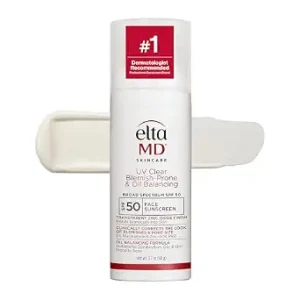
1. EltaMD UV Clear Blemish-Prone & Oil Balancing SPF 50
Best for oily, acne-prone skin
Why it stands out: This is one of the strongest topical matches for the acne-prone query because the current formula is specifically designed and tested for acne-prone skin. EltaMD says the formula is lightweight, non-comedogenic and non-acnegenic, with 5% niacinamide and Zinc-AOX Pro Technology.
Key specs: Broad-spectrum SPF 50 • Hybrid sunscreen • Lightweight natural finish • 1.7 oz
Pros: Designed specifically for acne-prone skin; non-comedogenic/non-acnegenic labeling; lightweight texture; 5% niacinamide.
Cons: Natural rather than ultra-matte finish; premium price point
Best for: Oily skin that also deals with blemishes or visible pores.
Not ideal for: Anyone who wants a strongly powder-matte look.
2. La Roche-Posay Anthelios Clear Skin Dry Touch Face Sunscreen SPF 60
Best drugstore-style pick for oily skin
Why it stands out: Its dry-touch positioning makes it directly relevant to the search intent around shine and oily skin. Current retailer descriptions identify it as oil-free and made for oily and acne-prone skin, with SPF 60.
Key specs: Broad-spectrum SPF 60 • Dry-touch finish • Oil-free • Face sunscreen
Pros: Strong SPF level; dry-touch texture; designed for oily/acne-prone skin; widely available in U.S. retail.
Cons: The finish may feel less silky than primer-style sunscreens for some users.
Best for: Oily or acne-prone shoppers who want a mainstream pharmacy/beauty-retail option.
Not ideal for: Very sensitive users who already know they react to particular chemical filters.
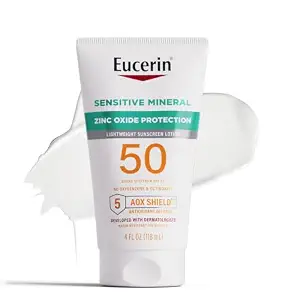
3. Eucerin Sun Oil Control SPF 50 Face Sunscreen
Best for strong oil-control positioning
Why it stands out: Eucerin’s Oil Control facial sunscreen is specifically positioned around anti-shine performance and a matte finish, making it a natural fit for readers whose main complaint is midday greasiness.
Key specs: SPF 50 • Face gel-cream/lotion format • Matte/anti-shine positioning
Pros: Clear oil-control positioning; lightweight face format; useful for very shiny skin.
Cons: Finish preferences vary, and availability/packaging can differ by U.S. seller
Best for: Very oily skin where shine control is the first priority.
Not ideal for: Readers who prefer a dewy, moisturizing finish.
4. Shiseido Urban Environment Oil-Control Sunscreen SPF 40
Best for oil control + makeup
Why it stands out: Shiseido’s current U.S. formula is explicitly described as a lightweight daily oil-control sunscreen that mattifies skin and doubles as a face primer. The brand reports that 86% of 103 women said it controlled excess sebum after four hours in a consumer test.
Key specs: Broad-spectrum SPF 40 • Lightweight lotion • Soft matte • Water-resistant 40 minutes • Non-comedogenic
Pros: Oil-control positioning; primer function; non-comedogenic; silica in the formula; 40-minute water resistance.
Cons: SPF 40 is lower than several SPF 50/60 options in this guide; fragranced formula may not suit everyone
Best for: Oily skin that wants a polished base under makeup.
Not ideal for: Fragrance-sensitive users or shoppers who specifically want SPF 50+.
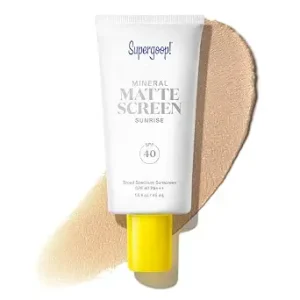
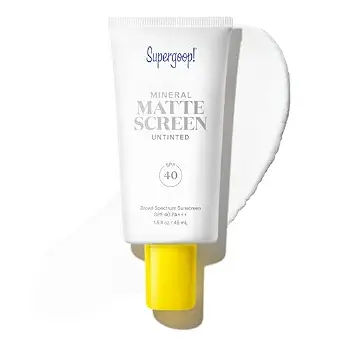
5. Supergoop! Mineral Mattescreen SPF 40
Best mineral matte option
Why it stands out: This mineral formula is designed as a sunscreen and makeup primer with a soft-focus matte finish. Its current product information highlights an oil-free formula, shine control and broad-spectrum protection.
Key specs: Broad-spectrum SPF 40 • Mineral • Soft-focus matte • Primer texture
Pros: Matte finish; oil-free positioning; zinc oxide/titanium dioxide; useful under makeup.
Cons: Mineral formulas can show more texture or cast depending on skin tone and application.
Best for: Oily skin that prefers mineral filters and a primer-like finish
Not ideal for: Anyone who wants a completely invisible liquid texture.
6. Supergoop! Unseen Sunscreen SPF 50
Best invisible primer-style formula
Why it stands out: For readers who hate sunscreen texture more than shine itself, Unseen Sunscreen is relevant because the current product is marketed as invisible, weightless and primer-like. It is especially useful for makeup users who do not want a visible white cast.
Key specs: Broad-spectrum SPF 50 • Invisible gel/primer texture • Scentless
Pros: Invisible finish; weightless feel; doubles as makeup primer; works across skin tones.
Cons: It is not the most aggressively mattifying option in this list.
Best for: Oily combination skin that needs an invisible, makeup-friendly sunscreen.
Not ideal for: Very oily users whose only goal is maximum oil absorption.
7. Neutrogena Clear Face Sunscreen SPF 50
Best budget-friendly oily/acne-prone option
Why it stands out: This is the practical drugstore entry for the article. Current product listings describe it as a broad-spectrum SPF 50 facial sunscreen designed for oily and acne-prone skin, with an oil-free/non-comedogenic positioning.
Key specs: Broad-spectrum SPF 50 • Oil-free • Non-comedogenic • Matte finish • Water-resistant
Pros: Affordable; easy to find; designed for oily/acne-prone skin; makeup-friendly for many users.
Cons: Some users may prefer a more elegant premium texture.
Best for: Budget-conscious shoppers who want a familiar facial SPF.
Not ideal for: Readers looking for a luxury primer texture.
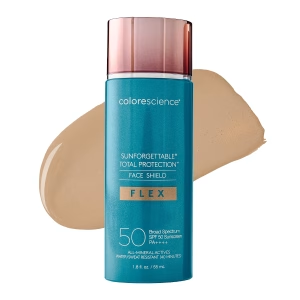
8. Colorescience Sunforgettable Total Protection Face Shield Matte SPF 50
Best mineral matte choice for shine
Why it stands out: This mineral facial sunscreen is specifically positioned around a lightweight matte finish and oil control. Current product information describes it as oil-free, non-comedogenic and suitable for oily, combination or blemish-prone skin.
Key specs: Broad-spectrum SPF 50 • Mineral • Matte • Oil-free • Non-comedogenic • Water/sweat resistant 40 minutes
Pros: Strong matte positioning; oil-free; mineral; non-comedogenic; useful for oily/blemish-prone skin.
Cons: Premium price; tint/finish may require blending to suit individual skin tones.
Best for: Oily or blemish-prone skin that wants mineral protection with a matte finish.
Not ideal for: Shoppers who want a completely clear, invisible sunscreen.
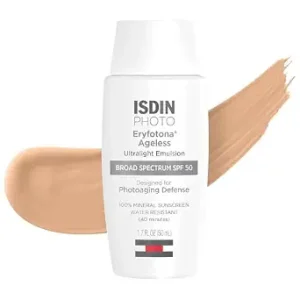
9. ISDIN Eryfotona Ageless Tinted Mineral SPF 50
Best tinted mineral option
Why it stands out: ISDIN describes Eryfotona Ageless as an ultralight, fast-absorbing, 100% mineral tinted SPF 50. The current U.S. page says it is non-comedogenic and reports that 93% of users in a 12-week brand study said it did not leave skin oily.
Key specs: Broad-spectrum SPF 50 • 100% mineral • Tinted • 10.7% zinc oxide • Non-comedogenic
Pros: Ultralight mineral texture; tint can help reduce the visible cast; non-comedogenic; useful for tone-unifying coverage.
Cons: Premium price; universal tint will not match every complexion equally.
Best for: Oily skin that wants mineral SPF plus a tinted finish.
Not ideal for: Anyone who needs an exact foundation-like shade match.
10. Dr.Jart+ Every Sun Day Mineral Korean Sunscreen SPF 50+ for Face
Best Korean mineral option
Why it stands out: This directly addresses the Korean-sunscreen search intent visible in the supplied SERP and current U.S. search coverage. Dr.Jart+ describes the formula as a lightweight, shine-free, matte mineral sunscreen with zinc oxide and titanium dioxide, and specifically lists oily or combination skin as a use case.
Key specs: SPF 50+ • Mineral • Matte • Zinc oxide + titanium dioxide • Korean sunscreen
Pros: Korean option with a matte, shine-free finish; mineral filters; positioned for oily/combination skin.
Cons: Mineral texture and fragrance may not suit every sensitive user; check the current ingredient list.
Best for: Oily or combination skin looking specifically for a Korean mineral sunscreen.
Not ideal for: Anyone who wants a fragrance-free formula or completely invisible chemical SPF.
Best Sunscreen for Oily Skin by Specific Concern
Very oily skin / midday shine: Start with formulas explicitly built around oil control or matte finishes. Eucerin Oil Control, Shiseido Urban Environment Oil-Control, Colorescience Face Shield Matte and Supergoop Mineral Mattescreen are the most directly positioned around shine control.
Oily + acne-prone skin: Look for non-comedogenic or non-acnegenic labeling and lightweight textures. EltaMD UV Clear Blemish-Prone & Oil Balancing and La Roche-Posay Clear Skin are particularly aligned with this intent.
Sensitive oily skin: Mineral formulas can be a useful category to explore because zinc oxide/titanium dioxide formulas may be better tolerated by some sensitive users. Patch-test and consider your full ingredient history.
Dark or deep skin tones: A transparent chemical formula or a well-matched tinted mineral formula can help avoid a visible white or gray cast. Shade/tint performance is personal, so check user photos where available.
Under makeup: Primer-like textures can make layering easier. Shiseido Urban Environment Oil-Control and Supergoop Unseen are designed around makeup compatibility; Supergoop Mineral Mattescreen is explicitly a primer-style mineral option.
Drugstore / budget: Neutrogena Clear Face is the clearest budget-focused option in this list, while La Roche-Posay Clear Skin offers another widely available retail choice.
Korean sunscreen: Dr.Jart+ Every Sun Day Mineral SPF 50+ directly covers the Korean + oily/combination + matte intent. Round Lab and other Korean SPFs can be considered separately when a more hydrating finish is preferred.
Mineral vs. Chemical Sunscreen for Oily Skin
There is no universal rule that oily skin must use mineral sunscreen or chemical sunscreen. The more useful approach is to compare finish, texture, sensitivity, white-cast risk and whether the formula is comfortable enough for daily use.
- Mineral sunscreens use zinc oxide and/or titanium dioxide. They can be a useful category for sensitive or reactive users, but some formulas can be more noticeable on the skin.
- Chemical filters are often easier to spread and can be more cosmetically invisible, which can be helpful for deeper skin tones or anyone who dislikes visible residue.
- Hybrid formulas combine mineral and chemical filters. EltaMD UV Clear Blemish-Prone & Oil Balancing SPF 50 is an example in this guide.
- For oily skin, the finish can matter as much as the filter category. A well-formulated mineral SPF can be matte; a chemical SPF can still feel greasy if the base is heavy.
The current NBC Select guidance similarly emphasizes that neither mineral nor chemical sunscreen is automatically better; formulation and personal preference matter. That makes the most useful comparison for oily skin a texture-and-wear comparison rather than a simple mineral-versus-chemical winner.
SPF 30 vs. SPF 50: What Matters for Oily Skin?
Oily skin does not require a different SPF number from other skin types. The American Academy of Dermatology recommends a sunscreen with SPF 30 or higher, broad-spectrum protection and water resistance. For a shopping guide, SPF 50 can be a practical target because it provides a higher labeled UVB protection factor while still allowing you to choose a lightweight formula.
- Choose broad-spectrum protection so the product covers both UVA and UVB radiation.
- Choose water resistance when you will sweat, swim or spend extended time outdoors.
- Apply enough sunscreen. A high SPF does not compensate for applying too little.
- Reapply according to the product label and exposure conditions, especially after swimming or heavy sweating.
- For oily skin, do not choose SPF by number alone; texture and wearability strongly affect whether you will apply the product consistently.
How to Apply Sunscreen on Oily Skin Without Making It Greasy
- Start with clean, dry skin and let heavier skincare layers settle before sunscreen.
- Use the amount recommended on the product label; for face application, a common practical guide is approximately two finger-lengths, but package directions take priority.
- Spread the sunscreen evenly over the face, ears, neck and other exposed areas.
- Give it time to set before applying makeup, especially when using a primer-style or silicone-rich formula.
- If you are very oily, keep the rest of the morning routine lightweight rather than skipping sunscreen.
- For outdoor exposure, reapply according to the sunscreen directions and after swimming or heavy sweating.
How to Reapply Sunscreen Without Looking Greasy
- Blot excess oil gently before reapplication rather than layering sunscreen over a thick layer of sebum.
- If using makeup, a stick or powder can be convenient for touch-ups, but do not assume a quick swipe provides the same coverage as a full application of liquid sunscreen.
- For prolonged outdoor exposure, prioritize adequate sunscreen coverage over cosmetic perfection.
- If a sunscreen repeatedly pills during reapplication, simplify the skincare layers underneath and allow each layer more time to set.
Common Sunscreen Mistakes on Oily Skin
- Applying too little sunscreen because you are trying to avoid shine.
- Choosing a product solely because it has SPF 50 or SPF 60 while ignoring finish and texture.
- Assuming non-comedogenic means a product can never cause an individual breakout.
- Treating powder or stick SPF as a substitute for a sufficiently generous first sunscreen application.
- Skipping reapplication during extended outdoor exposure.
- Layering too many silicone-rich or heavy skincare products under sunscreen and then blaming the sunscreen for pilling.
- Ignoring the neck, ears and hairline.
Frequently Asked Questions
What is the best sunscreen for oily skin?
There is no single formula that performs identically for everyone. For oily skin, prioritize broad-spectrum SPF 30+, a lightweight texture, and a finish you will comfortably wear. Oil-control or matte formulas are especially relevant if shine is your main concern.
What sunscreen is best for oily, acne-prone skin?
Look for lightweight, non-comedogenic or non-acnegenic formulas. EltaMD UV Clear Blemish-Prone & Oil Balancing SPF 50 and La Roche-Posay Anthelios Clear Skin are examples in this guide that are specifically positioned for acne-prone/oily skin.
Which sunscreen is best for oily skin: mineral or chemical?
Neither category is universally better. Chemical formulas often spread invisibly, while mineral formulas can be useful for people who prefer zinc oxide/titanium dioxide. Finish, sensitivity and white-cast risk are often more useful decision factors.
What is the best matte sunscreen for oily skin?
Look for a product explicitly described as matte, oil-control or dry-touch. Eucerin Oil Control, Shiseido Urban Environment Oil-Control, Supergoop Mineral Mattescreen and Colorescience Face Shield Matte are examples of products positioned around this need.
What is the best drugstore sunscreen for oily skin?
Neutrogena Clear Face SPF 50 is a strong budget-oriented option in this guide because its current product positioning is specifically aimed at oily/acne-prone facial skin. La Roche-Posay Anthelios Clear Skin is another widely available option.
Can oily skin use mineral sunscreen?
Yes. Oily skin can use mineral sunscreen. The key is choosing a formula whose finish and texture work for you. Mineral formulas can range from matte to creamy, and tint can change how visible the product looks.
What sunscreen is good under makeup for oily skin?
Primer-like, fast-setting textures are usually easier to layer. Shiseido Urban Environment Oil-Control, Supergoop Unseen and Supergoop Mineral Mattescreen are useful categories to compare.
How do I stop sunscreen from making my face greasy?
Choose a formula made for oily skin, keep the rest of your morning routine lightweight, apply an adequate but even layer, let it set before makeup, and blot excess oil before reapplying outdoors.
Which sunscreen is best for dark skin without a white cast?
Transparent chemical formulas and well-matched tinted mineral formulas generally reduce visible cast. No tint is universal, so checking the product in natural light is useful.
Is SPF 50 better than SPF 30 for oily skin?
Oily skin does not change the SPF requirement. SPF 30 or higher is the AAD’s general recommendation. SPF 50 can be a practical choice, but correct application, broad-spectrum coverage and reapplication remain important.
How often should I reapply sunscreen?
Follow the product label and reapply after swimming or heavy sweating. During sustained outdoor exposure, the commonly cited interval is about every two hours, but label directions and activity conditions should guide use.
Is sunscreen necessary on cloudy days?
UV exposure can still occur when it is cloudy, so daily broad-spectrum sunscreen is generally recommended when skin is exposed to daylight.
Suggested Internal Links for ZaisufBeauty
Use natural anchor text and link only where the destination genuinely helps the reader:
Amazon Affiliate Publishing Note
The “Check Price on Amazon” buttons in this draft are clickable Amazon.com product-search links. Because Amazon listings, variants and ASINs can change, the safest publishing workflow is to open each button, select the exact current product/size you want to recommend, and then generate your Amazon Associates SiteStripe link for that exact listing. Do not publish a made-up ASIN or a fixed price. Keep “Check Price on Amazon” as the call-to-action so the page remains accurate when marketplace pricing changes.
Place the product image directly above the ALT text and Image Title fields in WordPress. Use the supplied ALT text as descriptive accessibility text, not as a place to stuff repeated keywords.
Conclusion
The best sunscreen for oily skin is the one that gives reliable broad-spectrum protection in a texture you can apply generously and keep wearing. For very shiny skin, prioritize oil-control or matte finishes. For acne-prone skin, look for non-comedogenic or non-acnegenic labeling. For sensitive skin, compare mineral and chemical formulas based on your own tolerance. For makeup, prioritize fast-setting, primer-compatible textures. And for deeper skin tones, pay close attention to transparency or tint.
This page has been restructured around the current U.S. search intent shown in the supplied screenshots and 2026 competitor coverage. It is designed to compete for the core keyword and related long-tail searches, but no SEO position or traffic result can be guaranteed.