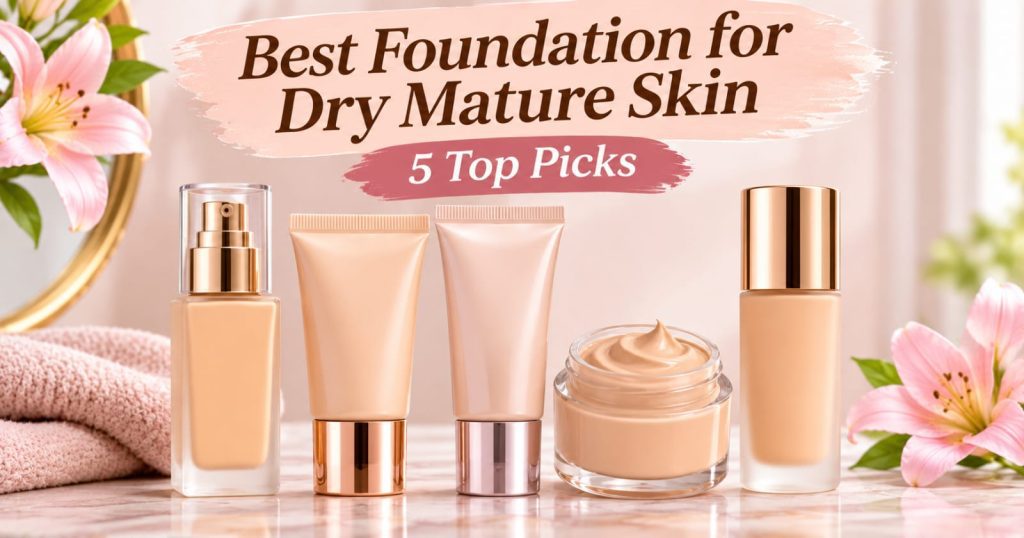
If your foundation clings to dry patches, settles into fine lines, or looks flat by lunchtime, you’re not imagining it. Skin tends to hold less moisture over time, and the wrong formula can make that more obvious instead of less. Finding the best foundation for dry mature skin usually comes down to texture, finish, and how thin you can wear it.
Here’s the short answer. Dry, mature skin generally looks better in a hydrating, flexible, lightweight foundation with a natural or radiant finish, applied in thin layers. Heavy, flat matte formulas tend to emphasize dryness and lines.
This guide compares five options at different prices, explains what to look for, and walks you through prep, application, and troubleshooting.
Best Foundation for Dry Mature Skin at a Glance
Here’s a quick comparison. Prices are the listed prices I found on brand pages while researching, and they change often, so check the current price before you buy.
| Product | Coverage | Finish | SPF | Listed price |
| L’Oréal Paris Age Perfect Radiant Serum Foundation | Light to medium | Natural, radiant | 50 | $18.99 |
| bareMinerals Complexion Rescue Tinted Moisturizer | Sheer to light, buildable | Dewy | 30 | $31.60 (regular$39.50) |
| IT Cosmetics CC+ Nude Glow Lightweight Foundation | Medium | Healthy glow | 40 | $39 |
| Jones Road What the Foundation | Light to medium, buildable | Natural, glowing | Not listed | $46 |
| Shiseido Revitalessence Skin Glow Foundation | Medium, buildable | Glowing | 30 | $60 |
A quick honesty note. I’m sharing what the brands publish, along with general guidance on how these formulas behave. I haven’t tested them myself, so I won’t claim before-and-after results. Your skin may react differently.
How I Chose the Best Foundation for Dry Mature Skin
I didn’t want five nearly identical products. So I looked for a spread of prices, formats, and coverage levels, and I only included foundations with published details I could verify.
Each pick needed to meet most of these points:
- Hydrating ingredients or a hydrating, skin-like format
- A natural, glowing, or satin finish rather than a flat matte one
- A coverage level that can be built up gradually
- Clearly listed price and shade information
- Availability from major US retailers, including Amazon
I also looked for drawbacks. Every foundation has trade-offs, and it’s more useful to know who might want to skip a product than to pretend one formula works for everyone.
5 Foundations for Dry Mature Skin Reviewed
Each one is a different take on the best foundation for dry mature skin, depending on your budget and how much coverage you want.
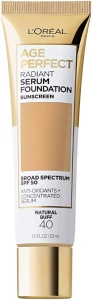
- L’Oréal Paris Age Perfect Radiant Serum Foundation: Best Drugstore Pick This is the most affordable option here at $18.99. L’Oréal markets it for mature skin, and the page describes a lightweight formula with a natural, radiant finish that evens tone. It includes SPF 50
and comes in 30 shades.
The ingredient list includes glycerin, hyaluronic acid (sodium hyaluronate), niacinamide, vitamin E, and aloe leaf juice powder. The brand says it doesn’t settle into lines, and reviewers on the page mention dry, mature, and sensitive skin.
**Who may like it:**
- Shoppers on a budget
- People who want a lightweight, glowy base for everyday wear
- Anyone who wants SPF built into their makeup
**Things to consider:**
- Coverage is light to medium, so it won’t hide dark spots or redness completely
- Some reviewers say the lightest shades look too dark or yellow for very fair, cool skin
- Foundation SPF shouldn’t replace your regular sunscreen
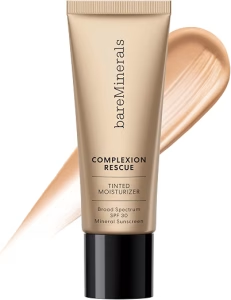
- bareMinerals Complexion Rescue Tinted Moisturizer: Best for Extremely Dry Skin
Complexion Rescue is more of a skin tint than a traditional foundation, which is exactly why many people with dry, mature skin like it. The coverage is sheer to light and buildable, and the finish is dewy. It contains hyaluronic acid and squalane, plus a mineral SPF 30.
The brand lists it as marketed for dry and combination skin, dermatologist-tested,
non-comedogenic, and made without synthetic fragrance, parabens, and talc. It comes in 20 shades and was listed at $31.60, down from $39.50.
**Who may like it:**
- People with very dry or flaky-feeling skin who want a comfortable base
- Those who prefer a natural “skin but better” look
- Anyone who wants to skip heavy coverage
**Things to consider:**
- Coverage is sheer to light, so pair it with a concealer for dark spots or redness
- A dewy finish can look shiny on oilier areas
- The shade range is smaller than some of the others, and some shades showed as sold out on the page I checked
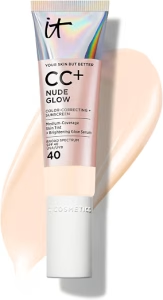
- IT Cosmetics CC+ Nude Glow Lightweight Foundation: Best With Skincare Ingredients
This one is positioned as a foundation plus glow serum. It offers medium coverage with a healthy-glow finish and SPF 40 that the brand says doesn’t leave a white cast. It’s listed at $39.
The formula includes niacinamide at 2%, hyaluronic acid, and green tea extract, and the brand describes it as a “90% skincare formula.” Keep in mind that those skin-benefit claims come from
the brand’s own testing.
**Who may like it:**
- People who want a bit more coverage than a tint
- Those who like skincare-style ingredients in their makeup
- Anyone who wants a higher SPF in their foundation
**Things to consider:**
- The ingredient list includes fragrance, along with limonene, linalool, and citral, which may bother fragrance-sensitive skin
- I couldn’t confirm the shade count or size on the page I checked
- Medium coverage may not be enough if you want to hide strong discoloration
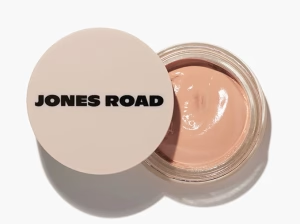
- Jones Road What the Foundation: Best for a Natural, Skin-Like Look
Jones Road’s What the Foundation is a tinted moisture balm. It’s light to medium and buildable, and the brand says it has a natural, glowing finish that won’t dry down or emphasize lines. It’s listed at $46 for 1.14 oz.
The formula includes hyaluronic acid, vitamin E, and oils such as jojoba and olive, and it’s labeled non-comedogenic. The brand sells a separate face pencil for extra coverage on redness or blemishes.
**Who may like it:**
- People who want a “no-makeup makeup” look
- Those who like a balm-style texture
- Anyone who enjoys a simple routine
**Things to consider:**
- The ingredient list includes several fragrance-related components, so check it if you’re fragrance-sensitive
- It’s a balm, so it takes a little practice to blend evenly
- The page lists 16 shades, but I could only see 12 shade names in the selector, so confirm the range before buying
- No SPF was listed
- Shiseido Revitalessence Skin Glow Foundation: Best Splurge
Shiseido’s Skin Glow is the priciest pick at $60, but it also offers a more polished feel. The brand describes it as medium, buildable coverage with a glowing finish and broad-spectrum SPF 30. It comes in 30 shades, grouped from fair to deep.
It includes niacinamide and a rice-derived prebiotic, and it’s listed as fragrance-free, paraben-free, dermatologist-tested, and non-comedogenic. The brand claims 12-hour wear and 24-hour hydration, though those are brand claims.
**Who may like it:**
- People who want medium coverage with a luminous finish
- Those who prefer fragrance-free formulas
- Shoppers who like a premium feel
**Things to consider:**
- It’s the most expensive option here
- Coverage is medium, so pair it with concealer if you want to hide dark spots
- I couldn’t confirm the size on the page I checked
What Makes the Best Foundation for Dry Mature Skin?
It’s easy to assume that “mature” just means “needs more coverage.” In reality, the formula matters more than the coverage level.
Look for these characteristics:
- **Hydrating ingredients:** Glycerin, hyaluronic acid, squalane, and ceramides are common in formulas made for dry skin
- **Flexible, lightweight texture:** A formula that moves with your face is less likely to crease
- **A natural, radiant, or satin finish:** Flat matte tends to emphasize dryness and lines
- **Buildable coverage:** It’s easier to add more than to take it away
Here’s a quick guide to match your concern with what to look for.
| Your concern | What to look for |
| Very dry or flaky skin | A creamy liquid, balm, or tinted moisturizer |
| Fine lines | Lightweight, buildable coverage |
| Deeper wrinkles | A flexible finish and thin application |
| Uneven tone | Buildable medium coverage |
| Dark spots | Targeted concealer plus a suitable foundation |
| A natural look | Sheer-to-medium coverage |
Ingredient lists can be helpful, but they aren’t guarantees. A foundation with hyaluronic acid on the label won’t necessarily hydrate every skin type, and it won’t treat dryness. It simply helps makeup feel more comfortable.
Dry vs. Dehydrated Skin
These two get mixed up all the time. Dry skin is a skin type, meaning it tends to produce less oil. Dehydrated skin lacks water, and it can happen to any skin type, including oily skin.
Why does this matter for foundation? If your skin looks tight or dull but you also get shiny, you may be dealing with dehydration. In that case, hydrating prep may help more than switching foundations. Understanding this difference makes it easier to choose the best foundation for dry mature skin.
Extremely dry skin often feels rough or tight, and it may show flaky patches. For that, a creamy tint or balm and careful skin prep usually work better than a thick, full-coverage formula.
Dewy vs. Satin vs. Matte: Which Finish Works Best?
Finish describes how a foundation looks on your skin, and it’s different from coverage.
| Finish | What it looks like | Good to know for dry mature skin |
| Dewy | Fresh, glowing, a bit shiny | Can look plump and hydrated, but may look shiny on oily areas |
| Radiant or natural | Soft glow, skin-like | Often a safe middle ground |
| Satin | Smooth with a slight sheen | Can look polished without being flat |
| Finish | What it looks like | Good to know for dry mature skin |
| Matte | Flat, no shine | May emphasize dry patches and lines, so prep carefully |
You don’t have to avoid matte forever. A soft matte can work if your skin is well moisturized, but a very flat matte on dry skin is usually a bigger risk.
Choosing Foundation by Age
Age is just a number, and your skin condition matters more. That said, some general patterns can help.
In Your 40s
Many people notice early fine lines and some dullness. A lightweight, glowy formula with SPF can be a good starting point.
In Your 50s
Skin may feel drier, and texture can become more noticeable. Look for hydrating formulas and apply thinly so they don’t settle into lines.
In Your 60s and Beyond
Skin often needs extra comfort. Tinted moisturizers, balms, and serum-style foundations usually look softer than thick, heavy formulas. Spot conceal where you need more coverage instead of layering foundation everywhere.
Whatever your age, the best foundation for dry mature skin is the one that feels comfortable and looks like skin on you.
How to Prep Dry Mature Skin Before Foundation
Prep makes a bigger difference than most people expect. If your base is dry or flaky, even a great foundation can look patchy.
- **Cleanse gently.** Harsh cleansers can leave skin tight.
- **Add a hydrating serum if you like.** Apply it to slightly damp skin.
- **Use a moisturizer.** Give it a few minutes to settle before foundation.
- **Apply sunscreen.** Foundation with SPF usually isn’t enough on its own.
- **Use primer only if it helps.** A hydrating primer can help some people, but too many layers may cause pilling.
If your makeup tends to pill, try simplifying your layers and letting each one settle before the next.
How to Apply Foundation Without Emphasizing Wrinkles
Application matters as much as the formula. Here’s a simple approach.
Use Less Than You Think
Start with a small amount and blend outward from the center of your face. You can always add more where needed.
Choose Your Tool
Fingers warm the product and can give a skin-like finish. A damp sponge presses the product in, and a soft brush can give a smoother look. Any of these works if you use thin layers.
Be Careful Around Lines
Around smile lines, under the eyes, and beside the nose, use even less. Pat gently instead of dragging the product.
Conceal Only Where Needed
Use a small amount of concealer on dark spots or redness instead of adding more foundation everywhere.
Set Lightly
Skip heavy all-over powder. If you need it, dust a small amount only where you get shiny.
Common Foundation Problems and How to Fix Them
Results vary by formula, climate, and skincare routine, so treat these as starting points.
| Problem | Likely reason | What to try |
| Settles into wrinkles | Too much product | Use thinner layers and blot lightly |
| Clings to dry patches | Dry skin or rushed prep | Moisturize and let it settle first |
| Looks cakey | Too much product or powder | Use less and build gradually |
| Separates or pills | Product layers aren’t compatible | Simplify your routine and wait between steps |
| Looks patchy | Uneven prep or application | Adjust your tool and blend more |
| Looks too shiny | Dewy formula on oily areas | Powder only where needed |
| Fades or oxidizes | Formula or shade issue | Test the shade after it has settled |
How to Find Your Shade and Undertone
Even the best foundation for dry mature skin looks off in the wrong shade. A mismatched color can age you up or look flat, no matter how good the formula is. Skin tone is how light or deep your skin is, and undertone is the warm, cool, neutral, or olive hue beneath it. You need to consider both.
Here are some tips to get it right:
- Swatch two or three shades along your jawline, not your wrist
- Check them in natural daylight
- Wait several minutes, because some formulas oxidize
- Blend down onto your neck
- When shopping online, read reviews from people with a similar undertone, and check the return policy
If you fall between two shades, you can sometimes mix them, or choose the one that looks closer in daylight. A bigger shade count doesn’t always mean a better match, so look at undertone options too.
Frequently Asked Questions
What is the best foundation for dry mature skin?
There isn’t one winner for everyone. A hydrating, lightweight formula with a natural or radiant finish is a good place to start. L’Oréal is a budget pick, bareMinerals suits very dry skin, IT Cosmetics and Shiseido offer medium coverage, and Jones Road gives a natural, skin-like look.
What is the best foundation for extremely dry mature skin?
A tinted moisturizer or balm with a dewy finish and good prep usually works well. Apply it thinly and avoid very matte formulas.
Which foundation is best for mature skin over 50?
Choose by skin condition rather than age. Lightweight, hydrating, buildable formulas tend to look softer and more natural.
Which foundation is best for mature skin over 60?
Many people prefer tints, balms, or serum-style foundations because they feel comfortable. Conceal only where you need extra coverage.
Is dewy or matte foundation better for mature skin?
For dry skin, dewy or radiant is usually more flattering. A soft matte can work with excellent prep.
Does full coverage foundation make wrinkles look worse?
It can, if you apply too much. Thin, buildable layers and spot concealing usually look better than heavy coverage all over.
How do I stop foundation from settling into fine lines?
Use less product, prep with moisturizer, and avoid heavy powder around lines.
Should mature skin use powder foundation?
It depends. Powder can emphasize dryness for some people, so cream or liquid formulas are often easier on dry skin.
Final Thoughts
The best foundation for dry mature skin is hydrating, lightweight, and buildable, with a finish that looks like real skin. L’Oréal is a great value, bareMinerals is a comfortable tint, IT Cosmetics and Shiseido give more coverage, and Jones Road delivers a natural balm look.
Prep your skin, use thin layers, and spot conceal where you need more coverage. Always check the current price, shade list, and ingredients before you buy.
If you want to read more about this, check out our detailed guide here:https://zaisufbeauty.com/where-do-you-put-bronzer/