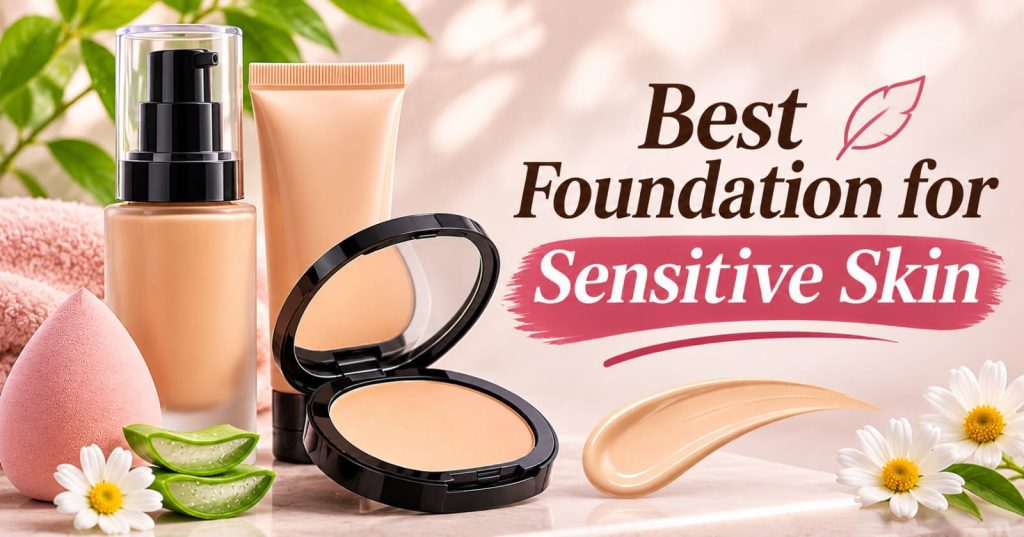
When your skin gets red, itchy, or tight after a new product, choosing makeup can feel like a gamble. You want coverage and a nice finish, but you don’t want to spend the evening with stinging cheeks. Finding the best foundation for sensitive skin means looking past the packaging and paying attention to ingredients, formula, and how you apply it.
Here’s the short answer. Sensitive skin usually does better with a fragrance-free, lightweight foundation with a short, simple ingredient list, applied in thin layers. No formula is guaranteed to suit every person, so patch testing and reading labels matter just as much as the brand.
This guide compares five options at different prices, explains common claims, and walks you through prep, application, and troubleshooting.
Best Foundation for Sensitive Skin at a Glance
Here’s a quick comparison. Prices are the listed prices I found on brand or major retailer pages while researching. They change often, so check the current price before you buy.
| Product | Type | Coverage | Finish | Listed price | Fragrance status |
| Almay Clear Complexion Foundation | Liquid | Medium, buildable | Matte | $17.95 | Fragrance free |
| bareMinerals Complexion Rescue Tinted Moisturizer | Tinted gel cream | Sheer to light | Dewy | $31.60 | No synthetic fragrance |
| bareMinerals Original Loose Powder SPF 15 | Mineral powder | Sheer to full, buildable | Luminous | $39.50 | No synthetic fragrance |
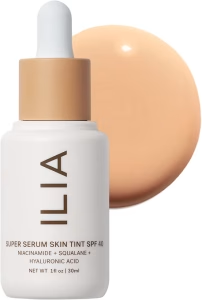
| ILIA Super Serum Skin Tint SPF 40 | Skin tint | Light to medium | Dewy | $48 | Formulated without fragrance |
| Product | Type | Coverage | Finish | Listed price | Fragrance status |
| Clinique Even Better Clinical Serum Foundation | Liquid | Full | Matte | $49 | Fragrance free |
A quick honesty note. I’m sharing what brands and retailers publish, along with general guidance on how these formulas behave. I haven’t tested them myself, so I won’t claim before-and-after results. Sensitive skin varies a lot, so your experience may differ.
How I Chose the Best Foundation for Sensitive Skin
I didn’t want five similar products, because “sensitive” covers many different situations. So I looked for a spread of formula types, coverage levels, and prices, and I only included products with published details I could verify.
Each pick needed to meet most of these points:
- A published fragrance claim, such as fragrance free or made without synthetic fragrance
- Sensitive-skin-related information, such as dermatologist tested, allergy tested, or hypoallergenic
- Ingredient information I could read
- A clearly listed price, shade range, and finish
- Availability from major US retailers, including Amazon
I also looked at drawbacks. Every foundation has trade-offs, and it’s more helpful to know who should skip a product than to pretend one formula works for everyone.
The 5 Best Foundations for Sensitive Skin Reviewed
Each one is a different take on the best foundation for sensitive skin, depending on your budget, coverage needs, and skin type.
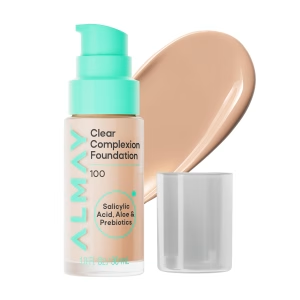
- Almay Clear Complexion Foundation: Best Drugstore Pick
Almay’s liquid foundation is one of the most affordable options here at $17.95 for one fluid ounce. The listing describes medium, buildable coverage with a soft matte finish and lists it as hypoallergenic, dermatologist tested, and fragrance free. It’s marketed for sensitive, acne-prone, oily, and combination skin.
The formula includes salicylic acid at about 1%, plus aloe vera and prebiotics. It’s listed as free of parabens, phthalates, SLS, mineral oil, formaldehydes, and triclosan.
**Who may like it:**
- Shoppers on a budget
- People with oily or blemish-prone skin who like a matte finish
- Anyone who wants a fragrance-free drugstore formula
**Things to consider:**
- Salicylic acid can be drying or irritating for some people, especially if you already use exfoliating products
- A matte finish may not suit very dry skin
- I couldn’t confirm the number of shades from the page I checked
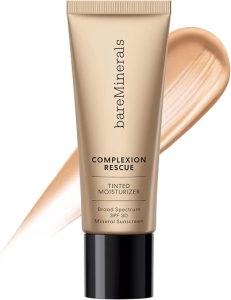
- bareMinerals Complexion Rescue Tinted Moisturizer: Best for Dry Sensitive Skin
This is more of a skin tint than a traditional foundation. The coverage is sheer to light and buildable, and the finish is dewy. It contains hyaluronic acid and squalane, along with a mineral SPF 30, and it comes in 20 shades. It was listed at $31.60, down from $39.50.
The brand says it’s marketed for dry and combination skin, and that it’s suitable for sensitive or acne-prone skin. It’s also listed as dermatologist-tested, non-comedogenic, and made without synthetic fragrance, parabens, and talc.
**Who may like it:**
- People with dry or easily irritated skin who like a comfortable base
- Those who prefer light, natural-looking coverage
- Anyone who wants to simplify their routine
**Things to consider:**
- Coverage is sheer to light, so you may need concealer for redness or blemishes
- A dewy finish can look shiny on oilier areas
- Some shades showed as sold out on the page I checked
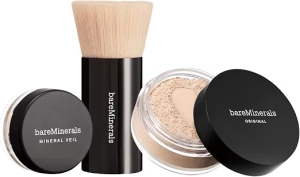
- bareMinerals Original Loose Powder Foundation: Best Mineral Pick
This is a classic mineral powder with a very short ingredient list. The brand describes it as a five-ingredient formula, with titanium dioxide and zinc oxide as the sun-protecting actives, plus
mica, iron oxides, and bismuth oxychloride. It comes in 30 shades with SPF 15, and it’s listed as hypoallergenic, dermatologist-tested, and non-comedogenic.
Coverage builds from sheer to full, and the finish is luminous. The listed price was $39.50.
**Who may like it:**
- People who like short ingredient lists
- Those who want a lightweight, breathable feel
- Anyone who wants buildable coverage and a wide shade range
**Things to consider:**
- Powder can emphasize dry patches, so it often works best on normal to combination skin
- Some people find bismuth oxychloride irritating or itchy, so check if you’ve reacted to it before
- The brand says it’s made without synthetic fragrance, which is narrower than a blanket fragrance-free claim
- The SPF 15 shouldn’t replace your sunscreen
- ILIA Super Serum Skin Tint SPF 40: Best Skin Tint
ILIA’s skin tint is a lightweight formula with light-to-medium coverage and a dewy finish. It includes a broad-spectrum mineral SPF 40 with 12% zinc oxide, and it comes in 30 shades. It’s listed at
$48 for one ounce.
The formula includes niacinamide, hyaluronic acid, allantoin, and plant-based squalane. The brand says it’s made without fragrance and clinically tested as safe for sensitive skin, and it reports that all 50 people in a small consumer survey with sensitive skin said it didn’t make their skin react.
That’s a brand-reported study, so treat it as marketing, not proof.
**Who may like it:**
- People who want a natural, skin-like look
- Those who want a higher SPF built in
- Shoppers who like skincare-style ingredients
**Things to consider:**
- Coverage is light to medium, so it won’t hide strong discoloration by itself
- Some users mention a brief initial scent that fades, according to review summaries
- A dewy finish can look shiny on oily skin
- Check that the listing you buy from is the brand or an authorized seller
- Clinique Even Better Clinical Serum Foundation: Best for Full Coverage
If you want more coverage than a tint can give, this liquid offers full coverage with a matte finish and mineral SPF 25. It comes in 42 shades and costs $49 for one ounce. The brand says it’s allergy tested, dermatologist and ophthalmologist tested, fragrance free, and oil-free.
It also lists active-style ingredients such as salicylic acid, hyaluronic acid, and a vitamin C complex. That’s worth thinking about, because some sensitive skin types don’t love extra actives.
**Who may like it:**
- People who want full coverage that lasts
- Those who want an allergy-tested, fragrance-free formula
- Anyone who needs a wide shade range
**Things to consider:**
- It’s the priciest pick on this list
- Salicylic acid and vitamin C can bother some sensitive skin
- A matte, full-coverage finish may look heavy on dry skin
- “Fragrance free” doesn’t mean every ingredient will suit you
What Does “Sensitive Skin” Really Mean?
Sensitive skin isn’t a medical diagnosis, and it doesn’t look the same for everyone. It’s usually a catch-all for skin that reacts easily, whether with stinging, redness, itching, or tightness.
Here are some common patterns. These are general categories to help you shop, not diagnoses, and a doctor can help if you have a skin condition.
| Pattern | What it feels like | What to look for |
| Reactive skin | Stings or burns with new products | Short ingredient lists and careful patch testing |
| Redness-prone skin | Visible redness or flushing | Buildable coverage and gentle formulas |
| Dry sensitive skin | Tight or flaky | Comfortable, hydrating, non-drying formulas |
| Oily sensitive skin | Shiny and easily irritated | Lightweight, oil-controlling options |
| Acne-prone sensitive skin | Breakouts plus irritation | Non-comedogenic formulas and careful testing |
| Rosacea-prone skin | Persistent redness and sensitivity | Gentle products, and advice from a dermatologist |
If you have a diagnosed condition, such as rosacea or eczema, it’s worth asking your dermatologist before changing products. Knowing your pattern makes it easier to pick the best foundation for sensitive skin.
Fragrance-Free, Hypoallergenic, and Other Labels
These labels sound similar, but they don’t mean the same thing.
| Label | What it generally suggests | What it doesn’t guarantee |
| Fragrance-free | No fragrance has been added | Other irritating ingredients may still be present |
| Unscented | May have no noticeable smell | Can still contain masking ingredients |
| Hypoallergenic | The brand says it’s less likely to cause reactions | There’s no federal definition, and reactions are still possible |
| Allergy tested | Some form of testing was done | The method varies, and it doesn’t prove safety for you |
| Dermatologist tested | A dermatologist was involved in testing | It doesn’t mean a dermatologist recommends it |
| Non-comedogenic | Formulated to be less likely to clog pores | It isn’t a regulated promise |
| Label | What it generally suggests | What it doesn’t guarantee |
| Mineral | Uses mineral pigments or filters | Mineral doesn’t automatically mean allergy-free |
According to the FDA, there are no federal standards or definitions for the term “hypoallergenic.” So use these labels as clues, not guarantees.
Ingredients to Understand Before You Buy
You don’t need a chemistry degree, but a few ingredients are worth recognizing.
**Hydrating and soothing ingredients:** Glycerin and hyaluronic acid attract water, squalane conditions the skin, and ceramides are skin-barrier lipids. These improve how makeup feels, but they don’t treat skin conditions.
**Mineral ingredients:** Zinc oxide and titanium dioxide are mineral sunscreen filters. Iron oxides give color.
**Possible triggers:** Fragrance and essential oils can bother some people, even when they come from natural sources. Some formulas also contain alcohol, which can feel drying depending on the formula.
**Silicones, preservatives, and actives:** These aren’t automatically harmful. Their effect depends on the full formula and your own sensitivity.
The best habit is to keep track of what has bothered your skin in the past, so you can scan ingredient lists for it.
How to Choose the Best Foundation for Sensitive Skin
Use these questions to narrow down the best foundation for sensitive skin for your needs.
Which Formula Type?
Liquid foundation offers the most variety in coverage and finish. Mineral powder can feel light and has short ingredient lists, but it may emphasize dryness. Skin tints and tinted moisturizers give light coverage and a natural look. Stick and cushion formulas are convenient, but check the ingredient list carefully.
Which Coverage and Finish?
If you want minimal fuss, start with a light or medium, buildable formula. Heavy layers can feel more irritating and tend to need more thorough removal.
For finish, natural or satin looks are a common starting point. Dewy can look lovely on dry skin, and matte can help with shine but may emphasize dry patches.
What About Shade?
A mismatched shade is easy to spot, and it can lead to piling on more product. Skin tone is how light or deep you are, and undertone is the warm, cool, neutral, or olive hue beneath it. Swatch a few shades along your jawline, check them in daylight, and wait several minutes to see how they settle.
Brand shade finders can help when you shop online, but they can’t guarantee a match.
How to Patch Test a New Foundation
A patch test is a small trial before you commit to the product on your whole face. It can help, but it has limits.
- Wash and dry a small area, such as the inside of your forearm or along your jawline.
- Apply a small amount of the product.
- Watch for redness, itching, burning, or swelling.
- Follow the timeframe suggested by the brand or your dermatologist, instead of assuming one number fits everyone.
- If you notice a reaction, wash it off and stop using it.
A patch test can’t promise a product will never cause a problem, because some reactions appear only after repeated use. If you have a severe reaction, talk with a medical professional.
How to Apply Foundation on Sensitive Skin
Gentle application can be as important as the formula.
- **Cleanse gently** with a mild cleanser
- **Moisturize** and give it a few minutes to settle
- **Apply sunscreen** if you’re going out in the daytime, since foundation with SPF usually isn’t enough alone
- **Use clean tools,** such as a washed sponge or brush
- **Apply thin layers** and build coverage only where needed
- **Remove makeup gently** at night, without scrubbing
Avoid piling on too many products, since extra layers can add irritation risk and cause pilling.
Common Foundation Problems and How to Fix Them
Results vary by formula, climate, and skincare routine, so treat these as starting points.
| Problem | Likely reason | What to try |
| Stinging or redness | Possible ingredient sensitivity | Stop using it, and talk with a professional if it persists |
| Clings to dry patches | Dry skin or rushed prep | Moisturize gently and let it settle |
| Looks cakey | Too much product or powder | Use less and build gradually |
| Pills | Layers aren’t compatible | Simplify your routine and wait between steps |
| Oxidizes or darkens | Formula reacts with your skin | Test the shade after it settles |
| Separates or fades | Oil or friction | Use a thinner layer and set lightly |
Drugstore vs. Premium: Does Price Matter?
Not necessarily. Price doesn’t tell you which is the best foundation for sensitive skin. On this list, Almay costs under $20, while the others range from about $32 to $49.
A higher price can bring a different texture or ingredient list, but it doesn’t guarantee fewer reactions. Choose based on ingredients, formula type, and how your skin responds.
Frequently Asked Questions
What is the best foundation for sensitive skin?
There isn’t one winner for everyone. Almay is a budget pick, bareMinerals offers a tint and a mineral powder, ILIA is a skin tint with SPF, and Clinique offers full coverage. Choose by skin pattern and always check the ingredients.
What foundation do dermatologists recommend for sensitive skin?
No single formula is recommended by every dermatologist. A common approach is to look for fragrance-free, simple formulas and ask your own dermatologist if you have a skin condition.
Is liquid or powder foundation better for sensitive skin?
It depends on your skin type. Powder can feel light but may emphasize dryness, while liquids offer more variety.
Should sensitive skin avoid fragrance?
If fragrance has bothered you before, choosing fragrance-free is a reasonable starting point.
Is hypoallergenic foundation better?
The label can be a clue, but there’s no federal definition, so check ingredients too.
Can foundation cause breakouts?
Some people find certain formulas clog pores or irritate their skin. Non-comedogenic claims can help, but they aren’t a promise.
How should I test a new foundation?
Patch test a small area first, watch for a reaction, and introduce the product gradually.
Final Thoughts
The best foundation for sensitive skin is the one that suits your skin pattern, avoids your personal triggers, and matches your shade. Almay is a good budget-friendly choice, bareMinerals offers comfortable tint and mineral options, ILIA is a lightweight skin tint, and Clinique gives full coverage.
Patch test, apply thin layers, and stop using anything that irritates your skin. Always check the current price, shade list, and ingredients before you buy.