This post may contain affiliate links. If you purchase through a link on this page, we may earn a small commission at no extra cost to you.
Before buying a shampoo for hair growth, it helps to know what a shampoo can and can’t actually do. Shampoo is a rinse-off product — it’s on your scalp for a minute or two before you wash
it out — so it isn’t going to work the same way a leave-on treatment or a prescription medication does. What it can do is keep your scalp clean and balanced, reduce buildup that clogs follicles, and in some formulas, add ingredients that support
strand strength and reduce breakage. That’s genuinely useful, but it’s a different thing than “growing new hair,” and the two get
blurred constantly in product marketing.
This guide walks through what a hair-growth shampoo can
realistically achieve, which ingredients have real support behind them versus which are mostly marketing, how to figure out what’s actually causing your hair to look thinner, and how to pick a shampoo based on your specific situation rather than a bottle that just says “growth” on the label.
Table of Contents
- Shampoo Types at a Glance
- Can Shampoo Actually Help Hair Growth?
- Hair Growth vs. Thickening vs. Reduced Shedding vs. Length Retention
- What’s Actually Making Your Hair Look Thinner?
- How We Chose These Shampoos
- 1 0 Best Shampoos for Hair Growth (by Category)
- Ingredients That Actually Matter — Graded by Evidence
- Choosing a Shampoo by Your Scalp or Hair Concern
- Choosing by Hair Type
1 0. Shampoo vs. Serum vs. Medical Treatment
1 1 . How to Use a Hair-Growth Shampoo Correctly
1 2. What to Be Cautious About
1 3. When Shampoo Isn’t Enough
1 4. Frequently Asked Questions
1 5. Final Verdict
Shampoo for hair growth Types at a Glance
Shampoo Type | Best For | MainPurpose | KeyIngredients |
Caffeine/Scalp-Stimulating | Hereditary thinning, scalp support | Supportsscalpenvironment | Caffeine,niacinamide |
Strengthening/Anti-Breakage | Hair that looksthinnerfrombreakage | Reduces breakage, protects strands | Peptides, keratin, amino acids |
Volumizing/Thickening | Fine, flat hair | Lightweight body and fullness | Biotin, panthenol |
Scalp-Balancing | Oily scalp, buildup | Removes excess oil and residue | Tea tree,salicylic acid |
Anti-Dandruff/Scalp Health | Flaky, itchy scalp | Targetsscalpirritation | Ketoconazole,zincpyrithione |
Moisturizing/Fortifying | Dry, damaged, over-processed hair | Restores softness, reduces dryness-related breakage | Argan oil, shea butter |
| Botanical/Natural | General scalp and hair support | Gentlecleansing plus plant- | Rosemary,saw palmetto |
Shampoo Type | Best For | MainPurpose | KeyIngredients |
| basedactives |
Can Shampoo Actually Help Hair Growth?
The honest answer is: indirectly, and to a limited degree. A shampoo works in three main ways. First, it cleanses the scalp, removing oil, sweat, and product buildup that can clog follicles and create an environment less favorable to healthy hair. Second, some formulas strengthen existing strands, using conditioning agents, proteins, or peptides that make hair more resistant to breakage — which matters a lot, because hair that snaps off before it reaches its full length can look exactly like hair that isn’t growing, even when it is. Third, certain active ingredients —
caffeine, ketoconazole, niacinamide, and a handful of botanical
extracts — have been studied for a possible supportive role in scalp health or hair density, though the strength of that evidence varies a lot by ingredient.
What a shampoo generally can’t do is reverse significant hair loss on its own. Because it’s rinsed off within a minute or two, it doesn’t have the contact time that or leave on treatment
medications do. If your main concern is genuine, progressive hair loss rather than breakage or scalp health, a shampoo should be one small piece of a larger approach — not the whole plan.
Hair Growth vs. Thickening vs. Reduced Shedding vs. Length Retention
This distinction is honestly the most useful thing in this entire guide, and it’s the part most product pages skip over. When
people say they want their hair to “grow,” they usually mean one of four different things, and each one calls for a different approach:
Actual hair growth — new hair production from the follicle.
This is a biological process influenced heavily by genetics, hormones, and overall health, and it’s the hardest thing for any topical product to meaningfully change.
Reduced shedding — fewer hairs falling out day to day. This can be affected by stress, diet, hormonal shifts, and scalp condition, and a healthier scalp environment may help here.
Length retention — keeping the hair you’ve already grown, by preventing breakage. This is where a well-formulated shampoo has the clearest, most direct impact.
Thicker-looking or fuller hair — a cosmetic effect from conditioning, volumizing ingredients, or reduced breakage, without any actual change in follicle activity.
Knowing which of these you’re actually trying to fix changes which shampoo makes sense. Someone dealing with breakage from heat styling needs a completely different formula than someone with a genuinely receding hairline.
What’s Actually Making Your Hair Look Thinner?
Before shopping for a shampoo, it’s worth spending a minute thinking about the actual cause, since “thinning hair” can come from a lot of different places:
Genetics (androgenetic alopecia, sometimes called male or female pattern hair loss)
Breakage from heat styling, chemical processing, or harsh handling
Stress or a major life event, which can trigger temporary shedding (telogen effluvium)
Postpartum hormonal shifts
Nutritional factors, including iron or vitamin D levels
Scalp conditions like dandruff, seborrheic dermatitis, or chronic buildup
Tight hairstyles or repeated tension on the same areas (traction alopecia)
Certain medications or recent illness
A shampoo can genuinely help with breakage and scalp-related causes. For genetic, hormonal, or medical causes, it’s realistically a supporting product at best, not a fix on its own.
How We Chose These Shampoos
None of the products below were personally tested by our team, and it’s worth saying that plainly. Each category was evaluated based on:
Whether the active ingredients have any meaningful research behind them for the specific claim being made
Whether the formula matches a specific, identifiable problem (breakage, scalp buildup, dandruff, fine hair) rather than a vague “growth” promise
Patterns across verified customer reviews, particularly ones describing scalp feel, breakage, and shedding rather than just “worked great!”
Whether the product is a standalone shampoo or intended as part of a larger system (shampoo plus serum, for example)
Price relative to the size and expected frequency of use
10 Best Shampoos for Hair Growth
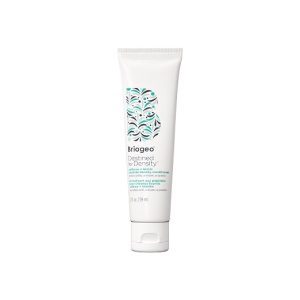
1. Briogeo Destined for Density Caffeine + Biotin Peptide Density Shampoo (Best Overall for Scalp Support)
Best for: General scalp health support alongside hereditary thinning concerns.
Why it stands out: Uses caffeine, biotin and copper peptides in a formula designed for thinner-looking hair and greater density.
Key ingredients: Copper peptides, caffeine, biotin, zinc, vitamin E.
What to consider: The formula is designed to support fuller-looking hair; shampoo evidence should not be treated as equivalent to prescription hair-loss treatment.
Checked price: $32.00
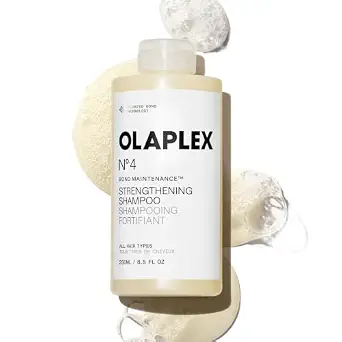
2. OLAPLEX No.4 Bond Maintenance Shampoo (Best for Breakage)
Best for: Hair that looks thinner mainly because of breakage rather than actual loss.
Why it stands out: Focuses on strengthening and maintaining damaged bonds so the hair is better protected from breakage.
Key ingredients: Bis-aminopropyl diglycol dimaleate, hydrolyzed vegetable protein, panthenol.
What to consider: It is a strengthening/bond-maintenance shampoo, not a treatment for follicle-driven hair loss
Checked price: $32.00
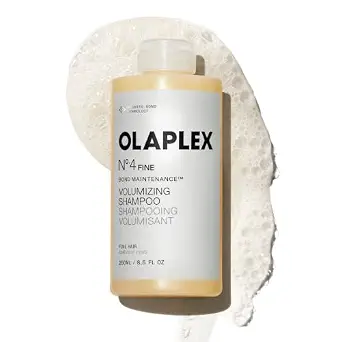
3. OUAI Fine Shampoo (Best for Fine, Flat Hair)
Best for: Fine hair that looks sparse due to low volume rather than actual thinning.
Why it stands out: Designed specifically for fine hair to add volume and bounce while helping strengthen and hydrate the strands.
Key ingredients: Panthenol, hydrolyzed keratin, biotin.
What to consider: The fuller appearance is primarily a cosmetic/strand-conditioning effect, not an increase in follicle count.
Checked price: $32.00
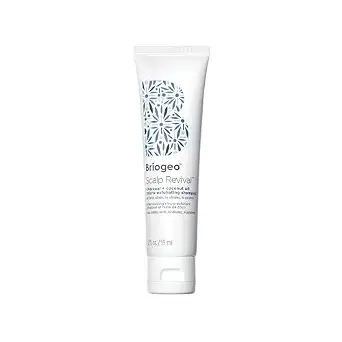
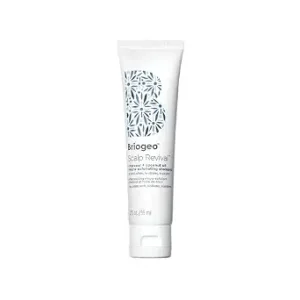
4. Briogeo Scalp Revival Charcoal + Coconut Oil Micro-Exfoliating Shampoo (Best for Oily Scalp/Buildup)
Best for: Buildup-prone scalps where excess oil or product residue is a concern.
Why it stands out: A scalp-focused exfoliating shampoo designed to remove buildup, oil and impurities while helping soothe and hydrate the scalp.
Key ingredients: Binchotan charcoal, coconut oil, tea tree oil, peppermint oil, spearmint oil.
What to consider: It is intended for periodic use rather than necessarily every wash; overuse of exfoliating or clarifying products can be drying.
Checked price: $42.00
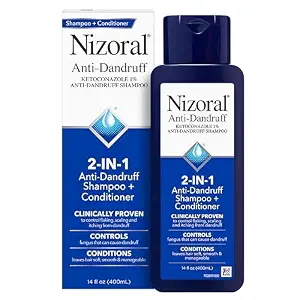
5. Nizoral Anti-Dandruff Shampoo 1% Ketoconazole (Best for Dandruff/Flaky Scalp)
Best for: Flaking, itching, or scalp irritation associated with dandruff.
Why it stands out: Uses ketoconazole, an established antifungal active used in dandruff treatment shampoos.
Key ingredients: Ketoconazole 1%.
What to consider: Persistent, severe, painful, or recurrent scalp symptoms should be evaluated rather than treated indefinitely with an OTC shampoo.
Checked price: Approx. $15.00
6. Briogeo Don’t Despair, Repair! Super Moisture Shampoo (Best for Dry, Damaged, or Over-Processed Hair)
Best for: Hair that is breaking because of dryness, heat, or chemical processing rather than genetic thinning.
Why it stands out: An ultra-hydrating shampoo formulated to strengthen damaged hair while restoring moisture.
Key ingredients: Shea butter, coconut oil, rosehip oil, biotin, panthenol, plant proteins.
What to consider: Best suited to dryness and damage; reducing heat and chemical stress is still important for long-term breakage control.
Checked price: $39.00
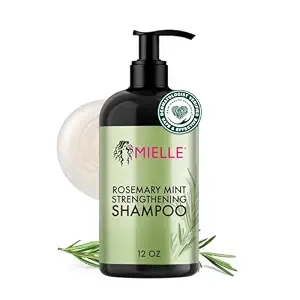
7. Mielle Organics Rosemary Mint Strengthening Shampoo (Best Natural-Leaning Option)
Best for: People who prefer a rosemary-forward botanical formula alongside general scalp and strand support.
Why it stands out: Combines rosemary and peppermint oils with biotin, coconut oil and babassu oil in a strengthening formula.
Key ingredients: Rosemary leaf oil/extract, peppermint oil, biotin, coconut oil, babassu seed oil.
What to consider: Rosemary is an area of research interest, but a rosemary shampoo should not be presented as equivalent to established medical hair-loss treatments.
Checked price: Approx. $8.94
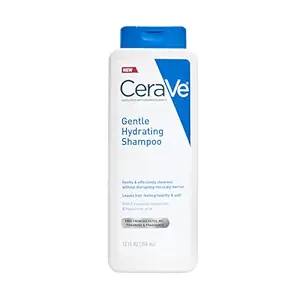
8. CeraVe Gentle Hydrating Shampoo (Best Budget Option)
Best for: Reliable everyday cleansing for people who want a straightforward, scalp-friendly shampoo without a premium price.
Why it stands out: Provides gentle cleansing and conditioning support with a relatively simple daily-care positioning.
Key ingredients: Ceramides, niacinamide, hyaluronic acid.
What to consider: It is a maintenance shampoo rather than a targeted hair-growth treatment, which is appropriate when the main need is gentle cleansing and scalp comfort.
Checked price: Approx. $9.99
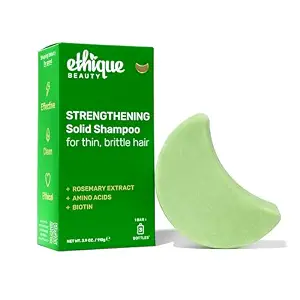
9. Ethique Strengthening Rosemary Shampoo Bar for Hair Growth (Best Low-Waste Option)
Best for: People who want a solid shampoo format while targeting brittle or thinning-looking hair.
Why it stands out: A concentrated shampoo bar built around rosemary, amino acids, biotin and peppermint, in a low-waste solid format.
Key ingredients: Rosemary extract, amino acids, biotin, peppermint essential oil.
What to consider: The bar format does not inherently make a shampoo more effective; the formula and how your scalp and hair respond matter more.
Checked price: $14.00
10. Briogeo Destined for Density Shampoo + Matching Scalp & Hair Routine (Best for a Multi-Step Routine)
Best for: People who want a shampoo designed to fit into a broader density-focused routine.
Why it stands out: The Destined for Density range is built around a coordinated approach, with the shampoo using caffeine, copper peptides, biotin and zinc.
Key ingredients: Caffeine, copper peptides, biotin, zinc, vitamin E.
What to consider: Evidence or results for a complete routine may involve multiple products, so they should not automatically be attributed to the shampoo alone.
Checked price: $32.00
Ingredients That Actually Matter — Graded by Evidence
| Ingredient | Proposed Role | Evidence Level |
Ketoconazole | Antifungal, targets scalp conditionslinked to hair issues | Well-studied for scalp/dandruff use |
Caffeine | May support scalp/follicle environment | Some supportive research,formulation-dependent |
| Ingredient | Proposed Role | Evidence Level |
Niacinamide | Scalp support, conditioning | Moderate, mostly cosmetic/scalp-focused |
Peptides | Strand strength,reduced breakage | Reasonable for breakage; not a growth ingredient per se |
| Rosemaryextract | Proposed scalp/hair support | Early-stage, limited human evidence |
Saw palmetto | Marketed for hair thinning | Limited, inconsistent evidence |
Biotin (topical) | Marketed forstrength/thickness | Mainly relevant if there’s an actual deficiency; topical evidence is weak |
Panthenol | Conditioning, softness | Well-established for hair conditioning, not growth |
A longer ingredient list doesn’t automatically mean a more effective shampoo — what matters is whether the formula matches your actual problem.
Choosing a Shampoo by Your Scalp or Hair Concern
| Your Main Concern | Look For |
| Hereditary/generalthinning | Caffeine or scalp-support formula, paired with realistic expectations |
Breakage | Peptide or protein-based strengthening shampoo |
| Fine, flat hair | Lightweight volumizing formula |
Oily scalp/buildup | Clarifying or balancing shampoo, used periodically |
Flaky/itchy scalp | Ketoconazole or zinc pyrithione formula |
| Dry, damaged hair | Moisturizing/fortifying formula |
Progressive or sudden hair loss | Shampoo as a supporting step; professional evaluation for the underlying cause |
Choosing by Hair Type
Fine hair: Lightweight volumizing formulas — richer products can flatten fine strands further.
Thick or coarse hair: Tolerates richer, more conditioning formulas well.
Curly or coily hair: Prioritize moisture alongside any growth-focused actives, since these textures dry out faster.
Color-treated or chemically processed hair: Look for gentle, color-safe cleansing combined with strengthening
ingredients, since this hair type is more prone to breakage.
All hair types: Scalp condition (oily, dry, flaky) matters as much as hair type when choosing a formula.
Shampoo vs. Serum vs. Medical Treatment
| Product Type | Contact Time | Best Suited For |
Shampoo | Rinsed off in 1 – 2 minutes | Scalp cleansing, breakage support |
| Leave-onserum/tonic | Stays on the scalp | Ingredients that need longer contact time |
| Medical treatments (e.g., minoxidil, finasteride) | Applied and left on perinstructions | Genetic or hormonal hair loss, under professionalguidance |
A shampoo and a leave-on treatment aren’t interchangeable, even if they share some of the same active ingredients — the
difference in contact time genuinely matters for how much the
ingredient can actually do.
How to Use a Hair-Growth Shampoo Correctly
- Wet hair thoroughly before applying shampoo.
- Massage into the scalp, not just through the lengths — most of the relevant activity happens at the scalp, not the hair shaft.
- Leave it on for the time stated on the label, often one to two minutes, rather than rinsing immediately.
- Rinse thoroughly to avoid residue buildup.
- Follow with a conditioner suited to your hair type, focused on the lengths and ends.
- Use consistently — most formulas are designed for regular, ongoing use rather than occasional application, and realistic changes (if any) tend to take weeks to months, not days.
What to Be Cautious About
Don’t assume “natural” or “sulfate-free” automatically means more effective — these are formulation choices, not evidence of hair-growth performance.
Don’t overuse clarifying or medicated shampoos beyond what the label recommends, since this can dry out the scalp.
Watch for fragrance or essential-oil sensitivity, especially with botanical-heavy formulas — discontinue if you notice irritation.
Be skeptical of dramatic before-and-after claims tied to a single product, especially over a short timeframe.
Treat brand-reported clinical studies as brand-specific evidence, not universal proof that every similar product performs the same way.
When Shampoo Isn’t Enough
Shampoo is a reasonable place to start, but it’s worth seeing a dermatologist if you notice:
Sudden or rapidly progressing hair loss
Bald patches rather than general thinning
A widening part or visibly receding hairline that’s changed noticeably over months
Scalp pain, significant inflammation, or sores
Hair loss alongside other symptoms (fatigue, weight changes, irregular periods)
According to the American Academy of Dermatology, identifying the underlying cause of hair loss is an important first step before committing to any long-term product or treatment, since the right approach differs significantly depending on the cause.
Frequently Asked Questions
(Add these to Rank Math’s FAQ block for rich-snippet eligibility — do not leave as plain text only. )
Does shampoo for hair growth actually work?
It depends on what you mean by “work.” Shampoo can support scalp health and reduce breakage, which can make hair appear fuller or help retain length, but it’s unlikely to reverse significant genetic or hormonal hair loss on its own.
What is the best shampoo for hair growth?
The best option depends on your specific cause — a caffeine or scalp-support formula for general thinning, a peptide-based formula for breakage, or a ketoconazole shampoo for a flaky scalp contributing to hair concerns.
What is the difference between hair growth and thicker-looking hair?
Hair growth refers to actual new hair production from the follicle,
while thicker-looking hair is often a cosmetic effect from
conditioning, volumizing ingredients, or reduced breakage — the strand count hasn’t necessarily changed.
Can shampoo alone treat hair loss?
Generally not on its own, especially for genetic or hormonal hair loss. Shampoo works best as a supporting step alongside addressing the actual underlying cause, which may require a
leave-on treatment or professional evaluation.
What ingredients should I look for in a hair-growth shampoo? Ketoconazole for scalp conditions, caffeine and niacinamide for general scalp support, and peptides or proteins if breakage is the main issue. Evidence varies significantly by ingredient, so match the ingredient to your actual problem.
How long does it take to see results from a hair-growth shampoo?
Most brands suggest allowing at least 8 to 1 2 weeks of
consistent use before evaluating results, since hair growth cycles are slow and shampoo effects (where they exist) build gradually.
Is shampoo or serum better for hair growth?
Serums generally have an advantage because they stay on the scalp longer, giving active ingredients more contact time.
Shampoo is better thought of as scalp maintenance rather than
the primary treatment.
Can hair breakage be mistaken for hair loss?
Yes, and it’s common. Breakage causes strands to snap before reaching full length, which can look identical to slower growth or shedding, even though the underlying cause and appropriate treatment are different.
Is biotin shampoo effective for hair growth?
Biotin is mainly relevant if someone has an actual biotin
deficiency, which is uncommon. Topical biotin in shampoo has limited evidence for improving hair growth in people without a deficiency.
When should I see a dermatologist about hair loss?
If loss is sudden, patchy, rapidly progressing, or accompanied by scalp pain or other symptoms, it’s worth professional evaluation rather than relying on over-the-counter shampoo alone.
Final Verdict
Best Overall: Caffeine Scalp Formula
Best for Breakage: Peptide Strengthening Formula
Best for Fine, Flat Hair: Lightweight Volumizing Formula
Best for Oily Scalp/Buildup: Scalp-Balancing Clarifying Formula
Best for Dandruff/Flaky Scalp: Ketoconazole Scalp Shampoo
Best for Dry, Damaged Hair: Fortifying Moisture Formula
Best Natural-Leaning Option: Botanical Rosemary Formula
Best Budget: Budget Everyday Scalp Shampoo
Best Low-Waste Option: Concentrated Shampoo Bar
Best for a Full Routine: Scalp Health System Shampoo
The right shampoo for hair growth isn’t the one with the longest ingredient list or the boldest marketing claim — it’s the one that actually matches what’s causing your hair to look thinner in the first place. If it’s breakage, a strengthening formula does real
work. If it’s your scalp, a targeted scalp shampoo makes sense. If it’s genuine, progressive hair loss, treat the shampoo as one supporting piece of a bigger plan rather than the whole solution, and don’t hesitate to get a professional opinion if things aren’t
improving.
For more on building out a complete hair-care routine, our guides to treatments for dry hair and salon hair care products go deeper into related picks that pair naturally with the options above.
Disclaimer: This article is intended as general educational information about hair-growth shampoo categories and ingredients and is not a substitute for professional medical or dermatological advice. Individual results vary, and persistent or significant hair loss should be evaluated by a qualified professional.