This article may contain affiliate links. If you purchase through links on this page, ZaisufBeauty may earn a commission at no additional cost to you. As an Amazon Associate, ZaisufBeauty may earn from qualifying purchases. Product selections are intended to help readers compare options; affiliate relationships do not determine the editorial explanations or guarantee a product will work for every reader.
If your cheeks look less lifted, your jawline seems softer, or the skin on your neck has started to look crepey, you may be searching for skincare for saggy skin that can make a visible difference. The most useful approach is not to buy the cream with the biggest lifting promise. It is to understand what topical skincare can realistically improve, choose ingredients that match your concern, and build a routine you can follow consistently.
Moisturizers and targeted treatments can improve hydration, soften the look of fine lines, and make skin appear smoother and temporarily plumper. Some ingredients, including retinoids, may gradually improve certain signs of photoaging. But a face cream cannot remove excess skin, replace lost facial fat, or reproduce the results of a facelift. That distinction matters when you are comparing products and deciding where to spend your money.
This guide compares three firming-focused moisturizers at different price points: Olay Retinol 24 MAX for shoppers interested in a retinol night cream, Peach & Lily Peptide Pro for a peptide-focused moisturizer, and Biossance Growth Factor Firming Moisturizer for a premium peptide-and-squalane formula. We also explain the ingredients, show how to use them in a realistic routine, and help you decide when a dermatologist’s advice may be more useful than another jar of cream.
Quick Answer: What Should You Use for Sagging-Looking Skin?
There is no single cream that works for every type of skin laxity. If your main concern is fine lines and rough texture, a carefully introduced retinol product may be worth discussing with your dermatologist. If your skin feels dry or looks temporarily less plump, a moisturizer with humectants and emollients can improve its appearance. Peptide moisturizers are another option for people who want a hydrating, firming-focused formula, although evidence varies by peptide and finished product.
For most people, the foundation is simpler than a complicated anti-aging routine: gentle cleansing, moisturizer, and daily broad-spectrum SPF 30 or higher. Add one targeted active at a time, and do not expect a topical product to correct substantial loose skin.
What Does Saggy Skin Actually Mean?
People use the phrase “saggy skin” to describe several different changes. One person may mean mild looseness around the jawline; another may mean fine, crinkled skin on the neck; someone else may be noticing hollowing after weight loss. These concerns can look similar in a mirror, but they do not have the same cause or respond to the same products.
Skin laxity refers to a loss of firmness and elastic recoil. Crepey skin describes a thin, finely wrinkled or crinkled appearance, often made more noticeable by dryness and sun damage. Volume loss is different: when facial fat or underlying support changes, the cheeks or temples may look less full and folds can become more noticeable. A moisturizer can help dryness, but it cannot replace lost volume.
Before choosing a product, identify the change that bothers you most. Is the skin dry and finely lined, or is there a noticeable fold or excess skin? Is the concern mainly on the face, neck, or body? Is it new after weight loss, or has it developed gradually over years? These details help set realistic expectations and guide whether a skincare routine is likely to be useful.
What Causes Skin to Lose Firmness?
1. Natural aging
As skin ages, its structure and repair processes change. Collagen and elastin are important components of the skin’s support network, and age-related changes can contribute to reduced firmness, wrinkles, and slower recovery after stretching. The degree and timing vary considerably from person to person.
2. Cumulative sun exposure
Ultraviolet radiation contributes to photoaging. Over time, UV exposure can damage elastic fibers and contribute to wrinkles, uneven tone, and a rougher texture. This is one reason daily sun protection matters even when you are already using anti-aging products. Sunscreen cannot reverse existing laxity, but it helps limit additional UV-related damage.
3. Significant or rapid weight loss
After substantial weight loss, the skin may not fully adapt to the reduced volume underneath it. Age, genetics, how much weight was lost, how quickly it changed, and the skin’s previous elasticity all influence the result. A face cream can make the surface feel more comfortable, but it cannot remove excess skin or restore lost facial fat.
4. Hormonal and health-related changes
Hormonal transitions, including menopause, can affect skin thickness, hydration, and collagen. Certain illnesses, medications, or major changes in health can also affect the skin. If a change is sudden, unexplained, or accompanied by other symptoms, speak with a healthcare professional instead of assuming it is ordinary aging.
5. Smoking and environmental stress
Smoking and repeated environmental exposures can contribute to visible skin aging. A consistent routine, sun protection, and avoiding tobacco are more meaningful long-term habits than relying on a product that promises an instant lift.
Can Skincare for Saggy Skin Really Work?
Yes, skincare can make a difference to the appearance and feel of skin, but the size of that difference depends on what is causing the concern. A moisturizer can attract and seal in water, making dehydration lines look less obvious. A well-formulated retinoid may improve some fine lines and texture over time. Sunscreen helps protect against further photoaging. These are useful benefits, but they are not the same as physically tightening excess skin.
Think of topical skincare as a way to support skin quality rather than reposition facial tissue. A product may make skin look smoother, more hydrated, and more comfortable. It is unlikely to create a sharply defined jawline or meaningfully correct pronounced jowls. If a brand uses words such as “lift,” “sculpt,” or “tighten,” check whether the claim refers to a temporary cosmetic appearance, a measured study outcome, or a medical procedure.
This realistic distinction is especially important for shoppers comparing expensive products. A higher price does not automatically mean a stronger result. Choose based on the ingredient approach, texture, skin compatibility, price per ounce, and whether you can use the product consistently without irritation.
Ingredients Worth Considering
Retinol and other retinoids
Retinol is an over-the-counter vitamin A derivative. Dermatologists use retinoids for concerns such as mild fine lines, uneven pigmentation, and texture. The strength, formulation, and frequency matter: stronger or more frequent use is not automatically better, especially for beginners or people with sensitive skin. Retinol is not a treatment for excess skin or significant facial sagging.
Start with a low-intensity product and follow its label. Many people begin on a couple of evenings per week, then adjust gradually if their skin tolerates it. Apply to dry skin, avoid the eyelids and corners of the nose and mouth unless the label says otherwise, and use moisturizer. Stop or reduce use if persistent burning, redness, or peeling develops. Ask a dermatologist whether retinol is suitable if you have eczema, rosacea, very sensitive skin, or use prescription skin treatments. Avoid retinoids during pregnancy; ask your clinician about use while breastfeeding.
Peptides
Peptides are short chains of amino acids used in many moisturizers and serums. Different peptide types are formulated for different purposes, and results depend on the ingredient, concentration, delivery system, and finished product. A peptide moisturizer can be a reasonable hydrating step, but it should not be described as proven to lift loose skin unless strong, product-specific evidence supports that exact claim.
Hyaluronic acid and glycerin
Hyaluronic acid and glycerin are humectants, meaning they help attract water to the outer layers of skin. They can temporarily make dehydrated skin look fuller and reduce the appearance of dryness-related fine lines. They do not rebuild lost facial volume or permanently tighten lax skin. Apply a moisturizer over a hydrating serum if your skin needs additional comfort.
Ceramides and squalane
Ceramides are lipids that help support the skin barrier. Squalane is an emollient that softens skin and helps reduce moisture loss. These ingredients are useful when skin feels dry, tight, or easily irritated. A healthy moisture barrier can make the surface look smoother, although barrier support is not the same as lifting.
Vitamin C and niacinamide
Vitamin C is an antioxidant used in products targeting dullness and uneven tone. Niacinamide can support the skin barrier and help improve the appearance of uneven tone. Neither should be presented as a stand-alone solution for sagging. If you use vitamin C in the morning, follow with broad-spectrum sunscreen.
What about collagen creams?
Topical collagen in a moisturizer should not be confused with rebuilding the deeper collagen network that supports skin. Many collagen-containing creams work mainly as moisturizers or film-forming products on the surface. Read the full ingredient list and judge the product by its actual formulation rather than assuming that the word “collagen” guarantees a lifting effect.
3 Best Moisturizers to Compare for Sagging-Looking Skin
The three products below were selected to represent different shopping needs rather than to claim that one cream can fix every type of sagging. Product descriptions, prices, sizes, and availability can change. The retailer listing should be checked at the time you publish or update this article. These are research-based product comparisons, not firsthand wear tests; do not describe them as personally tested unless your team has actually used and documented them.
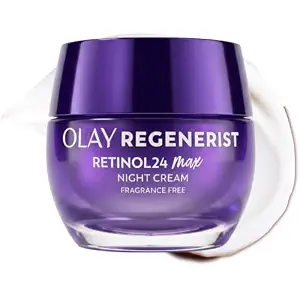
1. Olay Retinol 24 MAX Night Moisturizing Cream — Best Budget Retinol Pick
Olay Retinol 24 MAX is a night moisturizer for shoppers who want to add a retinol-focused product to an evening routine. It is the most practical option in this comparison for someone whose main concerns are the appearance of fine lines and uneven texture, rather than substantial loose skin. The formula is marketed as fragrance-free and includes retinol-focused skincare ingredients; check the current package for the complete ingredient list and directions.
Why it may suit you: it combines a night-cream format with a retinol approach, so you do not necessarily need to add a separate retinol serum and moisturizer as two new steps. A familiar drugstore-style product may also be easier to repurchase than a premium cream. The exact strength of retinol is not always disclosed in a way that allows a direct comparison across brands, so do not assume that “MAX” means it is right for every beginner.
What to consider: retinol can cause dryness, peeling, redness, or irritation, particularly when introduced too often. Start slowly and do not layer it on the same night with multiple exfoliating acids or other strong actives until you know how your skin responds. Use sunscreen every morning. Avoid retinoids during pregnancy and seek medical advice if you are unsure whether this product is suitable for you.
Best for: Shoppers looking for a retinol night cream to target the appearance of fine lines and uneven texture.
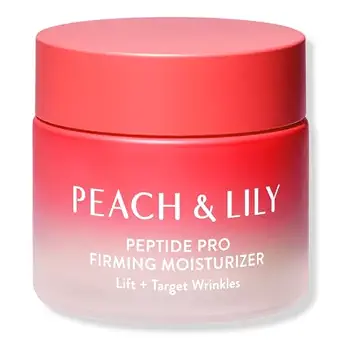
2. Peach & Lily Peptide Pro Firming Moisturizer — Best Peptide-Focused Pick
Peach & Lily Peptide Pro Firming Moisturizer is a peptide-focused moisturizer for shoppers who prefer a hydrating cream rather than starting with a retinol product. The brand positions it as a firming moisturizer, and its formula includes a peptide complex alongside moisturizing ingredients. This makes it a reasonable option for someone whose skin feels dry or looks less plump and who wants a comfortable daily moisturizer.
Why it may suit you: it gives readers an alternative to retinol and can fit into a routine focused on hydration and barrier comfort. A moisturizer that feels good and is easy to use consistently may be more practical than an aggressive routine that leaves skin irritated. The brand’s firming language should still be interpreted carefully: a topical moisturizer may improve the look of hydration and texture, but it cannot physically reposition sagging tissue.
What to consider: peptide formulas are not interchangeable, and evidence for one peptide or finished product should not be generalized to every peptide moisturizer. Check the ingredient list for fragrance or other ingredients you personally avoid. If you are highly reactive, patch test before applying it across your face.
Best for: People who want a peptide-focused moisturizer and prefer not to begin with retinol.
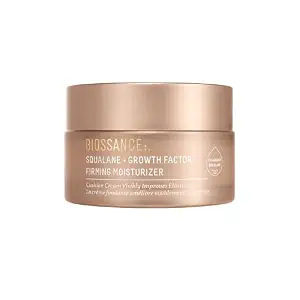
3. Biossance Growth Factor Firming Anti-Aging Moisturizer with Peptides — Best Premium Pick
Biossance Growth Factor Firming Anti-Aging Moisturizer with Peptides is the premium option in this comparison. The product is marketed around a biomimetic growth-factor ingredient, peptides, and squalane. Its appeal is a multi-ingredient moisturizer designed to support hydration and the appearance of smoother, firmer-looking skin.
Why it may suit you: shoppers who prefer a richer or more premium moisturizer may appreciate the combination of peptide-focused ingredients and an emollient such as squalane. It can be considered as a moisturizer step for someone who wants a more elaborate formula without building a routine around several separate products.
What to consider: “growth factor” language in cosmetics does not mean that a topical cream has been shown to reverse significant skin laxity. Product marketing is not the same as independent clinical evidence. Compare the price per ounce with your budget, review the full ingredient list, and remember that a more expensive moisturizer is not automatically more effective for your particular skin.
Best for: Shoppers who want a premium peptide-focused moisturizer with squalane
Comparison Table: Which One Fits Your Routine?
| Product | Main approach | Best suited to | Important limitation |
| Olay Retinol 24 MAX | Retinol night moisturizer | Fine lines and uneven texture | May irritate; introduce gradually |
| Peach & Lily Peptide Pro | Peptides + hydration | Peptide-focused daily moisturizing | Not a proven treatment for loose skin |
| Biossance Growth Factor Firming | Peptides + squalane | Premium hydration-focused routine | Higher price does not guarantee better results |
Our practical take: choose Olay if you specifically want to try a retinol night cream and your skin can tolerate it. Choose Peach & Lily if you want a peptide-focused moisturizer without making retinol the center of your routine. Consider Biossance if you prefer a premium moisturizer and the price fits your budget. None of these products should be purchased with the expectation of a surgical-style lift.
How to Build a Simple Routine for Firmer-Looking Skin
Morning routine
- Cleanse gently. Use lukewarm water and a mild cleanser. If your skin is dry and comfortable in the morning, rinsing with water may be enough.
- Apply an optional antioxidant serum. A vitamin C product may suit people concerned about dullness or uneven tone. Introduce it separately from other new active ingredients.
- Moisturize. Choose a moisturizer that suits your skin type. Look for humectants, ceramides, or emollients if dryness is making fine lines more noticeable.
- Finish with sunscreen. Use a broad-spectrum, water-resistant SPF 30 or higher on exposed skin. Apply enough and reapply about every two hours when outdoors, and after swimming or sweating.
Sunscreen is not an optional extra in an anti-aging routine. The American Academy of Dermatology recommends broad-spectrum SPF 30 or higher and other sun-protective habits. A product marketed as firming cannot compensate for repeated unprotected UV exposure.
Evening routine
- Remove makeup, sunscreen, and daily buildup with a gentle cleanser.
- Use one targeted treatment if appropriate. If you choose a retinol product, follow its label and start slowly. Do not add several new actives at once.
- Apply moisturizer. Use a comfortable cream to reduce dryness and support the skin barrier.
- Give the routine time. Track comfort and visible changes over several weeks rather than changing products every few days. Stop a product that causes persistent irritation.
You do not need to use all three featured moisturizers. Pick one that matches your main concern. Using multiple firming creams at once is unlikely to produce a better result and may make it harder to identify what is irritating your skin.
Face, Jawline, Neck, and Body: Does the Same Advice Apply?
The face and neck both benefit from gentle cleansing, moisturizer, and sun protection, but the skin on the neck may be more sensitive for some people. Extend products to the neck only when the label permits and your skin tolerates them. Be especially cautious when using retinol near the neck because irritation can be more noticeable there.
Body skin may need a different texture or larger-volume moisturizer. If the concern is loose skin on the abdomen, arms, or thighs after substantial weight loss, a facial cream is not designed to remove excess skin. A dermatologist or qualified clinician can explain realistic options based on the area and degree of laxity.
Common Mistakes That Can Waste Money or Irritate Skin
Expecting instant lifting
A temporary tightening sensation or smoother finish does not prove that the deeper support structures have been lifted. Evaluate products by realistic outcomes such as hydration, comfort, and the appearance of fine lines.
Starting several active products together
Adding retinol, exfoliating acids, vitamin C, and multiple firming serums in one week makes irritation more likely and makes it difficult to identify the cause. Introduce one product at a time.
Skipping sunscreen
UV exposure contributes to photoaging. A night cream cannot undo the effect of spending the day in the sun without protection.
Buying by price or marketing language alone
Terms such as “lifting,” “collagen,” and “firming” can sound impressive, but they do not tell you how well a formula will suit your skin. Compare the ingredient list, product directions, amount, price, and your own sensitivity.
Ignoring persistent irritation
Burning, swelling, persistent redness, or worsening dryness is not a sign that a product is working. Stop using the product and seek medical advice if the reaction is significant or does not settle.
When Skincare Is Not Enough
If you have pronounced jowls, substantial loose skin after weight loss, or a clear change in facial volume, topical skincare may not deliver the result you want. A board-certified dermatologist or appropriately qualified plastic surgeon can assess the cause and discuss options. Depending on the person, options may include energy-based procedures, injectables for selected volume concerns, or surgery for more significant excess skin.
Procedures have different evidence, costs, risks, downtime, and suitability. Some treatments provide modest improvement rather than a dramatic lift, and results vary. Ask about expected outcomes for your specific concern, how many sessions may be needed, possible complications, and the clinician’s training. Avoid making a decision based only on social media images or a clinic’s promotional claims.
If the change in your skin is sudden, one-sided, associated with swelling or a rash, or occurs alongside other unexplained symptoms, seek medical assessment rather than treating it as routine aging.
Frequently Asked Questions
What is the best skincare for saggy skin?
The best routine depends on what you mean by sagging. For fine lines and uneven texture, a suitable retinol product may help gradually. For dehydration, a moisturizer with humectants and barrier-supporting ingredients can make skin look smoother. Daily broad-spectrum sunscreen is essential for limiting further UV-related aging. No topical routine can remove significant excess skin.
Can a firming cream really tighten loose skin?
A cream may temporarily improve the look of firmness by hydrating and smoothing the surface. It cannot physically lift substantial loose skin or replace lost facial volume. Be cautious of products promising facelift-like results.
Is retinol or peptides better for sagging skin?
They serve different purposes. Retinol has a better-established role for certain signs of photoaging, including fine lines and texture, but can irritate. Peptide moisturizers may support hydration and the appearance of smoother skin, although evidence varies by formula. Neither is a substitute for a procedure when laxity is significant.
How long does it take to see results?
Hydration-related changes can be noticeable relatively quickly, while changes in fine lines or texture from an active ingredient may take weeks or longer. Results vary with the product, consistency, and individual skin response. Do not increase use simply to speed up results.
Can skincare tighten sagging skin after weight loss?
Skincare can improve dryness and surface texture, but it cannot remove excess skin after major weight loss or restore lost facial fat. A clinician can assess whether the concern is skin laxity, volume loss, or both.
Should I use firming cream on my neck?
You can use a moisturizer and sunscreen on the neck if the products are suitable for that area. Introduce active ingredients carefully because the neck can be sensitive. Follow the label and stop if irritation develops.
Can I use retinol every night?
Not everyone should start with nightly use. Follow the product directions and introduce retinol gradually. If you experience persistent irritation, reduce use or stop and ask a dermatologist. Avoid retinoids during pregnancy.
Does expensive skincare work better?
Not necessarily. Price does not establish effectiveness. A less expensive product that suits your skin and is used consistently may be a better choice than a luxury cream that irritates you or does not match your concern.
Final Verdict: Choose a Realistic Routine, Not a Miracle Claim
The most useful skincare for saggy skin is a routine built around your actual concern. Retinol may help with the appearance of fine lines and photoaging when used appropriately. Peptide and moisturizing formulas can support hydration and a smoother-looking surface. Daily sunscreen helps protect against additional UV damage.
For this comparison, Olay Retinol 24 MAX is the retinol-focused option, Peach & Lily Peptide Pro is the peptide-focused moisturizer, and Biossance is the premium peptide-and-squalane pick. Choose one based on your skin’s needs, tolerance, and budget—not on a promise that a cream will lift loose skin.
If your concern is substantial laxity or volume loss, a consultation with a qualified dermatologist can help you understand options beyond topical skincare. Healthy-looking skin is a more realistic goal than overnight transformation.
Related Reading on ZaisufBeauty
If wrinkles and fine lines are also a concern, read our related guide: Best Skin Cream for Wrinkles: 5 Top Picks (2026)
How We Researched This Guide
We compared the three featured products using publicly available product descriptions and retailer listings, then reviewed dermatologist and health-system guidance on retinoids, sunscreen, skin aging, and realistic expectations for topical skincare. This is a research-based comparison, not a hands-on product test or a clinical evaluation. Product formulas, prices, ratings, and availability can change. We do not claim personal testing, dermatologist review, or clinical results for these products.
Before publishing, ZaisufBeauty should verify each product’s current ingredient list and size, check the live retailer and Amazon listings, and update any price or availability details. If the editorial team later tests a product, add the date, testing period, skin type, method, and observations rather than retroactively describing research as firsthand experience.
If you want to read more about this, check out our detailed guide here:https://zaisufbeauty.com/best-gucci-perfume-for-women/