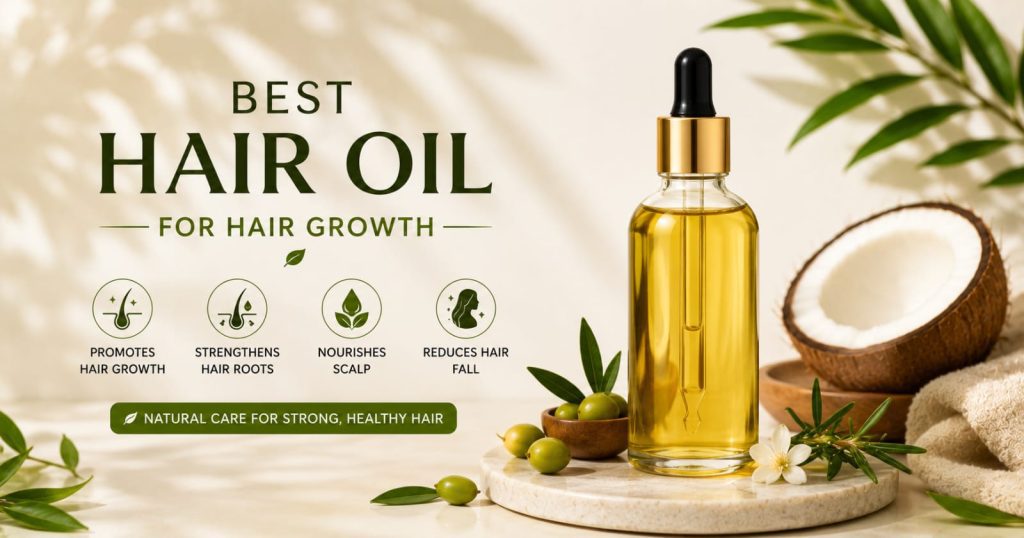
If you’re searching for the best hair oil for hair growth, you’re probably dealing with one of three things: more shedding than usual, thinning around the scalp or hairline, or hair that seems to grow but never gets longer because of constant breakage.
The tricky part is that not every product marketed as a “growth oil” actually does the same job. Some oils mainly moisturize and reduce breakage. Some are designed specifically for the scalp. Others are lightweight serums rather than traditional oils. And when true hair loss is involved, an oil may not address the underlying cause at all.
For this guide, I compared popular products based on formula, intended use, scalp compatibility, hair type, ingredient profile, application, price category, and the quality of evidence behind common hair-growth ingredients.
The result is a practical list of 10 products available to U.S. shoppers, including affordable oils, scalp treatments and higher-end density serums.
Quick answer:
If you want a traditional oil with a rosemary-focused formula and an accessible price, Mielle Rosemary Mint Scalp & Hair Strengthening Oil is an easy starting point. If your main concern is visible thinning rather than dryness or breakage, a dedicated scalp serum such as Vegamour GRO or The Ordinary Multi-Peptide Serum may make more sense.
Quick Comparison: 10 Hair Growth Oils and Scalp Treatments
| Product | Best For | Formula | Price Level | Main Strength |
| Mielle Rosemary Mint Oil | Overall oil routine | Oil | Budget | Rosemary + biotin + conditioning |
| Fable & Mane HoliRoots | Pre-wash oiling | Oil | Mid-range | Scalp massage + conditioning |
| Wild Growth Hair Oil | Budget shoppers | Oil | Budget | Multi-oil conditioning |
| Kreyòl Essence Haitian Black Castor Oil | Thick/coily hair | Oil | Mid-range | Rich conditioning |
| The Ordinary Multi-Peptide Serum | Budget scalp serum | Serum | Budget | Lightweight density care |
| Vegamour GRO Hair Serum | Thinning/shedding | Serum | Premium | Scalp-focused treatment |
| Briogeo Destined for Density | Fine/thinning hair | Serum | Premium | Peptides + caffeine + scalp care |
| BondiBoost Procapil Hair Tonic | Lightweight scalp care | Tonic | Mid-range | Procapil-focused formula |
| Kérastase Genesis Serum | Weak/breakage-prone hair | Serum | Premium | Strengthening + breakage care |
| OUAI Hair Oil | Damage/frizz/length retention | Oil | Mid-range | Smoothing + heat protection |
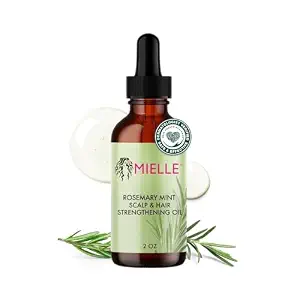
1. Mielle Rosemary Mint Scalp & Hair Strengthening Oil
Best for: An affordable everyday hair oil routine
Mielle’s Rosemary Mint Scalp & Hair Strengthening Oil is one of the most recognizable options in this category, and it makes sense for shoppers who specifically want a traditional hair oil rather than a water-based scalp serum. The formula contains rosemary, mint and biotin and is designed to condition the scalp and hair while supporting stronger, healthier-looking strands. Its versatility makes it useful for a small amount on the scalp or on lengths and ends.
Potential downside: The richer texture may feel heavy on very fine or oily hair.
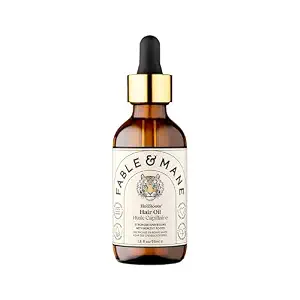
2. Fable & Mane HoliRoots Hair Oil
Best for: Pre-wash oiling and scalp massage
Fable & Mane HoliRoots is a good choice if your routine centers on a relaxing pre-shampoo scalp massage. The brand describes it as a pre-wash treatment with ingredients including ashwagandha and amla, designed to moisturize the scalp and strands while helping reduce breakage. It is particularly suitable for people who prefer washing oil out rather than wearing a heavy leave-in layer.
Potential downside: It costs considerably more than basic drugstore oils.
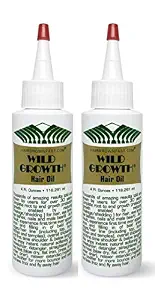
3. Wild Growth Hair Oil
Best for: Budget-conscious shoppers
Wild Growth Hair Oil is a concentrated multi-oil formula designed to condition and soften hair. Its ingredient profile includes oils such as coconut, olive and jojoba. It is best viewed as a conditioning and length-retention product rather than a guaranteed treatment for medical hair loss.
Potential downside: The richer texture may feel heavy on fine hair.
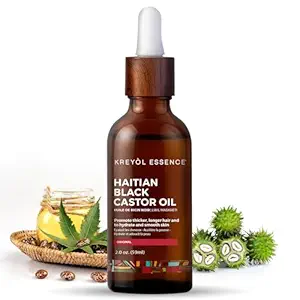
4. Kreyòl Essence Haitian Black Castor Oil
Best for: Dry, thick and textured hair
Castor oil is popular in the hair-growth category, but claims about direct hair growth are often overstated. Pure castor oil does not have strong evidence for increasing human hair growth. It can still be useful as a rich conditioning ingredient, particularly for dry strands and textured hair where moisture and breakage control matter
Potential downside: Castor oil can be too heavy for fine or oily hair and may irritate some scalps.
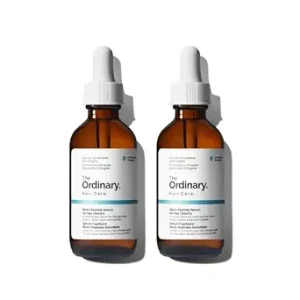
5. The Ordinary Multi-Peptide Serum for Hair Density
Best for: A lightweight, budget-friendly scalp serum
The Ordinary Multi-Peptide Serum for Hair Density is a lightweight leave-in scalp serum designed to support the appearance of thicker, denser and fuller-looking hair. For people with fine hair who dislike greasy oils, this format can be easier to use consistently.
Potential downside: It is a serum rather than a conventional hair oil, so it belongs in a slightly different product category.
6. Vegamour GRO Hair Serum
Best for: Visible thinning and shedding concerns
Vegamour GRO is a scalp-focused serum positioned around thinning, shedding and fuller-looking hair. The lightweight format can suit people who have fine hair or an oily scalp and do not want to saturate the scalp with a rich oil. Treat its claims as cosmetic/product claims rather than proof that it can treat every cause of hair loss.
Potential downside: Premium pricing compared with basic hair oils.
7. Briogeo Destined for Density Peptide Hair Serum
Best for: Fine or thinning hair with a dry scalp
Briogeo Destined for Density is a density-focused scalp serum with ingredients including copper peptide, caffeine, niacinamide, biotin and botanical ingredients. It is a good example of a scalp treatment rather than a traditional oil, particularly for readers who want a lightweight format.
Potential downside: It is expensive compared with basic hair oils.
8. BondiBoost Procapil Hair Tonic
Best for: Lightweight scalp treatment
BondiBoost Procapil Hair Tonic is designed for thinning and shedding concerns and is intended as a lightweight leave-in scalp treatment. This makes it another option for people who dislike the weight of traditional oils. Think of it as a scalp treatment, not an ordinary conditioning oil.
Potential downside: Procapil should not be treated as equivalent to an FDA-approved hair-loss medication.
9. Kérastase Genesis Strengthening Scalp & Hair Serum
Best for: Weak hair and breakage
Kérastase Genesis is particularly useful for readers whose apparent “growth” problem is actually breakage. It is a lightweight scalp and hair serum designed to strengthen weak hair and reduce breakage. If hair is growing but snapping at the ends, improving the condition of the lengths can help retain more of the length you naturally grow.
Potential downside: Premium pricing and less direct relevance to medical hair loss.
10. OUAI Hair Oil
Best for: Damage, frizz, shine and length retention
OUAI Hair Oil is included to show what a good cosmetic hair oil can do without presenting it as a hair-loss treatment. It is designed for smoothing, hydration, shine, frizz control and heat protection, and is primarily used on the mid-lengths and ends.
Potential downside: It is not a dedicated hair-growth or thinning treatment.
Does Hair Oil Actually Make Your Hair Grow?
The honest answer is that an oil may support the condition of the scalp and hair, but that does not mean every hair oil directly stimulates new growth.
Hair growth and hair retention are different. Follicles determine how hair grows from the scalp, while the condition of the hair shaft affects how much of that length survives without breaking.
Coconut oil has evidence for reducing protein loss from hair when used as a grooming treatment, which can help protect the hair fiber. That is a hair-damage benefit rather than proof that coconut oil creates new follicles.
Rosemary oil has some human research behind it, including a small randomized trial comparing rosemary oil with 2% minoxidil in androgenetic alopecia over six months. The study was relatively small, so it should not be interpreted as proof that rosemary oil is equivalent to established hair-loss treatments.
When choosing a hair-growth product, focus on realistic outcomes such as scalp conditioning, reduced breakage, improved manageability, moisture, and the appearance of fullness. Those benefits should not automatically be equated with treatment for medical hair loss.
Rosemary Oil vs. Castor Oil for Hair Growth
Rosemary has some human research supporting further investigation as a botanical option for hair growth. Castor oil is more strongly associated with conditioning and lubrication, while evidence that pure castor oil directly increases human hair growth is lacking.
Bottom line: Choose rosemary when the research behind a botanical growth ingredient matters most to you. Choose castor oil when your priority is richer moisture and conditioning, particularly for dry or textured hair.
How to Choose the Best Hair Oil for Hair Growth
For fine or oily hair
Look for a lightweight oil or scalp serum. Heavy formulas can leave fine strands flat and may feel uncomfortable if your scalp becomes oily quickly.
For dry, thick or coily hair
A richer oil can make more sense because the hair itself may benefit from additional lubrication and conditioning.
For breakage and damaged hair
Focus on length retention. A product that improves manageability and protects the hair shaft may be more useful than one making aggressive growth promises.
For actual thinning or hair loss
Look beyond cosmetic oils. Hair loss can have many causes, and professional evaluation can help identify the underlying problem.
How to Use Hair Oil for Better Results
More oil does not mean faster growth. Start with a small amount and work it into the scalp gently with your fingertips if the product is intended for scalp use.
For pre-shampoo oils, apply before shampooing and wash out according to the product directions. For hair that mainly suffers from dryness or breakage, concentrate oil on the mid-lengths and ends.
Overnight oiling is not automatically better. Follow product directions and stop if your scalp becomes itchy, red, painful or unusually irritated.
Avoid aggressive scratching or rubbing, and be cautious with hot-oil treatments on fragile hair.
How Often Should You Oil Your Hair?
There is no universal schedule. A dry, thick or highly textured hair type may tolerate richer oiling better than fine, oily hair.
A practical starting point is once or twice a week for a traditional oil, then adjust based on how your scalp and hair respond. Dedicated scalp serums may have completely different directions, so follow the product label.
Consistency and a suitable routine matter more than applying a large amount of oil occasionally.
Hair Oil vs. Hair Serum: Which Is Better?
Hair oils are generally more useful for moisture, softness, shine, scalp conditioning, pre-wash treatments and helping reduce the effects of dryness and breakage.
Scalp serums are often more practical for people who want a lightweight product, daily scalp application, or a formula focused on the appearance of density and thinning.
That is why this guide includes both categories. Treating every scalp product as a traditional oil would make the comparison less useful.
Hair Oil vs. Minoxidil
Minoxidil is a recognized hair-loss treatment, while hair oils are generally cosmetic or botanical products with different levels of evidence.
The American Academy of Dermatology notes that topical minoxidil can stimulate hair growth and reduce further hair loss for some people, but results take time and continued use is generally needed to maintain benefits.
If you have significant or progressive thinning, do not assume an expensive oil is a substitute for medical evaluation.
When Should You See a Dermatologist?
- Sudden or severe shedding
- Rapidly widening areas of thinning
- Bald patches
- Scalp pain, burning or persistent inflammation
- Hair loss around the crown or hairline
- Persistent hair loss despite changing your routine
Hair loss can have many causes, and identifying the underlying cause is important because treatment depends on what is actually happening.
Frequently Asked Questions
What is the best hair oil for hair growth?
There is no single oil that is scientifically best for everyone. For a traditional rosemary-focused oil, Mielle Rosemary Mint is a practical affordable option. For visible thinning, a dedicated scalp serum may be a better product category.
Which oil is best for hair growth and thickness?
Rosemary-based formulas are among the more researched botanical options, while castor, coconut and other oils can be useful for conditioning and reducing breakage. Do not confuse stronger-looking hair with new follicle growth.
Does rosemary oil help hair growth?
There is some human evidence supporting rosemary oil, including a small randomized trial in androgenetic alopecia. However, the evidence base is much smaller than for established medical treatments.
Does castor oil grow hair?
There is not good evidence that pure castor oil directly increases human hair growth. It can still be useful as a rich conditioning oil for dry or textured hair.
How long does hair oil take to work?
Do not expect dramatic changes in a few days. Hair grows slowly, and results depend heavily on the reason for thinning or breakage.
Can I leave hair oil overnight?
Some products are designed for longer treatments, but overnight application is not automatically better. Follow product directions and stop if your scalp becomes irritated.
How often should I use hair oil?
Start with once or twice a week for a traditional oil and adjust according to your hair and scalp. Lightweight scalp serums may have different instructions.
Is hair oil good for thinning hair?
It can support scalp conditioning and hair care, but thinning can have medical causes. If thinning is persistent or worsening, a dermatologist can help identify the cause.
Final Verdict: Which Hair Growth Product Should You Buy?
The best hair oil for hair growth depends on what you actually want to improve.
If you want an affordable traditional oil, Mielle Rosemary Mint is a sensible starting point. If you prefer a pre-wash ritual, Fable & Mane HoliRoots is worth considering. For thick, dry or textured hair, Wild Growth or Kreyòl Essence may fit better. If your primary concern is fine hair or visible thinning and you dislike greasy oils, a lightweight scalp serum such as The Ordinary, Vegamour GRO or Briogeo may make more sense.
If your real problem is ongoing hair loss rather than dryness or breakage, do not stop at an oil. Understanding the cause is the most important step.
The biggest mistake is looking for a miracle bottle. A better approach is to choose a product that matches your scalp, hair type, concern and realistic goal, then use it consistently while protecting your hair from unnecessary breakage and damage.