This post may contain affiliate links. If you purchase through a link on this page, we may earn a small commission at no extra cost to you.
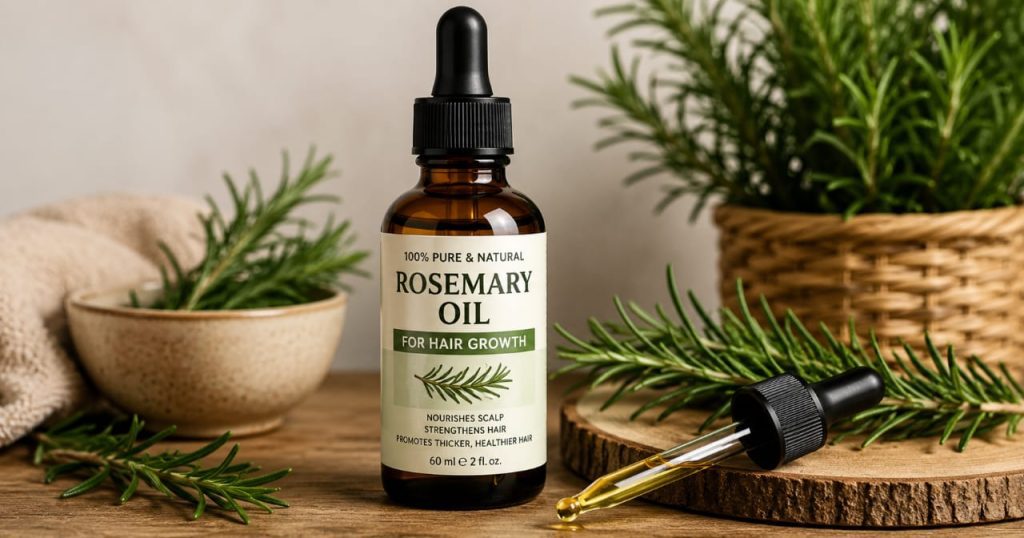
Rosemary oil has become one of the most searched natural ingredients for thinning hair and scalp care. You will find it in everything from concentrated essential oils to ready-to-use scalp blends, shampoos, serums, and hair treatments. But there is an important difference between a product containing rosemary and evidence that rosemary oil can actually improve hair growth.
The short version is encouraging but not dramatic: a small human clinical trial found that rosemary oil and 2% minoxidil both showed an increase in hair count after six months in people with androgenetic alopecia. That is useful evidence, but it is not enough to say rosemary oil works for every kind of hair loss or that every rosemary product will produce the same result.
This guide breaks down what the research actually shows, which type of rosemary product makes sense for different routines, how to dilute and apply pure rosemary essential oil, what to look for when shopping, and 10 Amazon-searchable rosemary hair products worth considering.
Quick Answer: Does Rosemary Oil Help Hair Growth?
It may help support hair growth, particularly in the context of androgenetic alopecia, but the clinical evidence is still limited. The best-known human study compared rosemary oil with 2% minoxidil for six months and found increased hair counts in both groups at six months, with no statistically significant difference between them.
That result should be interpreted carefully. It was one relatively small study with a specific population and design. It does not prove that rosemary oil is equivalent to minoxidil for everyone, nor does it establish rosemary oil as a treatment for conditions such as alopecia areata or scarring alopecia.
If you want to try rosemary oil, the safest practical route is to use a clearly labeled ready-to-use product or properly dilute pure rosemary essential oil in a carrier oil. Use a consistent routine for several months rather than expecting visible changes within days.
Rosemary Hair Oil: Quick Comparison
| Product type | Best for | Dilution? | What to know |
| Pure rosemary essential oil | DIY users who want a concentrated ingredient | Yes | Never apply undiluted to the scalp. |
| Rosemary-infused carrier oil | Simple pre-wash scalp routines | Usually no | Rosemary is already infused into a base oil. |
| Pre-diluted rosemary scalp oil | Beginners and convenience | Usually no | Follow the manufacturer’s directions. |
| Rosemary scalp serum/tonic | Fine hair or people who dislike greasy oils | No | Often lighter than a traditional oil. |
| Rosemary shampoo/conditioner | Rinse-off hair care | No | Contains rosemary but has much shorter scalp contact time. |
10 Rosemary Oils & Rosemary Hair Products to Consider
The list below is designed around different product formats, formulas, and use cases rather than claiming one universal winner. Amazon prices, ratings, sellers, and stock can change, so verify the live listing before publishing or updating this section.
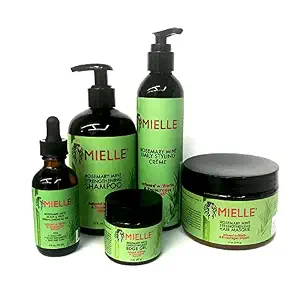
Mielle Organics Rosemary Mint Scalp & Hair Strengthening Oil, 2 oz
Best for: A popular ready-to-use rosemary scalp and hair oil.
Why consider it: A rosemary-and-mint formula with biotin, castor oil, jojoba oil and other botanical ingredients. It is a strong option for readers who want a finished blend rather than DIY dilution. Current Amazon-market tracking lists ASIN B07N7PK9QK and very high buyer volume.
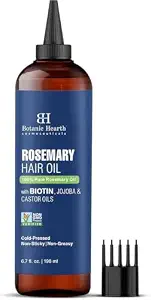
Botanic Hearth Rosemary Oil for Hair Growth, 6.7 fl oz
Best for: A larger ready-to-use rosemary hair-oil bottle.
Why consider it: The formula is positioned around rosemary with biotin, castor and jojoba oils. The larger bottle can make sense for regular scalp-oiling routines. Current Amazon-market tracking lists ASIN B0C6XJMSGP.
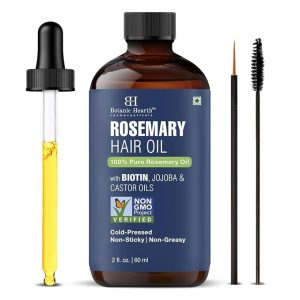
Botanic Hearth Rosemary Oil for Hair Growth, 2 fl oz
Best for: Readers who want a smaller bottle before committing to a larger size
Why consider it: A smaller version of the rosemary, biotin, castor and jojoba-focused formula. Current Amazon-market tracking lists ASIN B0D2RSCZBD.
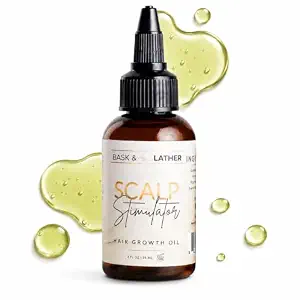
Bask & Lather Scalp Stimulator Hair Growth Oil, 2 fl oz
Best for: A leave-in scalp oil with rosemary, mint and grapeseed oil
Why consider it: The formula combines rosemary and mint with grapeseed oil and is marketed as a leave-in scalp treatment. Current Amazon-market tracking lists ASIN B0CFYS7M4L.
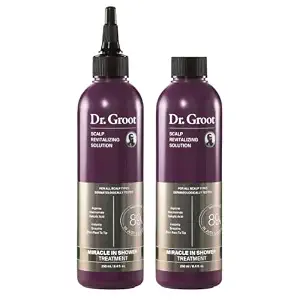
Dr. Groot Miracle in Shower Moisturizing Treatment with Rosemary Oil
Best for: Readers who prefer a rinse-off treatment rather than a traditional scalp oil
Why consider it: It represents an important alternative format in the rosemary category: a rinse-off treatment containing rosemary rather than a leave-on oil. Current Amazon-market tracking lists ASIN B0CGS2D8J8.
AROMATICA Rosemary Root Enhancer
Best for: A lighter scalp-focused rosemary tonic/spray format.
Why consider it: Current Amazon-market tracking lists this rosemary root product with rosemary, caffeine and biotin and positions it around scalp and thinning-hair care. ASIN B01MU9AUX7.
Be Bodywise Hair Growth Serum Roll-On with Rosemary Oil
Best for: Readers interested in a targeted scalp serum rather than a traditional oil.
Why consider it: Current Amazon-market data lists a roll-on serum with 3% rosemary oil alongside other actives such as saw palmetto and caffeine. ASIN B0GD1KRPT3. Because it is a multi-active serum, it should not be treated as equivalent to pure rosemary essential oil.
Weleda Revitalizing Hair Tonic with Rosemary
Best for: Fine hair users who prefer a liquid tonic instead of a heavy oil.
Why consider it: It is a rosemary hair tonic format rather than a conventional oil, making it relevant for readers who want a lighter scalp routine. Current 2026 comparison pages list it among rosemary hair-care options.
Handcraft Blends Rosemary Essential Oil
Best for: DIY users who specifically want a concentrated essential oil.
Why consider it: This is a pure essential-oil style product, so it belongs in the DIY category. Do not apply it directly to the scalp; dilute it in a carrier oil first. Amazon-market tracking identifies Handcraft Blends among rosemary essential-oil products.
100% Pure Rosemary Essential Oil for Hair, Undiluted, 4 fl oz
Best for: Experienced DIY users who understand essential-oil dilution.
Why consider it: Current Amazon-market tracking lists an undiluted 4 fl oz rosemary essential oil under ASIN B09PR9R9SL. It is a concentrated essential oil, not a ready-to-use scalp oil.
10-Product Comparison Table
| Product | Format | Dilution | Best fit |
| Mielle Rosemary Mint | Ready-to-use oil | No extra dilution | Scalp + hair care |
| Botanic Hearth 6.7 oz | Ready-to-use oil | No extra dilution | Frequent scalp oiling |
| Botanic Hearth 2 oz | Ready-to-use oil | No extra dilution | Smaller-size trial |
| Bask & Lather | Leave-in scalp oil | Follow label | Scalp-focused routine |
| Dr. Groot | Rinse-off treatment | No | Non-greasy routine |
| AROMATICA | Scalp tonic/spray | No | Fine-hair/light feel |
| Be Bodywise | Multi-active scalp serum | No | Targeted serum routine |
| Weleda | Hair tonic | No | Light scalp tonic |
| Handcraft Blends | Essential oil | Yes | DIY users |
| Pure Rosemary Essential Oil 4 oz | Essential oil | Yes | DIY users / larger bottle |
Product note: The product section is intentionally presented as a shopping shortlist, not a clinical ranking. Popularity, price, reviews, or ingredient combinations do not establish that one commercial product will regrow more hair than another.
What the Research Actually Says
The most commonly cited human evidence comes from a 2015 randomized comparative study of rosemary oil and 2% minoxidil in people with androgenetic alopecia. The trial followed participants for six months. Hair counts did not show a significant change at three months, while both groups showed a significant increase from baseline at six months. The study found no statistically significant difference in hair count between the rosemary-oil and minoxidil groups at three or six months.
That is a useful signal, but it is not the same as a large body of evidence. The trial had a limited sample and specific study conditions, and it did not establish that rosemary oil works for every cause of hair loss. Recent expert discussions continue to describe the evidence as promising but limited rather than definitive.
Why You Should Be Careful With the ‘Rosemary = Minoxidil’ Claim
You will see this comparison across the web because of the 2015 trial. But the correct interpretation is narrower: that study compared rosemary oil with 2% minoxidil under its own study conditions. It does not prove that a bottle of rosemary hair oil from a retailer is clinically equivalent to minoxidil.
Commercial products also differ in rosemary concentration, extraction method, carrier oils, fragrance, application instructions and contact time. A product containing rosemary is therefore not automatically the same intervention that was studied.
How Rosemary Oil May Support a Hair-Care Routine
- Antioxidant activity may help support a healthier scalp environment.
- Anti-inflammatory and antimicrobial properties may be relevant to scalp care.
- Massage can make a scalp-oiling routine relaxing and may help distribute the product evenly.
- Carrier oils can condition the hair shaft and reduce the dry, rough feel associated with friction and breakage.
These mechanisms are biologically plausible, but they should not be turned into a promise that rosemary oil will regrow hair for everyone.
Can Rosemary Oil Help Every Type of Hair Loss?
| Concern | What the evidence means |
| Androgenetic alopecia / pattern hair loss | The most relevant human rosemary study involved this condition. Evidence remains limited. |
| General thinning | May be part of a routine, but the cause of thinning should be considered. |
| Telogen effluvium | Not established as a rosemary-oil treatment; identifying the trigger is more important. |
| Alopecia areata | Not an established standalone treatment; medical evaluation is appropriate. |
| Scarring alopecia | Do not rely on oils alone. Early medical diagnosis matters. |
| Breakage | Oils can improve conditioning and reduce friction, but that is not the same as follicle regrowth. |
How to Choose the Right Rosemary Oil for Your Hair
| If you are… | Look for… |
| New to rosemary oil | A clearly labeled, ready-to-use scalp oil or tonic. |
| Sensitive to heavy oils | A lighter tonic/serum or lightweight formula. |
| Dry/coarse/curly | A richer carrier-oil blend that also conditions the hair. |
| Fine/oily | A lightweight product and smaller application amounts. |
| DIY-focused | Pure rosemary essential oil plus a suitable carrier oil and clear dilution instructions. |
| Trying to avoid unnecessary irritation | A transparent ingredient list and a simple application routine. |
How to Dilute Rosemary Essential Oil Safely
Pure rosemary essential oil is concentrated. A simple household approach is to use a small amount of essential oil in a carrier oil rather than applying it neat. Jojoba and coconut oil are commonly used carrier oils. Cleveland Clinic also recommends diluting rosemary oil with a carrier oil and patch-testing before wider use.
| Approx. dilution | Essential oil | Carrier oil |
| ~1% | 1 drop | 1 teaspoon / 5 mL |
| ~2% | 2 drops | 1 teaspoon / 5 mL |
| ~2% | 6 drops | 1 tablespoon / 15 mL |
| ~3% | 9 drops | 1 tablespoon / 15 mL |
These are approximate household measurements because drop size varies by bottle. If a finished product is already diluted, do not add extra essential oil unless the manufacturer tells you to.
How to Use Rosemary Oil for Hair Growth
- Patch-test the product before applying it broadly to your scalp.
- Part your hair into sections so you can apply a small amount to the scalp instead of coating the hair.
- Massage gently with your fingertips for a few minutes. Do not scratch the scalp.
- If you are using pure essential oil, make sure it is properly diluted first.
- Leave it on for the time recommended by the product label. A DIY blend does not automatically need to stay on overnight.
- Wash thoroughly if the formula is designed as a pre-wash treatment or if your scalp becomes greasy.
- Repeat on a consistent schedule that your scalp tolerates.
How Often Should You Use Rosemary Oil?
There is no single schedule that fits every rosemary product. Ready-to-use products should be used according to their labels. For a DIY diluted blend, a few applications per week is a practical starting point for many people, but scalp tolerance matters more than forcing a high frequency.
How Long Does Rosemary Oil Take to Work?
Think in months, not days. The main human trial assessed hair counts at three and six months, and the significant increase occurred at six months. That does not mean every person will see growth at six months; it means that a short trial of a week or two is not a meaningful test of hair-growth potential.
Can You Leave Rosemary Oil Overnight?
Some ready-to-use products and routines are designed for longer contact, including overnight use. However, more contact time is not automatically better. If you experience itching, burning, redness, greasy buildup or scalp discomfort, shorten the contact time or stop using the product.
Rosemary Oil Side Effects & Safety
- Pure rosemary essential oil can irritate skin when used undiluted.
- Patch-test before full-scalp application.
- Avoid contact with the eyes.
- Stop if you develop burning, redness, swelling or persistent itching.
- People with very reactive skin or scalp conditions should be especially cautious.
- If pregnant or breastfeeding, discuss topical essential-oil use with a healthcare professional.
- Sudden, severe, patchy or persistent hair loss should be evaluated rather than treated only with cosmetic oils.
Rosemary Oil vs. Minoxidil
| Feature | Rosemary oil | Minoxidil |
| Evidence base | Promising but limited human evidence. | Much larger clinical evidence base for pattern hair loss. |
| 2015 comparison | Studied against 2% minoxidil in one trial. | Comparator in the same trial. |
| How to use | Usually diluted oil or finished topical product. | Standardized topical formulations with specific instructions. |
| Best framing | Complementary/cosmetic scalp-care option; not a guaranteed treatment. | Established treatment option for certain types of hair loss. |
The 2015 study does not justify saying rosemary oil is universally ‘better’ than minoxidil or that every rosemary product is equivalent to it. If you are experiencing meaningful hair loss, discuss evidence-based treatment options with a dermatologist.
Common Mistakes to Avoid
- Applying pure rosemary essential oil directly to the scalp.
- Assuming more oil means faster growth.
- Confusing a rosemary-infused carrier oil with pure rosemary essential oil.
- Assuming every product containing rosemary has been clinically tested for hair regrowth.
- Treating customer reviews as clinical evidence.
- Expecting visible regrowth after a few days.
- Ignoring sudden or patchy hair loss.
- Using multiple irritating essential oils at once and then not knowing which ingredient caused a reaction.
Frequently Asked Questions
Does rosemary oil really grow hair?
It may support hair growth in some people, but the evidence is limited. The strongest human trial evidence relates to androgenetic alopecia and a six-month timeframe.
Can I use rosemary essential oil directly on my scalp?
No. Pure rosemary essential oil should be diluted in a carrier oil before topical use.
What is the best carrier oil for rosemary?
Jojoba and coconut oil are common choices. Your scalp and hair texture should guide the choice.
Can I use rosemary oil every day?
Follow the instructions for your specific product. Daily use is not automatically better, especially with concentrated essential oils.
Can I leave rosemary oil on overnight?
Some routines allow it, but overnight use is not necessary for everyone. Stop or shorten contact time if irritation occurs.
How long should I use rosemary oil before judging it?
Use a consistent routine for several months. The main human trial evaluated outcomes at three and six months.
Does rosemary oil work for thinning hair?
It may help as part of a routine, but thinning has many possible causes. The evidence is strongest for androgenetic alopecia.
Is rosemary oil the same as rosemary extract?
No. They are different ingredient types with different preparation methods and chemical profiles.
Is rosemary oil as effective as minoxidil?
One small 2015 trial found no significant difference in hair count between rosemary oil and 2% minoxidil under that study’s conditions. That does not prove broad equivalence.
Can rosemary oil treat alopecia areata?
It should not be presented as an established standalone treatment for alopecia areata. Seek medical evaluation for patchy hair loss.
Can rosemary oil treat scarring alopecia?
No established evidence supports rosemary oil as a treatment for scarring alopecia. Medical evaluation is important because scarring can permanently damage follicles.
What if rosemary oil makes my scalp itch?
Stop using it and wash the product out. Persistent or significant irritation should be discussed with a healthcare professional.
Related ZaisufBeauty Guides
For a broader hair-care routine, continue with these existing ZaisufBeauty articles. Use the current live URLs already present in your WordPress site when inserting the links.
- Top 5 Hair Oils for Fast Hair Growth
- Best Hair Care Products for Damaged Hair
Final Thoughts
Rosemary oil is more than a social-media trend, but it is also not a miracle hair-growth treatment. There is a real human study suggesting a possible benefit in androgenetic alopecia, yet the overall evidence remains much smaller than the evidence base behind established medical treatments.
For shoppers, the biggest decision is often not ‘which rosemary oil is magically best?’ but ‘which format can I use consistently and safely?’ A ready-to-use scalp oil or tonic may be easiest for beginners. Pure essential oil gives DIY flexibility but requires correct dilution. A richer oil may suit dry or coarse hair, while fine hair may do better with a lighter formula.
Whatever product you choose, keep expectations realistic, avoid undiluted essential oil, and give the routine enough time to evaluate. If your hair loss is sudden, patchy, painful, inflamed, or persistent, finding the cause is more important than adding another hair oil.
Medical Disclaimer
This article is for educational purposes and is not medical advice. Hair loss can have genetic, hormonal, nutritional, inflammatory and other medical causes. Speak with a qualified healthcare professional or dermatologist for significant, sudden, patchy, painful, or persistent hair loss.