This post may contain affiliate links. If you purchase through a link on this page, we may earn a small commission at no extra cost to you.
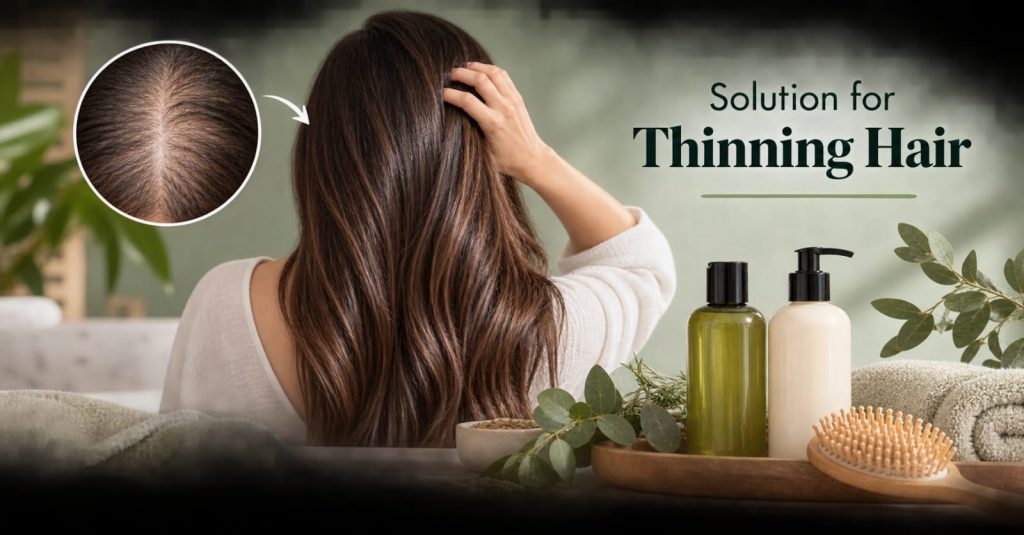
Noticing more hair in your brush than usual, or a part that looks a little wider than it used to? Finding the best shampoo for thinning hair won’t reverse genetics or hormones on its own, but the right formula can support a healthier scalp, reduce unnecessary breakage, and create better conditions for the hair you do have to look fuller and stronger.
We compared 10 shampoos formulated specifically for thinning hair, looking at ingredients, scalp-health benefits, and how each formula fits different causes of thinning — from fine, fragile strands to a flaky or sensitive scalp. This guide breaks down what actually helps, what doesn’t, and how to build a routine around whichever shampoo you choose.
Table of Contents
- Quick Answer
- Why Hair Thins in the First Place
- Comparison Table
- How We Chose These Products
- The 1 0 Best Shampoos for Thinning Hair
- Ingredients to Look For
- Ingredients That Can Work Against Thinning Hair
- How to Use a Thinning-Hair Shampoo Correctly
- Common Mistakes That Make Hair Look Thinner
- Frequently Asked Questions
- Final Verdict
Quick Answer
The best shampoo for thinning hair is typically a lightweight, sulfate-free formula built around scalp-supporting ingredients like biotin, caffeine, niacinamide, or saw palmetto, paired with gentle cleansing agents that won’t strip natural oils or weigh strands down.
If you’re dealing with thin hair loss specifically — where shedding is the main concern rather than just flatness — look for formulas built around caffeine, saw palmetto, or peptides, and for women, a biotin-and-niacinamide blend formulated with hormonal and lifestyle-related thinning in mind. If thinning is related to genetics or hormones, a shampoo can support scalp health and hair texture, but it works best alongside guidance from a dermatologist rather than as a stand-alone fix.
Why Hair Thins in the First Place
Hair thinning has more causes than most shampoo marketing suggests, which is part of why one “miracle” formula rarely works for everyone.
Beyond genetics, thinning can also be triggered by hormonal shifts, physical or emotional stress, damaging styling habits, certain medications, and underlying health conditions. Because the causes vary so widely, a shampoo formulated for thinning hair is best understood as scalp and strand support — not a guaranteed fix for every type of hair loss.
Comparison Table
Shampoo | Best For | KeyIngredient | Sulfate-Free | ScalpFocus |
| Scalp RenewalShampoo | Best Overall | Biotin | Yes | Yes |
| Caffeine Strengthening Shampoo | Best for Hair Loss Support | Caffeine | Yes | Yes |
| Featherweight Volumizing Shampoo | Best for Fine, Thinning Hair | Rice Protein | Yes | No |
| Balance Shampoo for Women | Best forWomen | Biotin,Niacinamide | Yes | Yes |
Shampoo | Best For | KeyIngredient | Sulfate-Free | ScalpFocus |
| DHT-Blocking Shampoo for Men | Best for Men | SawPalmetto | Yes | Yes |
| Dermatologist-Formulated Scalp Shampoo | Best Dermatologist-Style Formula | SalicylicAcid | Yes | Yes |
Growth Support Shampoo | Best for Encouraging Fuller-Looking Hair | Peptides | Yes | Yes |
| Anti-Flake Scalp Shampoo | Best for Flaky, Sensitive Scalp | ZincPyrithione | Yes | Yes |
| Budget Thickening Shampoo | Best BudgetPick | Biotin | No | No |
| Sulfate-Free Gentle Cleanse Shampoo | Best for Color-Treated or Sensitive Hair | Coconut-Derived Cleansers | Yes | No |
How We Chose These Products
Every shampoo on this list was evaluated using:
- Published ingredient lists, prioritizing formulas built around scalp-supporting or strand-strengthening actives
- Sulfate content, since sulfate-free formulas are generally gentler on fragile, thinning hair
- Patterns across verified customer reviews specifically mentioning volume, scalp comfort, and shedding
- Suitability for different causes of thinning, including fine hair, scalp sensitivity, and hormonal factors
- Price relative to bottle size
These recommendations are based on formulation research and customer feedback patterns rather than clinical testing, so individual results will vary depending on the underlying cause of your hair thinning.
The 10 Best Shampoos for Thinning Hair
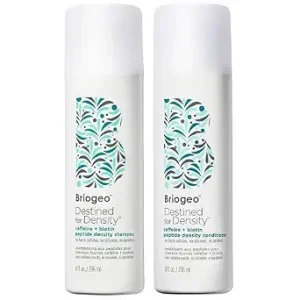
Briogeo Destined for Density™ Shampoo — Best Overall
Overview: Briogeo Destined for Density™ Shampoo is formulated specifically for thin hair and is designed to gently cleanse while helping hair look denser, thicker, and more voluminous. The formula includes copper peptides, zinc, biotin, vitamin E, and caffeine.
Key Features:
- Formulated for thin hair
- Copper peptides, biotin, zinc, vitamin E, and caffeine
- Sulfate- and SLS-free
- Silicone-free and paraben-free
- Designed to support thicker-, fuller-looking hair
Pros:
- Specifically designed for thin hair
- Lightweight cleansing formula
- Multiple scalp- and hair-supporting ingredients
- Sulfate- and SLS-free
Cons:
- Premium price compared with drugstore shampoos
- Contains fragrance, which may not suit very sensitive scalps
Best For: People with thin hair who want a premium shampoo focused on density and fuller-looking strands.
Why We Recommend It: Its formula and intended use closely match the needs of a thinning-hair roundup, making it a strong all-around choice.
- Alpecin C1 Caffeine Shampoo — Best for Hair Loss Support
Overview: Alpecin C1 Caffeine Shampoo is a caffeine-focused shampoo designed for men who want to incorporate a caffeine shampoo into their regular hair-care routine. Its main point of differentiation is its caffeine-focused formula.
Key Features:
- Caffeine-focused formula
- Designed for men’s hair care
- Intended for regular scalp cleansing
- Easy to incorporate into a daily routine
- Popular choice among caffeine shampoos
Pros:
- Straightforward caffeine-focused formula
- Well-known option in the caffeine-shampoo category
- Convenient everyday shampoo format
Cons:
- Should not be presented as a guaranteed hair-loss treatment
- Results and suitability can vary between users
Best For: Men looking to add a caffeine shampoo to a broader thinning-hair routine
Why We Recommend It: It gives this list a dedicated caffeine-shampoo option without treating shampoo as a replacement for professional hair-loss treatment.
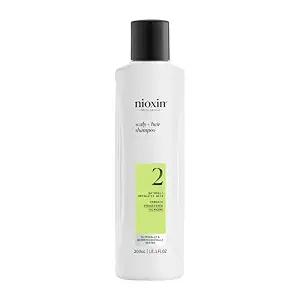
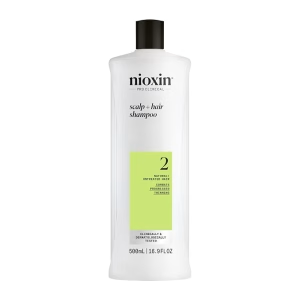
- Nioxin System 2 Scalp + Hair Thickening Shampoo — Best for Fine, Thinning Hair
Overview: Nioxin System 2 Scalp + Hair Thickening Shampoo is designed for natural hair with progressed thinning. The Amazon listing identifies niacinamide and biotin among its highlighted ingredients and positions the shampoo around improving the appearance of hair density.
Key Features:
- Designed for progressed thinning
- Niacinamide
- Biotin
- Scalp and hair thickening focus
- Designed for natural hair
Pros:
- Specifically positioned for thinning hair
- Recognizable hair-thickening system
- Includes niacinamide and biotin
Cons:
- The complete Nioxin system may be more expensive than shampoo alone
- Results can vary depending on the cause of thinning
Best For: People with fine or progressively thinning natural hair who want a product specifically positioned around hair thickening
Why We Recommend It: Its specific positioning for progressed thinning makes it a more relevant choice than a generic volumizing shampoo.
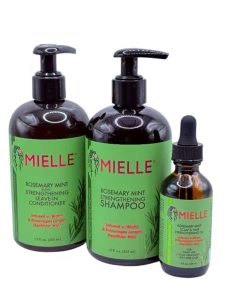
4.Mielle Rosemary Mint Strengthening Shampoo — Best for Women
Overview: Mielle Rosemary Mint Strengthening Shampoo is a biotin-infused strengthening shampoo designed to gently cleanse the hair while providing nutrients to weak or brittle strands. The brand specifically describes it as suitable for all hair types.
Key Features:
Biotin-infused formula
Rosemary and mint-focused formula
Contains coconut and babassu seed oils
Designed to gently cleanse and strengthen
Suitable for all hair types
Pros:
Affordable compared with many salon shampoos
Contains biotin and nourishing oils
Designed for weak and brittle hair
Can be used across different hair types
Cons:
Not specifically a medical treatment for female hair loss
Rosemary/mint fragrance may not suit everyone
Best For:
Women looking for an affordable strengthening shampoo for weak, fragile or thinning-looking hair.
Why We Recommend It:
The formula is specifically positioned around strengthening weak/brittle hair and includes biotin, making it a reasonable choice for the women’s section without claiming that it treats hormonal hair loss
5.hims Thick Fix Shampoo — Best for Menoverview
hims Thick Fix Shampoo is a thickening shampoo formulated with saw palmetto and designed to help thinning hair appear thicker and fuller. Current retailer information describes it as a unisex shampoo, although it fits particularly well in a men’s-focused section because of the hims branding.
Key Features:
Saw palmetto as the highlighted active ingredient
Designed for thinning hair
Helps hair appear thicker and fuller
Sulfate-free according to current product listings
Eucalyptus-style fragrance
Pros:
Directly relevant to thinning-looking hair
Saw palmetto is a recognizable ingredient in men’s hair-care products
Gentle cleansing base
Easy fit for a men’s hair-care routine
Cons:
Shouldn’t be presented as a replacement for proven medical hair-loss treatments
Fragrance may not suit sensitive scalps
Best For:
Men looking for a saw-palmetto shampoo to support a routine for thinning-looking hair.
Why We Recommend It:
It is a much better replacement for your original generic “DHT-Blocking Shampoo for Men” because the actual product contains saw palmetto. However, I would not call it a proven “DHT blocker” in the article because that would overstate what the shampoo itself demonstrates.
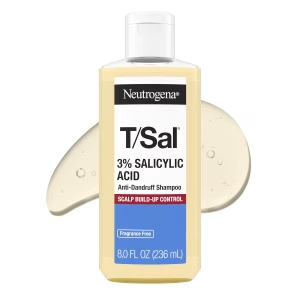
6.Neutrogena T/Sal 3% Salicylic Acid Anti-Dandruff Shampoo — Best Scalp-Care Formula
Overview: Neutrogena T/Sal is a fragrance-free therapeutic scalp shampoo containing 3% salicylic acid. It is designed to help clear flakes and scalp buildup and relieve itching and irritation.
Neutrogena
Key Features:
3% salicylic acid
Fragrance-free
Helps clear flakes
Helps control scalp buildup
Designed for dandruff, psoriasis and seborrheic dermatitis
Pros:
Strong scalp-focused formula
Fragrance-free
Useful for buildup and flaking
Easy-to-understand active ingredient
Cons:
More treatment-oriented than a cosmetic volumizing shampoo
May be too drying for some hair types
Not a direct treatment for genetic hair loss
Best For:
People whose thinning-looking hair is accompanied by scalp buildup, flakes or irritation.
Why We Recommend It:
Your original #6 was supposed to be a dermatologist-style formula. T/Sal is a much more defensible real-product match because the manufacturer specifically positions it as a therapeutic scalp-care shampoo with 3% salicylic acid.
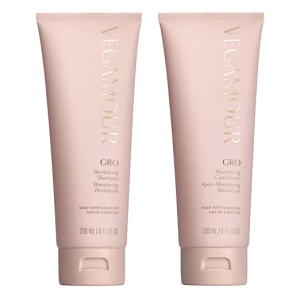
7.VEGAMOUR GRO Revitalizing Shampoo — Best for Fuller-Looking Hair
Overview:
VEGAMOUR GRO Revitalizing Shampoo is designed for proactive hair wellness and is suitable for fine or thinning hair. Its formula contains biotin, caffeine, a spider polypeptide and several additional peptide ingredients. The brand says the shampoo helps build strength and resilience. �
Vegamour +1
Key Features:
Biotin
Caffeine
Multiple peptide/polypeptide ingredients
Ceramide NP
Designed for fine or thinning hair
No SLS or SLES according to the brand
Pros:
Particularly strong match for your original peptide category
Suitable for fine and thinning hair
Contains multiple modern hair-care actives
Color-treated hair compatible according to the brand
Cons:
Premium-priced compared with drugstore options
Contains fragrance
The brand’s clinical result cited is from a controlled hair-swath study, not a clinical trial proving hair regrowth
Best For:
People wanting a premium shampoo focused on stronger, fuller-looking hair.
Why We Recommend It:
This is the product I would use for your original #7 “Growth Support Shampoo.” It actually contains peptide ingredients, biotin and caffeine, so the article’s peptide-focused positioning can be made much more accurate
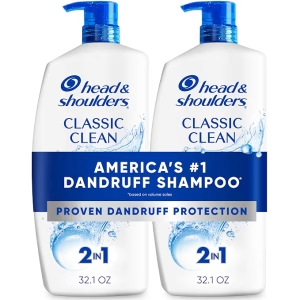
Head & Shoulders Classic Clean 2-in-1 — Best for Flaky Scalp
Overview:
Head & Shoulders Classic Clean 2-in-1 combines shampoo and conditioner with 1% pyrithione zinc. The manufacturer says it is designed to fight dandruff, flakes, itch, oil and dryness with regular use.
Head & Shoulders +1
Key Features:
1% pyrithione zinc
Anti-dandruff formula
2-in-1 shampoo and conditioner
Designed for daily use
Helps control flakes and itch
Pros:
Strong match for a flaky-scalp category
Widely available
Combines cleansing and conditioning
Specifically formulated for dandruff
Cons:
Not a hair-growth treatment
Contains sulfates
May not be ideal for very dry or highly sensitive hair
Best For:
Thinning-looking hair accompanied by dandruff, flakes or an itchy scalp.
Why We Recommend It:
This is a much better real-product replacement for your original “Anti-Flake Scalp Shampoo” because the actual formula contains pyrithione zinc and is specifically intended for dandruff and scalp symptoms.
Head & Shoulders
9.OGX Thick & Full + Biotin & Collagen Shampoo — Best Budget Pick
Overview:
OGX Thick & Full + Biotin & Collagen Shampoo is a volumizing shampoo designed specifically for fine, flat and thin-looking hair. The formula contains biotin, collagen and hydrolyzed wheat protein, and OGX says it uses sulfate-free surfactants.
OGX Arabia +1
Key Features:
Biotin
Collagen
Hydrolyzed wheat protein
Designed for fine hair
Sulfate-free surfactants
Designed to add volume and body
Pros:
More affordable than premium density shampoos
Specifically designed for fine/thin-looking hair
Biotin and collagen-focused formula
Good choice for cosmetic volume
Cons:
Focuses more on volume than scalp-related hair loss
Fragrance may not suit everyone
Shouldn’t be described as a hair-loss treatment
Best For:
Budget-conscious shoppers who mainly want fine hair to look thicker and more voluminous.
Why We Recommend It:
This is one of the strongest matches for your original Budget Thickening Shampoo category. OGX explicitly positions it for fine/thin hair and volume, while keeping the price generally below many salon-oriented options.
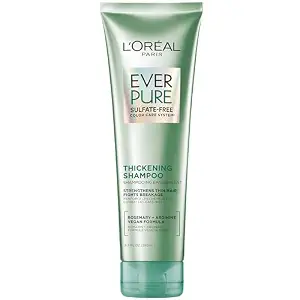
.L’Oréal Paris EverPure Volume Shampoo — Best for Color-Treated or Fine Hair
Overview:
L’Oréal Paris EverPure Volume Shampoo is a sulfate-free shampoo designed to revive fine, flat hair while helping preserve color-treated hair. The formula uses lotus botanicals and is specifically marketed as gentle on color.
L’Oreal Paris
Key Features:
Sulfate-free formula
Lotus botanicals
Designed for fine, flat hair
Color-care focus
Designed to provide lasting volume
No harsh sulfates according to L’Oréal
Pros:
Excellent fit for color-treated hair
Designed specifically for fine, flat hair
Sulfate-free
More affordable than many premium salon shampoos
Cons:
Primarily a volume/color-care shampoo
Not specifically designed to treat hair loss
Fragrance may not suit everyone
Best For: People with fine or thinning-looking hair who also color their hair and want gentle volume without harsh sulfates.
Why We Recommend It:
It directly matches your original “Color-Treated or Sensitive Hair” category because L’Oréal specifically states that it is designed for fine, flat hair and color-treated hair,
Ingredients to Look For
A handful of ingredients consistently show up in shampoos formulated for thinning hair:
- Biotin — commonly included to support the appearance of stronger, healthier-looking hair
- Caffeine — often used in scalp-focused formulas for its energizing effect on hair follicles
- Niacinamide — supports overall scalp comfort and balance
- Saw Palmetto — frequently included in formulas targeting pattern-related thinning
- Peptides — support hair’s natural strength and resilience over time
- Zinc Pyrithione — helps address flaking and scalp irritation that can accompany thinning
Ingredients That Can Work Against Thinning Hair
A few ingredients and formula characteristics are worth approaching carefully if your hair is already fine or fragile:
- Harsh sulfates (like sodium lauryl sulfate) — can strip natural oils and leave already-fragile hair feeling drier
- Heavy silicones — can weigh down fine, thinning hair and make it look flatter rather than fuller
- Added fragrance — worth avoiding if your scalp is sensitive or easily irritated
How to Use a Thinning-Hair Shampoo Correctly
- Focus on the scalp, not just the strands. Most of the benefit comes from how the formula interacts with your scalp, not from lathering the ends.
- Massage gently rather than scrubbing vigorously, since aggressive friction can increase unnecessary breakage.
- Leave it on for a minute or two if the label suggests it, giving active ingredients time to work rather than rinsing immediately.
- Follow with a lightweight conditioner applied mainly to the ends, since heavy conditioner near the roots can flatten already-thin hair.
- Be consistent. Most scalp and strand-support ingredients need several weeks of regular use before any visible difference shows up.
Common Mistakes That Make Hair Look Thinner
- Washing too infrequently in an attempt to “protect” hair. This often allows oil and product buildup to weigh hair down further.
- Using heavy, ultra-moisturizing shampoos meant for thick or coarse hair. These can flatten fine, thinning strands.
- Skipping scalp care entirely. A congested or irritated scalp can quietly make thinning look worse over time.
- Expecting a shampoo alone to reverse significant hair loss. Shampoo can support scalp and strand health, but it isn’t a substitute for a dermatologist’s evaluation when thinning is sudden or severe.
- Switching products too frequently. Give a new shampoo several weeks before deciding whether it’s actually helping.
Frequently Asked Questions
What is the best shampoo for thinning hair?
The best shampoo for thinning hair is generally a sulfate-free, lightweight formula built around scalp-supporting ingredients like biotin, caffeine, or niacinamide, chosen based on your specific type of thinning.
Can shampoo really help with hair loss?
Shampoo can support scalp health and strand strength, which may improve how existing hair looks and feels, but it isn’t a substitute for medical treatment if hair loss is significant or related to an underlying condition.
What is the best shampoo for fine, thinning hair?
A lightweight, protein-based volumizing formula tends to work best for fine hair, since it adds body without weighing strands down the way richer formulas can.
Is sulfate-free shampoo better for thinning hair?
Generally, yes. Sulfate-free formulas tend to be gentler and less stripping, which can be helpful for hair that’s already fragile or prone to breakage.
What ingredients should I look for in a shampoo for hair loss? Biotin, caffeine, niacinamide, saw palmetto, and peptides are commonly included in formulas designed to support scalp health and strand strength.
How long does it take to see results from a thinning-hair shampoo?
Most people need several weeks of consistent use before noticing
any difference, since hair growth cycles are naturally slow.
Should I see a dermatologist for thinning hair?
If thinning is sudden, patchy, or significant, seeing a dermatologist is worth considering, since they can identify the underlying cause and recommend appropriate treatment.
Is a dermatologist-recommended shampoo different from a regular thickening shampoo?
Dermatologist-style formulas tend to prioritize a simpler, less irritating ingredient list, while standard thickening shampoos may focus more on cosmetic volume rather than scalp health specifically.
What is the best shampoo for thin hair loss?
For thinning hair that’s actively shedding, a sulfate-free formula built around caffeine, saw palmetto, or peptides tends to be the better choice, since these ingredients are commonly used to support scalp health during hair loss rather than just adding cosmetic volume.
What is the best shampoo for thinning hair women?
For women, a formula that addresses both hormonal and lifestyle-related thinning — like one built around biotin and niacinamide — tends to work best, since female pattern thinning often differs from the hair loss patterns typically seen in men.
Are there different shampoos for thinning hair based on gender?
Yes. Thinning patterns often differ between men and women, which is why formulas like a women’s biotin-and-niacinamide blend or a men’s saw-palmetto-based formula are built around the specific type of thinning each group tends to experience most.
Final Verdict
Best Overall: Scalp Renewal Shampoo
Best for Women: Balance Shampoo for Women
Best for Men: DHT-Blocking Shampoo for Men
Best Budget Pick: Budget Thickening Shampoo
Best Dermatologist-Style Formula: Dermatologist-Formulated Scalp Shampoo
Best for Encouraging Fuller-Looking Hair: Growth Support shampoo
Choosing the best shampoo for thinning hair really comes down to identifying what’s driving your specific thinning — fine texture, scalp irritation, hormonal changes, or genetics — rather than
reaching for whichever bottle promises the boldest results. Once you understand your starting point, matching it to the right formula becomes a lot more straightforward.
For more on supporting healthy hair growth, our guide to the best hair oil for hair growth covers another step worth pairing with a scalp-focused shampoo routine.
Disclaimer: The products mentioned are recommendations based on research and verified customer reviews rather than in-person testing. This article is for informational purposes only and is not a substitute for professional medical advice. Individual results may vary, and significant or sudden hair loss should be evaluated by a dermatologist.