If you have ever stood in a salon-supply aisle or scrolled through a beauty retailer’s shampoo section, you already know the problem: there are hundreds of hair salon shampoo brands, dozens of formulas within each one, and almost no clear answer to the only question that actually matters — which one is right for your hair?
Most pages you will find on this topic fall into one of two categories. Either they are massive ecommerce catalogs with a thousand products and no real guidance, or they are single-brand pages that, understandably, only tell you why their own product is the answer. This guide takes a different approach. We compared 15 of the most established hair salon shampoo brands by hair type, hair concern, formula focus, and price, so you can find the right match for your hair rather than scrolling through an endless product grid.
Table of Contents
- Quick Answer
- What Makes a Shampoo a “Salon Brand”?
- Quick Comparison Table
- 1 5 Best Hair Salon Shampoo Brands
- Best Salon Shampoo by Hair Type
- Best Salon Shampoo by Hair Concern
- What Shampoo Brands Do Professional Salons Actually Use?
- Salon Shampoo vs. Drugstore Shampoo
- Professional vs. Luxury Shampoo: What’s the Difference?
1 0. Are Salon Shampoo Brands Worth the Money?
1 1 . How We Chose These Brands
1 2. Common Mistakes to Avoid
13. Frequently Asked Questions
14. Final Thoughts
Quick Answer
The best hair salon shampoo brands depend heavily on your specific hair type and concern, since professional formulas are typically built to solve one problem exceptionally well rather than everything at once. Redken and Olaplex lead in damage and bond repair, Pureology and Wella Professionals specialize in color-treated hair, Biolage and Moroccanoil focus on hydration, and Kérastase sits at the luxury end for highly targeted, concern-specific care. Rather than chasing the single “best” brand, match the formula to what your hair actually needs.
What Makes a Shampoo a “Salon Brand”?
A salon or professional shampoo brand generally refers to a line formulated and marketed primarily through salons, licensed stylists, and professional beauty
distributors, rather than mass-market retail alone. According to the American Academy of Dermatology, choosing a shampoo formulated for your specific hair type and scalp condition matters more than price point or where it’s sold.
That distinction is worth remembering throughout this guide: a professional label does not automatically mean a formula is better for every person. It usually means the brand has invested more heavily in targeted formulas for specific hair concerns, such as bond repair, color protection, or scalp health, compared to a typical one-size-fits-all drugstore hair.
Quick Comparison Table
| Brand | Best For | Hair Type | Main Concern | Price Tier |
| Redken | Damaged hair | Most types | Repair, bond-building | $$ |
| Pureology | Color-treated hair | Most types | Color protection, moisture | $$$ |
| Kérastase | Targeted luxury care | Most types | Damage, dryness, frizz, color | $$$$ |
| Olaplex | Bond repair | Most types | Chemical/heat damage | $$$ |
| Biolage | Hydration | Most types | Dryness and damage | $$ |
| Paul Mitchell | Scalp care | Most types | Scalp cleansing | $$ |
| Matrix | Affordable professional care | Most types | Frizz, volume, color | $ |
| Wella Professionals | Color and repair | Most types | Color, repair | $$ |
| Moroccanoil | Dry/frizzy hair | Most types | Frizz, dryness | $$$ |
| K18 | Damage repair technology | Most types | Molecular repair | $$$ |
10 Best Hair Salon Shampoo Brands
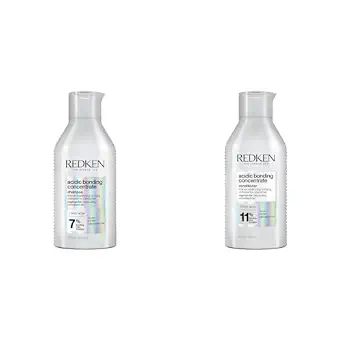
1. Redken — Best for Damaged Hair
Product: Redken Acidic Bonding Concentrate Shampoo
Best for: Damaged, weakened, or chemically treated hair.
Hair types: Most hair types.
Main concern: Repair and bond-focused care.
Why we recommend it: A sulfate-free professional shampoo designed for damaged hair, with Redken’s Acidic Bonding Concentrate system focused on strengthening weakened hair and helping reduce breakage.
Key ingredients/technology: Citric-acid-based bonding technology.
How to use: Apply to wet hair, massage into the scalp and hair, then rinse. Follow with conditioner or the matching system
Potential downside: The Redken range is extensive, so choosing the right line requires matching it to your concern.
2. Pureology — Best for Color-Treated Hair
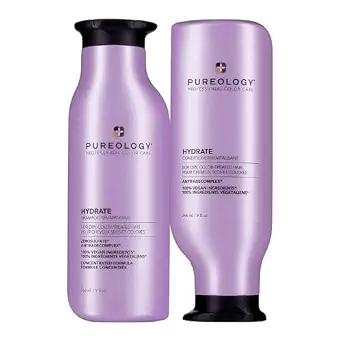
Product: Pureology Hydrate Shampoo
Best for: Color-treated, dry hair.
Hair types: Medium to thick; broad texture range.
Main concern: Color protection and moisture.
Why we recommend it: A sulfate-free moisturizing shampoo designed for dry, color-treated hair, with a strong focus on maintaining softness while protecting color.
Key ingredients/technology: Jojoba, green tea, sage and conditioning ingredients.
How to use: Massage into wet scalp and hair, then rinse. Follow with conditioner.
Potential downside: Premium pricing is higher than many general-purpose professional shampoos.
3. Kérastase — Best for Luxury, Targeted Care
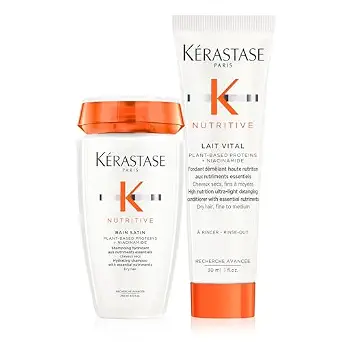
Product: Kérastase Nutritive Bain Satin Shampoo
Best for: Dry or dehydrated hair needing targeted care.
Hair types: Medium to thick; multiple textures.
Main concern: Luxury hydration and nutrition.
Why we recommend it: A targeted Kérastase shampoo for dry hair that gently cleanses while replenishing moisture and nourishment.
Key ingredients/technology: Moisturizing and conditioning ingredients.
How to use: Use on wet hair according to the current package directions, then rinse and follow with conditioner.
Potential downside: Luxury pricing is a major consideration for regular use.
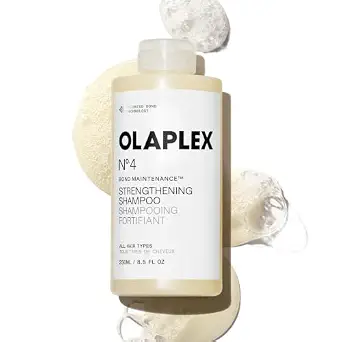
4. Olaplex — Best for Bond Repair
Product: Olaplex No. 4 Bond Maintenance Shampoo
Best for: Chemically processed, damaged or heat-styled hair.
Hair types: Most types and textures.
Main concern: Bond maintenance and strengthening.
Why we recommend it: A concentrated strengthening shampoo designed to help reinforce hair, improve manageability and support a damage-repair routine.
Key ingredients/technology: Olaplex bond-maintenance technology.
How to use: Massage into wet scalp and hair, rinse, and follow with conditioner or the broader Olaplex routine.
Potential downside: A shampoo cannot reverse every type of existing structural damage by itself.
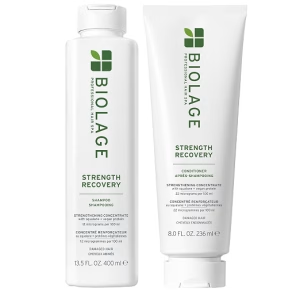
5. Biolage — Best for Hydration and Damage Care
Product: Biolage Strength Recovery Shampoo
Best for: Damaged hair needing softness and strengthening.
Hair types: Most types.
Main concern: Strengthening, softness and breakage support.
Why we recommend it: A professional shampoo formulated with olive squalane and vegan proteins to cleanse, detangle and help fortify damaged hair.
Key ingredients/technology: Olive squalane and vegan proteins.
How to use: Apply to wet hair, massage gently and rinse thoroughly.
Potential downside: Its richer conditioning profile may not be necessary for very fine, oily hair.
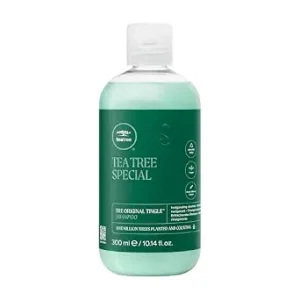
6. Paul Mitchell — Best for Scalp Care
Product: Paul Mitchell Tea Tree Special Shampoo
Best for: Scalp-focused cleansing and buildup.
Hair types: Most hair types.
Main concern: Scalp refresh and cleansing.
Why we recommend it: A well-known professional shampoo centered on an invigorating tea-tree-and-mint cleansing experience, making it useful when scalp freshness is the priority.
Key ingredients/technology: Tea tree oil, peppermint and cleansing ingredients.
How to use: Massage gently into the scalp and hair, then rinse well.
Potential downside: The strong minty sensation and fragrance may not suit everyone.
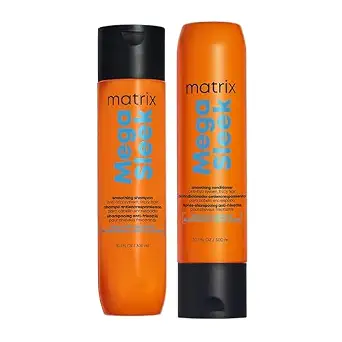
7. Matrix — Best Affordable Professional Option
Product: Matrix Total Results Mega Sleek Shampoo
Best for: Frizz-prone, unruly hair.
Hair types: Medium to coarse.
Main concern: Smoothing and frizz control.
Why we recommend it: Mega Sleek is a professional Matrix line aimed at smoothing unruly hair and improving manageability while remaining relatively accessible in price.
Key ingredients/technology: Shea butter and smoothing/conditioning ingredients.
How to use: Apply to wet hair, massage into the scalp, work through lengths and rinse.
Potential downside: A smoothing formula can feel too rich for very fine hair.
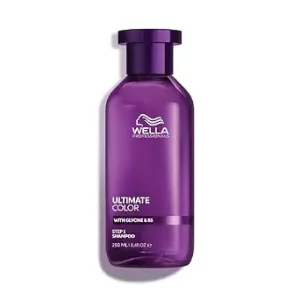
8. Wella Professionals — Best for Color and Repair
Product: Wella Professionals Ultimate Color Shampoo
Best for: Color-treated hair needing gentle cleansing.
Hair types: Most types.
Main concern: Color protection and repair support.
Why we recommend it: A sulfate-free professional shampoo designed to gently cleanse color-treated hair while helping protect color and supporting hair health.
Key ingredients/technology: Glycine, metal-purifying technology and conditioning ingredients.
How to use: Apply to wet hair, massage gently and rinse thoroughly.
Potential downside: It is more targeted to color care than to scalp-specific treatment.
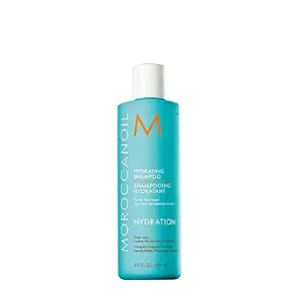
9. Moroccanoil — Best for Dry or Frizzy Hair
Product: Moroccanoil Hydrating Shampoo
Best for: Dry, frizzy or dull-looking hair.
Hair types: Fine, medium and thick.
Main concern: Moisture, softness and shine.
Why we recommend it: A gentle daily-cleansing shampoo infused with argan oil and designed to leave dry hair softer, shinier and more manageable.
Key ingredients/technology: Argan oil and conditioning ingredients.
How to use: Use on wet hair, massage into scalp and hair, then rinse.
Potential downside: The moisturizing feel may be richer than needed for very oily or fine hair.
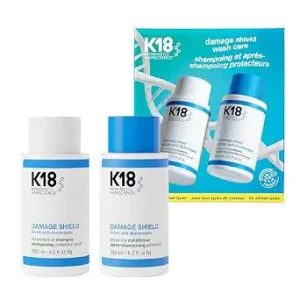
10. K18 — Best for Damage Repair Technology
Product: K18 Damage Shield pH Protective Shampoo
Best for: Chemically or heat-damaged hair.
Hair types: Fine, medium and thick; straight, wavy, curly and coily.
Main concern: Damage protection and scalp-friendly cleansing.
Why we recommend it: A color-safe, pH-optimized shampoo designed to cleanse while helping maintain hair health, reduce frizz and support a broader K18 repair routine.
Key ingredients/technology: K18PEPTIDE technology and pH-optimized formula.
How to use: Use according to the current product directions and follow with the K18 routine when appropriate.
Potential downside: Premium pricing can be significant compared with standard professional shampoos.
Best Salon Shampoo by Hair Type
Fine or thin hair: Look toward lightweight, volumizing formulas from Matrix or Redken’s volumizing lines, since heavier moisturizing shampoos can weigh fine hair down.
Thick or coarse hair: Moroccanoil and Biolage tend to perform well here, offering enough moisture and slip to manage thickness without feeling greasy.
Curly or coily hair: Ouidad and Mizani are specifically built around curl definition and moisture retention for textured patterns.
Straight hair: Most professional brands work well here, but Wella Professionals and Matrix offer particularly good lightweight, non-flattening options.
Color-treated hair: Pureology and Wella Professionals are both strong picks, since color protection is central to their formulation.
Best Salon Shampoo by Hair Concern
Dry hair: Biolage, Moroccanoil, and Kérastase’s hydrating lines all prioritize moisture retention.
Damaged hair: Redken, Olaplex, and K1 8 are the strongest picks for structural repair.
Frizzy hair: Moroccanoil and Matrix’s smoothing lines are specifically built to reduce frizz.
Color-treated hair: Pureology and Wella Professionals lead here, with Kérastase’s Chroma Absolu line as a luxury alternative.
Oily scalp or buildup: Paul Mitchell’s tea tree formulas and clarifying options from Redken address buildup without over-stripping hair.
Thinning hair: Volumizing formulas from Redken and Matrix can improve the appearance of fullness, though a dermatologist should be consulted for underlying hair loss concerns.
What Shampoo Brands Do Professional Salons Actually
Use?
Professional-market data from Kline & Company, an industry research firm that tracks U.S. salon retail sales, indicates that brands such as Pureology, Redken,
Olaplex, Paul Mitchell, and amika consistently rank among the top-performing
lines actually sold and used in U.S. salons.
It’s worth separating two related but different ideas here: which brands are most commonly used in salons, and which brand is genuinely the best fit for your
individual hair. A brand’s popularity reflects broad market success and stylist
familiarity, but the right choice for you still comes down to your specific hair type and concern, not simply which name shows up most often in industry sales data.
Salon Shampoo vs. Drugstore Shampoo
The most meaningful difference between salon and drugstore shampoo usually
isn’t quality in an absolute sense, but formulation focus. Drugstore shampoos are typically designed to work reasonably well across a broad range of hair types,
while professional salon brands tend to build entire product lines around solving
one specific concern, such as bond repair, color protection, or curl definition, in more depth.
This means a salon shampoo can be genuinely worth the switch if you have a specific, persistent hair concern that a generic formula hasn’t resolved. If your hair is healthy and low-maintenance, a well-matched drugstore shampoo may be perfectly sufficient, and spending more on a professional brand won’t necessarily deliver a noticeable improvement.
Professional vs. Luxury Shampoo: What’s the
Difference?
These two terms are often used interchangeably, but they describe different
things. “Professional” typically refers to a brand’s distribution and salon-industry positioning, meaning it’s formulated and sold primarily through licensed stylists and professional beauty suppliers. “Luxury” refers to pricing and market
positioning, regardless of where the product is sold.
Kérastase is a good example of a brand that is both professional and luxury.
Matrix, by contrast, is genuinely professional in its formulation and salon
distribution but is positioned at a much more accessible price point. Neither positioning automatically means better performance for your specific hair; it simply reflects a different pricing and marketing strategy.
Are Salon Shampoo Brands Worth the Money?
This depends heavily on what you’re trying to solve. If you have a specific concern, such as significant color damage, chemical processing, or persistent frizz, a professional formula built specifically around that concern is often worth the
added cost, since the formulation is typically more concentrated and targeted than a general-purpose shampoo.
If your hair is generally healthy and you don’t have a specific persistent concern, the price difference may not translate into a noticeable everyday benefit. A useful approach is to identify your single biggest hair concern first, then choose a professional brand that specializes in that exact area, rather than assuming any salon brand will automatically outperform your current shampoo.
How We Chose These Brands
Each brand on this list was evaluated using:
Professional and salon-industry reputation, including current market data
Formula specialization for specific hair types and concerns
Range of product lines available for different hair needs
Price positioning and overall value
Availability through professional retailers and salons in the United States
We prioritized brands with genuine professional-market presence and clear
formulation focus over simply listing the most well-known names, since popularity and hair-type fit are not always the same thing.
Common Mistakes to Avoid
Choosing a brand based on price alone — the most expensive option isn’t automatically the best match for your hair type or concern
Ignoring your specific hair concern — a general “salon shampoo” claim means little without knowing which concern the formula actually targets
Assuming professional always beats drugstore — a well-matched drugstore shampoo can outperform a poorly matched salon brand for your specific hair
Switching brands too frequently — most professional formulas need several consistent washes before their full effect becomes noticeable
Overlooking the conditioner and treatment system — many salon brands, particularly bond-repair lines like Olaplex, are designed to work as a system rather than shampoo alone
Frequently Asked Questions
What are the top hair salon shampoo brands?
Redken, Pureology, Kérastase, Olaplex, and Biolage are consistently among the most recognized hair salon shampoo brands in the United States, though the best choice depends on your specific hair type and concern.
What shampoo do professional salons actually use?
Industry market data indicates that Pureology, Redken, Olaplex, Paul Mitchell, and amika are among the most commonly used professional brands in U.S. salons, though individual stylists often have their own preferred lines.
Are salon shampoos better than drugstore shampoos?
Not automatically. Salon shampoos are typically more specialized for specific concerns like bond repair or color protection, while drugstore shampoos are
designed for broader, general use. The better option depends on whether you have a specific hair concern to address.
What is the difference between salon shampoo and regular shampoo?
Salon shampoos are generally formulated with more targeted, concentrated ingredients for specific hair concerns and are distributed primarily through
professional channels, while regular shampoo is designed for general, everyday
use across most hair types.
Which salon shampoo brand is best for fine hair?
Lightweight, volumizing formulas from Matrix or Redken tend to work best for fine hair, since heavier moisturizing shampoos can weigh it down.
Which salon shampoo brand is best for curly hair?
Ouidad and Mizani are both specifically formulated around curl definition and moisture retention for curly and coily hair patterns.
Is Olaplex better than Redken?
Both are strong repair-focused brands, but Olaplex is more specifically built around bond-level chemical repair, while Redken offers a broader range of
formulas across damage, color, and frizz concerns. The better choice depends on the severity and type of damage.
Are professional salon shampoos worth the extra cost?
They can be, particularly if you have a specific concern like significant color damage or chemical processing that a general shampoo hasn’t resolved. For healthy, low-maintenance hair, the price difference may not translate into a noticeable benefit.
Final Thoughts
There is no single best hair salon shampoo brand that works for everyone, and that’s actually the most important thing to understand before you buy. The right choice comes down to matching a brand’s specific formulation focus, whether that’s Redken and Olaplex for damage repair, Pureology and Wella Professionals for color protection, or Ouidad and Mizani for curl definition, to your own hair type and concern.
Rather than chasing the most expensive or most talked-about name, start with the one hair problem you most want to solve, then choose the professional brand that specializes in exactly that.
For more on building out a complete hair care routine, check out our guide to the best hair oil for hair growth.
Disclaimer: This article is for general informational purposes. Individual results vary based on hair type, condition, and consistency ofuse. Consult a dermatologist or licensed stylist for persistent hair or scalp concerns.