This post may contain affiliate links. If you purchase through a link on this page, we may earn a small commission at no extra cost to you, as an Amazon Associate.
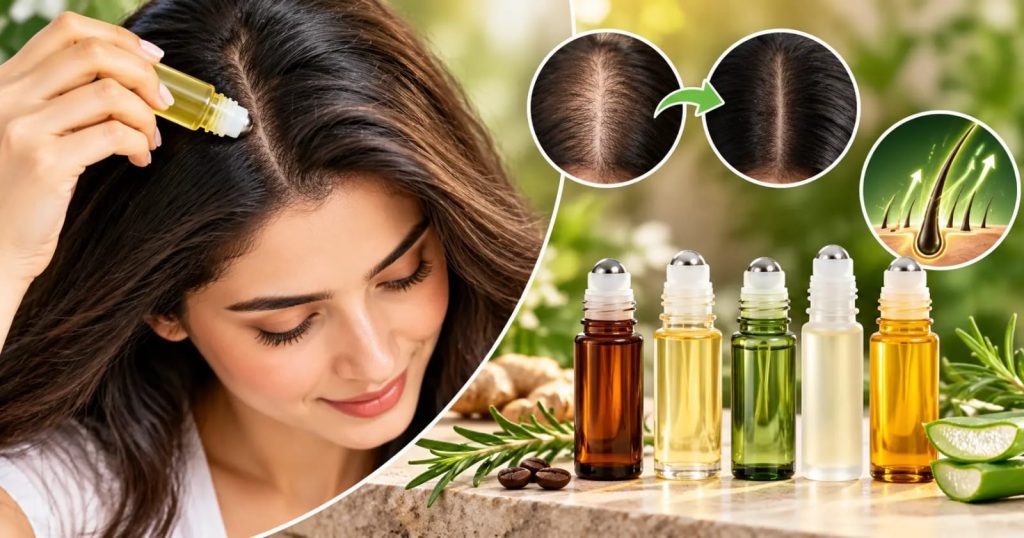
If you’ve started noticing more hair in your brush, a widening part, or a hairline that looks thinner than it used to, you’ve probably come across dozens of products promising to fix it. A hair growth serum roll on is one of the most popular formats right now, mainly because it’s mess-free and easy to apply directly to the scalp without the drips and waste that come with a dropper.
But “hair growth serum roll on” isn’t one single thing. Some are built around established active ingredients, some rely mostly on
botanical extracts with limited evidence, and a few blur the line between marketing claims and what’s actually been studied. We compared five roll-on serums available in the US by ingredients, evidence, applicator design, and price — and we’re being upfront about where the evidence is strong and where it’s still preliminary.
Table of Contents
- Quick Answer
- Comparison Table
- How We Evaluated These Products
- 5 Best Hair Growth Serum Roll-Ons
- What Ingredients Actually Matter?
- Roll-On vs. Dropper vs. Minoxidil
- Does Hair Growth Serum Roll-On Really Work?
- How to Use a Hair Growth Roll-On
- Possible Side Effects and When to See a Dermatologist
- Frequently Asked Questions
- Final Verdict
Quick Answer
The best hair growth serum roll on is generally one that discloses its active ingredient concentrations, uses actives with at least
some human research behind them (such as caffeine, rosemary, or peptide complexes), and applies evenly without irritating the scalp.
A roll-on works well for convenience and targeted application, but
it’s worth remembering that a cosmetic serum is not the same as a clinically established treatment like minoxidil — it’s better understood as scalp support than a guaranteed fix for hair loss.
Comparison Table
Product | Best For | KeyActives | Size | Applicator |
| Be Bodywise | Best Overall | 3% | 25 | Roll-on |
| Rosemary | Rosemary, | ml | ||
| Hair Growth | 3% |
Product | Best For | KeyActives | Size | Applicator |
| Serum RollOn | Redensyl,2%Anagain | |||
Be Bodywise Advanced Hair Density Roll-On | Best forThinning/Density | 5% Saw Palmetto, 3%Rosemary,1 %Caffeine,3%Fenugreek | 25ml | Roll-on |
WishCare Hair Growth Serum Concentrate | Best Ingredient Stack | 3%Redensyl,4%Anagain,2%Baicapil, Caffeine, Biotin | 30ml | Dropper |
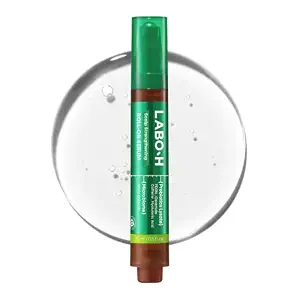
| LABO.H Scalp Strengthening Hairline Roll-On | Best forHairline/Sensitive Scalp | RosemaryOil, coolingcomplex | 0.50fl oz | Roll-on |
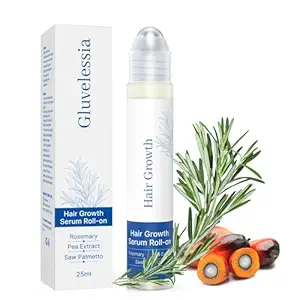
| Gluvelessia Hair Growth Serum Roll On | Best Budget | Rosemary,Batana Oil, Saw Palmetto | 0.84fl oz | Roll-on |
How We Evaluated These Products
We looked at each product using:
Whether active ingredient concentrations are disclosed on the label, since vague “proprietary blend” formulas are harder to evaluate
What kind of evidence exists for the ingredients used — human studies, ingredient-level research, or mostly brand claims
Applicator design and whether the roll-on actually applies evenly to the scalp rather than dripping into hair
Patterns across verified customer reviews, specifically mentioning irritation, greasiness, or noticeable change
Price relative to size and expected months of use
We did not rely on brand-reported “percent improvement” statistics as proof of effectiveness on their own — those numbers come from manufacturer or small consumer studies, not independent
clinical trials, and we say so where it’s relevant.
5 Best Hair Growth Serum Roll-Ons
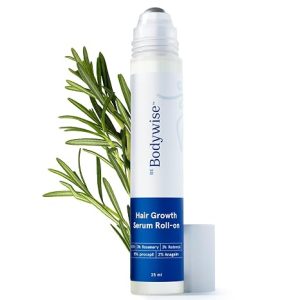
- Be Bodywise Rosemary Hair Growth Serum Roll On — Best Overall
Overview: A roll-on scalp serum built around 3% Rosemary, 3% Redensyl, and 2% Anagain, positioned for general hair thinning in both men and women.
Key Features: Disclosed active percentages, roll-on applicator, lightweight non-greasy formula.
Pros: Transparent about ingredient concentrations, convenient scalp-targeted application, large volume of customer reviews.
Cons: Brand-reported results (such as specific percentage
improvements) come from company-linked studies rather than
independent, peer-reviewed research, so treat those numbers as a starting point rather than a guarantee.
Best For: Anyone wanting a well-rounded roll-on with disclosed
actives to start with.
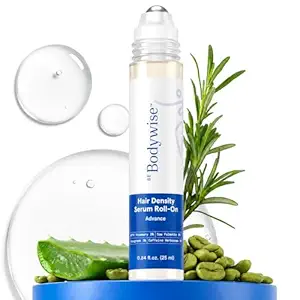
- Be Bodywise Advanced Hair Density Roll-On Serum — Best for Thinning Hair
Overview: A richer formula combining 5% Saw Palmetto, 3% Rosemary, 1 % Caffeine, and 3% Fenugreek, aimed specifically at reduced hair density and visible thinning.
Key Features: Saw palmetto as the primary active, roll-on applicator, multi-ingredient scalp complex.
Pros: Higher concentration of saw palmetto than most roll-ons in this category, convenient application, suitable for daily use.
Cons: Saw palmetto’s evidence for hair growth in humans is still considered limited and mixed compared with established treatments.
Best For: Those specifically concerned about progressive thinning or density loss rather than general scalp care.
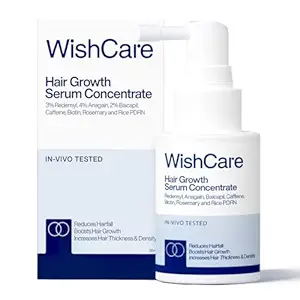
- WishCare Hair Growth Serum Concentrate — Best Ingredient Stack
Overview: A concentrated scalp serum combining 3% Redensyl, 4% Anagain, and 2% Baicapil alongside caffeine and biotin — one of the more ingredient-dense formulas we compared.
Key Features: Three disclosed actives at meaningful
concentrations, dropper applicator (not a roll-on bottle on the US listing), lightweight texture.
Pros: Strong ingredient transparency, multiple actives targeting different parts of the hair-growth cycle, widely reviewed.
Cons: Applies via dropper rather than a roller ball, so if a true roll-on format matters to you, this isn’t it — though the formula itself is comparable to the roll-on products on this list
Best For: Readers who prioritize ingredient concentration over applicator format.
- LABO.H Scalp Strengthening Hairline Roll-On Serum — Best for Hairline & Sensitive Scalp
Overview: A Korean, vegan-formulated roll-on built around rosemary oil with a cooling, soothing finish, marketed specifically for hairline and scalp anchoring.
Key Features: Vegan formula, cooling sensation on application, compact roll-on designed for targeted hairline use.
Pros: Gentle, cooling feel that can be more comfortable for sensitive scalps, precise hairline application, no mineral oil or silicones.
Cons: Smaller bottle size (0.5 fl oz) means it runs out faster with daily use; ingredient concentrations beyond rosemary oil aren’t fully disclosed
Best For: Hairline-specific thinning or anyone who prefers a lighter, cooling scalp-care feel over a stronger active-ingredient formula.
- Gluvelessia Hair Growth Serum Roll On — Best Budget
Overview: An affordable roll-on combining rosemary, batana oil, and saw palmetto, designed to support a thicker, fuller hair appearance without a premium price tag.
Key Features: Multi-oil blend, roll-on applicator, non-greasy finish
Pros: Lower price point than most of the other picks here, easy to find, suitable for daily use.
Cons: Fewer disclosed active percentages than the ingredient-forward picks above, so it leans more cosmetic/conditioning than treatment-focused.
Best For: Budget-conscious shoppers who want a simple, rosemary-based roll-on to try first.
What Ingredients Actually Matter?
Roll-on formulas tend to repeat a handful of actives, and it helps to know what each one is actually meant to do:
Redensyl — a cosmetic active frequently marketed for supporting hair-growth signaling at the follicle; evidence is mostly from manufacturer-sponsored research rather than large independent trials.
Anagain — derived from pea sprout extract, used in several roll-ons to support the hair growth cycle; similarly limited to
smaller, brand-linked studies.
Baicapil — a botanical complex marketed for supporting hair density; evidence is preliminary.
Saw Palmetto — sometimes included for its proposed effect on DHT; research in topical form for hair loss is mixed and not as robust as minoxidil’s.
Caffeine — studied to some extent for its effect on hair
follicles in lab and small human studies, though results don’t match prescription treatments.
Rosemary Oil — a small clinical comparison found rosemary oil performed similarly to 2% minoxidil for androgenetic
None of this means these ingredients don’t help at all — it means the evidence is generally preliminary to moderate, not equivalent to an FDA-approved drug treatment.
Roll-On vs. Dropper vs. Minoxidil
| Format | Precision | Mess | Best For |
Roll-On | Excellent | Low | Targeted hairline/scalp application |
Dropper | Good | Medium | Larger scalp areas, adjustable dosing |
Minoxidil (OTC) | Good | Medium | Established, FDA-approved hair-loss treatment |
A roll-on’s main advantage is convenience — you can apply it directly and massage it in without drips. A dropper gives more control over how much product goes where. Minoxidil, unlike
cosmetic roll-ons, is an FDA-approved over-the-counter drug with a stronger evidence base for regrowing hair in androgenetic
alopecia, though it comes with its own commitment (it needs continued use) and possible side effects. If you’ve tried cosmetic serums without meaningful results, minoxidil — discussed with a
pharmacist or dermatologist — is generally the next evidence-based step.
Does Hair Growth Serum Roll-On Really
Work?
This depends heavily on what’s causing your hair thinning in the first place. A roll-on serum may help support scalp condition, reduce certain types of shedding, and improve the look and feel of hair over time, especially if your formula contains actives with at
least preliminary human evidence. But cosmetic serums are not a substitute for identifying the actual cause of thinning — genetics, hormones, stress, nutrition, or an underlying medical condition can all contribute, and a serum alone won’t address those root causes.
If you’ve used a roll-on consistently for 2–3 months with no change, that’s a reasonable point to consider an evidence-based treatment like minoxidil or to talk to a dermatologist, rather than
simply switching to another serum with a similar ingredient profile.
How to Use a Hair Growth Roll-On
- Start with a clean, dry or towel-dried scalp.
- Part your hair in sections so the roller makes direct scalp contact.
- Roll the serum across thinning areas — hairline, part line, or crown — rather than the full scalp if you’re targeting specific zones.
- Massage gently with your fingertips for 1 –2 minutes to help with even distribution.
- Leave it in; most roll-ons are designed as leave-on products, not rinse-out treatments.
- Use consistently — once or twice daily depending on the product label — since hair growth cycles are slow and
inconsistent use makes it hard to judge whether something is working.
Possible Side Effects and When to See a Dermatologist
Any topical scalp product can potentially cause irritation, itching, redness, or a reaction to fragrance or a specific ingredient, even when a brand describes a formula as “gentle” or free of a particular ingredient class. If you notice persistent irritation, a rash, or
increased shedding after starting a new serum, stop using it and consider patch-testing future products.
You should also consider seeing a board-certified dermatologist if your hair loss is sudden, patchy, accompanied by scalp pain or scaling, or if it continues to progress despite several months of consistent care — a cosmetic roll-on is not designed to diagnose or treat underlying medical causes of hair loss.
Frequently Asked Questions
What is the best hair growth serum roll on?
The best hair growth serum roll on is generally one that discloses its active ingredient concentrations and uses actives with at least
some supporting human research, applied consistently as part of a daily scalp-care routine.
Does hair growth serum roll-on really work?
It can support scalp condition and, for some ingredients, modestly support the appearance of hair over time, but results vary by cause
of hair loss, and a cosmetic serum isn’t equivalent to a clinically established treatment like minoxidil.
Is roll-on better than a dropper for hair serums?
Roll-on applicators are generally more precise and less messy for targeted areas like the hairline, while droppers allow more control over how much product you apply across a larger scalp area — neither format changes how well the formula itself works.
How long does it take to see results from a hair growth roll-on? Most people need at least 8–1 2 weeks of consistent use before judging results, since hair growth cycles are naturally slow, and
individual responses vary considerably.
Can men and women both use this type of roll-on serum?
Yes, most roll-on scalp serums are formulated for both men and women, though some products emphasize ingredients (like saw palmetto) more associated with certain causes of thinning.
Is a hair growth serum roll on the same as minoxidil?
No. Minoxidil is an FDA-approved over-the-counter drug with a stronger clinical evidence base, while most roll-on serums are cosmetic products built around ingredients with more limited or preliminary research.
Can hair growth serum roll-on cause side effects?
Yes, topical irritation, itching, or sensitivity to fragrance or specific ingredients is possible, even with “gentle” or natural formulas — patch-testing is a reasonable precaution.
Final Verdict
Best Overall: Be Bodywise Rosemary Roll-On
Best for Thinning Hair: Be Bodywise Advanced Hair Density Roll-On Serum
Best Ingredient Stack: WishCare Hair Growth Serum Concentrate
Best for Hairline/Sensitive Scalp: LABO.H Scalp Strengthening Hairline Roll-On
Best Budget: Gluvelessia Roll-On
Choosing the best hair growth serum roll on really comes down to being honest about what the evidence does and doesn’t support — and matching the formula to your actual concern, whether that’s general scalp care, hairline thinning, or budget. None of these are a guaranteed fix, but picking one with disclosed, researched actives and using it consistently gives you a reasonable, low-risk starting point before considering stronger treatments.
If thinning is showing up more broadly across your scalp rather than just the hairline, our guide to the best shampoo for thinning hair covers a complementary wash-day routine worth pairing with a roll-on serum.
Disclaimer: The products mentioned are recommendations based on research and verified customer reviews rather than in-person testing. This article is for informational purposes only and is not a substitute for professional medical or dermatological advice. Individual results may vary, and significant, sudden, or patchy hair loss should be evaluated by a dermatologist.