This post contains affiliate links. If you buy through a link, we may earn a small commission at no extra cost to you, as an Amazon Associate.
Choosing a hair serum for fine hair comes down to restraint. Use too little and your ends may stay frizzy or dull. Use too much, or choose a formula that is too rich, and fine hair can look flat, greasy, or limp. Because fine strands are smaller in diameter, the formula, amount, and application area matter more than the name on the bottle.
This guide compares five lightweight picks. More importantly, it helps you match a serum to your actual problem—whether that’s frizz, dry ends, damage, flat hair, or hair that looks sparse. That last concern is different from simply having fine strands, and many buying guides blur the two.
Quick Answer
For most people with fine hair, the best serum is a lightweight, fast-absorbing formula that you apply sparingly to the mid-lengths and ends. For frizz, light hydration, and fine wavy hair, RŌZ Milk Hair Serum is our overall pick. On a budget, John Frieda Frizz Ease All-In-1 Lightweight Serum is specifically positioned for fine hair. If your hair is fine and also looks sparse, a scalp-focused product such as John Frieda Ultra Filler+ is a different category, and we explain when that distinction matters.
Which Serum Type Do You Need?
| Your situation | Look for |
| Fine + frizzy | Lightweight smoothing serum |
| Fine + dry ends | Lightweight hydrating serum |
| Fine + damaged or breaking | Strengthening or repair serum |
| Fine + flat | Very light, low-residue volumizing/styling formula |
| Fine + oily roots | Fast-absorbing, low-residue formula |
| Fine + looks sparse/thinning | Scalp-focused product; persistent shedding or thinning may need professional evaluation |
What’s Inside
- Comparison table
- Fine hair vs. thin hair
- What makes a serum work for fine hair
- Find your fine-hair problem
- How we chose these serums
- The 5 best picks
- Serum vs. oil vs. scalp serum
- How to apply serum without weighing hair down
- Common mistakes and realistic expectations
- FAQ and final verdict
Comparison Table
| Serum | Best For | Type | Where It Goes | Weight Feel | Price* |
| RŌZ Milk Hair Serum | Best overall | Hydrating, smoothing | Mid-lengths and ends | Featherlight | Check current listing |
| John Frieda Frizz Ease All-In-1 Lightweight Serum | Best budget for fine hair | Smoothing, shine | Mid-lengths and ends | Light, quick-absorbing | Check current listing |
| Oribe Hair Alchemy Fortifying Treatment Serum | Fine hair with damage | Strengthening | Lengths and ends | Light; use sparingly | Check current listing |
| L’Oréal Paris Elvive Hydra Hyaluronic Serum | Dry ends on a budget | Hydrating spray | Mid-lengths and ends | Lightweight | Check current listing |
| John Frieda Ultra Filler+ Thickening Hair Serum | Fine hair that looks sparse | Scalp-focused | Scalp, part, hairline | Leave-in scalp treatment | $11.99 brand-listed; verify current listing |
*Prices and availability change. Verify the current Amazon listing before publishing.
Fine Hair vs. Thin Hair: What’s the Difference?
People often use these words interchangeably, but they describe different things. Fine hair refers to the diameter of each individual strand. Thin hair or low density refers to how much hair is present overall. You can have fine strands and plenty of them, or thicker strands with lower density.
This matters because the right product changes with the problem. A person with fine, dense, frizzy hair may need a lightweight smoothing serum. A person whose part is widening or who is experiencing persistent shedding has a different concern and may need a scalp-focused approach or professional evaluation.
| Your Situation | What It Means | Serum Type to Look For |
| Fine strands, plenty of hair | Small strand diameter, normal density | Lightweight finishing serum |
| Fine and flat | Low volume; easily weighed down | Very light, low-residue formula |
| Fine and frizzy | Frizz or flyaways without wanting heaviness | Lightweight smoothing serum |
| Fine and dry at the ends | Dry or dehydrated lengths | Lightweight hydrating serum |
| Fine and damaged or breaking | Heat, color, chemical, or friction damage | Strengthening or repair serum |
| Fine and looks sparse | Lower density or visible scalp may be present | Scalp-focused product; seek professional advice if shedding/thinning is persistent |
What Makes a Hair Serum Work for Fine Hair?
Fine hair has one big practical challenge: it can look weighed down easily. These five qualities help determine whether a hair serum for fine hair is a good fit.
1. A lightweight texture
Lightweight, milky, or spray formats can be easier to control on fine hair, but the full formula—not simply whether it is water-based or oil-based—determines how heavy it feels. Rich formulas can work beautifully on thicker hair and still feel too heavy on fine strands.
2. Fast absorption and low residue
A good serum should leave the hair conditioned without an obvious greasy, sticky, or heavy coating. If your hair feels coated or looks flatter after application, reduce the amount or choose a lighter formula.
3. The right job
Smoothing, hydrating, strengthening, styling, thickening, and scalp serums are different product categories. Decide what your hair needs before you shop.
4. Easy amount control
A pump, spray, or dropper can make it easier to start with a small amount. With fine hair, gradual application is often more useful than applying a large amount at once.
5. The finish you want
Smooth and shiny is not the same as full and voluminous. A very conditioning serum can make hair sleeker but potentially flatter. Decide which result matters more to you.
One more caution: “suitable for all hair types” does not mean equally good for fine hair. A product can be broadly compatible with many hair types while still feeling too rich for some fine strands.
How We Chose These Serums
We did not hands-on test these products, and we won’t pretend to. Our picks are based on comparing official product information, formula and texture descriptions, published editorial reviews, fine-hair suitability, price/value, and the product’s intended use. We then matched each product to a specific fine-hair concern.
We looked at six things:
- Fine-hair suitability: Is the formula positioned as lightweight, and is there independent editorial feedback about how it behaves on finer hair?
- Weight and residue risk: Could the formula leave fine hair flat, greasy, or coated when overapplied?
- Primary purpose: Is it mainly for smoothing, hydration, strengthening, styling, or scalp support?
- Application: Where does the product go, what does the brand instruct, and how easy is the amount to control?
- Price and value: What are you paying relative to the product’s intended job?
- Trade-offs: Who is the product best for, and who should choose another category?
We also separate brand claims from independent feedback. When a benefit, percentage, or promise comes from the manufacturer, we treat it as a brand claim rather than independent proof.
The 5 Best Hair Serums for Fine Hair
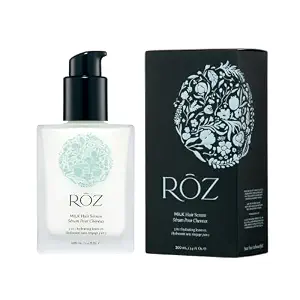
1. RŌZ Milk Hair Serum: Best Overall for Fine Hair
RŌZ Milk Hair Serum is our overall pick for readers whose main needs are light smoothing, hydration, detangling, and frizz control. Allure has specifically highlighted it as a fine-hair pick, and its tester feedback describes a lightweight feel that can soften and define fine, frizz-prone waves without making them feel heavy.
Key Features: Milky, lightweight texture; glycerin, panthenol, and plant-derived ingredients are part of the formula; suitable for use on damp or dry hair according to product directions.
- Light enough for fine strands while still conditioning dry ends.
- Useful for frizz and detangling.
- Can fit both damp-hair smoothing and dry-hair finishing routines, following label directions.
Potential drawback: Premium pricing compared with drugstore options.
Best For: Fine hair that is frizzy, dry at the ends, or wavy and needs light moisture.
Skip If: Your main goal is root lift or a scalp-focused thinning routine.
2. John Frieda Frizz Ease All-In-1 Lightweight Serum: Best Budget Hair Serum for Fine Hair
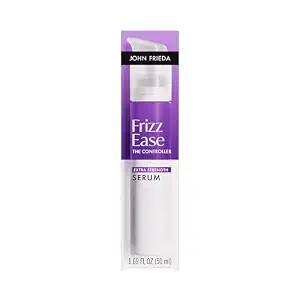
Who What Wear has highlighted John Frieda Frizz Ease All-In-1 Lightweight Serum as its fine-hair pick. It is positioned around a lightweight, quick-absorbing finish designed to smooth and add shine without making hair feel overly heavy.
Key Features: Lightweight formula, quick absorption, budget positioning, and fine-hair-focused use.
- Quick absorption can help smooth ends without an overly greasy finish.
- Budget-friendly and widely available.
- Specifically positioned for fine hair.
Potential drawback: It is more focused on smoothing and shine than on intensive repair or strengthening.
Best For: Fine hair with frizz or dull ends where you want a simple, affordable finishing serum
Skip If: Your main concern is significant damage requiring a repair-focused treatment.
3. Oribe Hair Alchemy Fortifying Treatment Serum: Best for Fine Hair With Damage
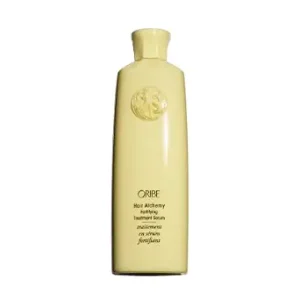
Vogue recommends Oribe Hair Alchemy Fortifying Treatment Serum for finer textures, while Who What Wear has highlighted the product for damaged hair. It is better viewed as a strengthening treatment than as a simple shine or frizz serum.
Key Features: Fortifying treatment positioning; designed for damaged/fragile hair; editorial feedback suggests using a small amount because fine hair can be more easily weighed down by excess product.
- Targets damage and breakage-prone lengths.
- Useful when fine hair has been stressed by heat, color, or styling.
- A small amount can provide conditioning without requiring a heavy application.
Potential drawbacks: Premium price; overapplication may make fine hair feel heavier.
Best For: Fine hair with heat, color, or other damage that is prone to breakage.
Skip If: Your hair is healthy and your only goal is a light shine or frizz finish.
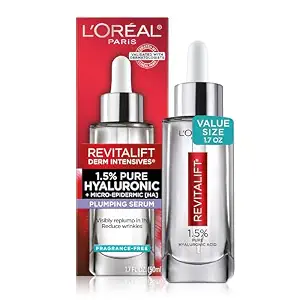
4. L’Oréal Paris Elvive Hydra Hyaluronic Serum: Best Affordable Hydration
Who What Wear has highlighted this as an affordable serum option. Its spray-style format is useful for fine hair because it can make small, controlled applications easier. Its primary role is hydration rather than volume or intensive repair.
Key Features: Spray format, lightweight positioning, and hyaluronic-acid-focused hydration.
- The spray format makes small applications easy.
- Useful for fine ends that need light hydration.
- Budget-friendly compared with many prestige treatments.
Potential drawback: It may not be enough for severely damaged or very dry hair that needs a more intensive treatment.
Best For: Fine hair with dry ends that needs light hydration on a budget
Skip If: Your primary concern is severe damage and you need a dedicated repair treatment.
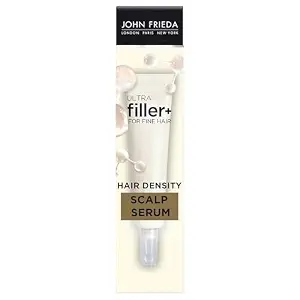
5. John Frieda Ultra Filler+ Thickening Hair Serum: Best for Fine Hair That Looks Sparse
This is a different kind of serum. It is a scalp-focused leave-in product rather than a finishing serum for the lengths and ends. John Frieda positions it for fine or thin-looking hair and fuller-looking results.
Key Features: Biotin, peptides, and caffeine are highlighted by the brand. John Frieda’s current directions call for application to the scalp, part, hairline, and thinning areas, followed by massage and leave-in use. Verify the current directions on the product listing before publishing.
- Affordable compared with many premium scalp treatments.
- Targets the scalp and areas where users may notice reduced fullness.
- Useful when fine hair is accompanied by a sparse or thinning appearance.
Potential drawbacks: This is not a finishing serum for smoothing dry ends. It should not be presented as a proven medical hair-growth treatment. Persistent or sudden shedding/thinning warrants professional evaluation.
Best For: Fine hair that looks sparse and needs a scalp-focused fuller-looking routine.
Skip If: Your main problem is frizz, dry ends, or damaged lengths.
Hair Serum vs. Hair Oil vs. Scalp Serum
These products get lumped together, but they can serve different purposes. Understanding the difference can help you choose the right product instead of simply buying the richest formula.
| Product | Main Job | Where It Goes | Fine-Hair Notes |
| Finishing serum | Smoothing, shine, frizz | Mid-lengths and ends | Choose a lightweight formula and start small |
| Hair oil | Nourishment, shine | Usually lengths/ends, sparingly | A small amount can work; richer oils may feel heavy |
| Repair serum | Damage and breakage support | Usually lengths/ends | Check texture and use the amount directed |
| Scalp serum | Scalp and fullness/thinning concerns | Scalp/roots | Different category from a finishing serum |
Is serum better than oil for fine hair? Not automatically. A light oil used sparingly can work, while a heavy serum can still weigh hair down. The formula, amount, and intended use matter more than the label alone.
Are Silicones Bad for Fine Hair?
Not automatically. Some stylists raise concerns about buildup, while others note that well-formulated silicones can add slip, smoothness, shine, and protection. The more useful question is how the finished formula behaves on your hair.
If a product repeatedly leaves your hair flat, coated, or difficult to cleanse, reduce the amount or choose another formula. If it feels light and improves smoothness without buildup, the presence of a silicone alone is not a reason to reject it.
How to Apply Hair Serum on Fine Hair Without Weighing It Down
Technique matters almost as much as the product. Fine hair often responds better to gradual application.
- Start with a tiny amount: a drop, light pump, or a few spritzes depending on the product. Follow the label.
- Spread the product evenly between your palms when appropriate for the product format.
- For a regular finishing serum, start at the mid-lengths and ends rather than the roots.
- Use damp hair when the product directions call for it and when you want help with smoothing/styling; use dry hair when the product is intended as a finishing step.
- Do not automatically layer serum, oil, leave-in conditioner, and other smoothing products. Fine hair can become overloaded quickly.
- If hair feels coated or looks flatter, use less next time rather than adding another product to fix it.
Scalp serums are the exception: if a product is specifically made for the scalp, follow its scalp-application directions rather than applying it like a finishing serum.
Common Mistakes That Weigh Down Fine Hair
- Using the same amount you would use on thick hair.
- Applying a regular smoothing serum directly to the roots.
- Choosing a rich formula simply because it has strong reviews.
- Layering several smoothing products at once.
- Expecting a finishing serum to treat thinning or hair loss.
- Ignoring buildup when hair becomes coated or limp.
Can a Hair Serum Make Fine Hair Look Thicker?
A serum can make fine hair look smoother, shinier, and more polished, and some products may make hair appear fuller by improving texture, separation, or manageability. A cosmetic serum does not automatically increase hair density or change the diameter of every strand.
Results also arrive on different timelines. Shine, smoothness, and frizz control can be visible after application. Breakage, shedding, and density-related goals require a different standard of evidence and usually take longer to evaluate. A ‘thickening’ label generally describes a cosmetic or appearance-related benefit unless the product has stronger evidence for a specific treatment claim.
Ingredients such as biotin or caffeine may appear in thickening/scalp products, but their presence on an ingredient list is not, by itself, proof that a product will regrow hair.
When a Hair Serum Isn’t Enough
Cosmetic serums are mainly used to improve the look, feel, manageability, or styling of hair. If you notice sudden or substantial shedding, a widening part, bald patches, or persistent scalp redness, itching, or scaling, a cosmetic serum should not be treated as the complete answer. Hair loss can have many causes, so a dermatologist can help identify the underlying problem.
If your concern is growth rather than styling, read our guide to [Rosemary Oil for Hair Growth: ADD YOUR VERIFIED INTERNAL LINK].
Frequently Asked Questions
What hair serum is best for thin, fine hair?
If by thin you mean fine strands but normal density, choose a lightweight finishing serum such as RŌZ or John Frieda Frizz Ease. If you mean reduced density, visible scalp, or persistent shedding, a scalp-focused category may be more appropriate and professional advice may be warranted.
What is a good hair serum for very fine hair?
Choose a featherlight, milky, or spray format and start with a very small amount. RŌZ Milk Hair Serum and the L’Oréal Elvive Hydra Hyaluronic spray are examples of lightweight options, subject to current formula and availability.
Which hair serum is best for thin hair?
It depends on what ‘thin’ means. For fine strands with frizz or dryness, use a lightweight finishing serum on the lengths. For reduced density or thinning, a scalp-focused product is a different category, and persistent thinning deserves professional evaluation.
Are serums good for fine hair?
Yes. A lightweight formula used sparingly can help fine hair with smoothness, shine, hydration, or frizz. A richer formula or excessive amount can make fine hair look flat or greasy.
Can hair serum make fine hair look thicker?
It can make hair look smoother or fuller by improving texture and controlling frizz and flyaways, but a cosmetic serum does not automatically add hair or increase hair density.
Can serum weigh down fine hair?
Yes. Too much product or a formula that is too rich can make fine hair limp or greasy. Start with a small amount and add only if needed.
Should you put hair serum on your scalp?
Not if it is a regular finishing serum. Apply those products to the mid-lengths and ends as directed. Use a serum on the scalp only when the product is specifically designed for scalp application.
Is hair oil better than serum for fine hair?
Not automatically. A small amount of a lightweight oil can work for some fine hair, while a heavy serum can still feel too rich. Choose based on formula, amount, and your specific goal.
How much serum should I use on fine hair?
Start with the smallest amount recommended for the product—often a drop, light pump, or a few spritzes—and add more only if needed. Hair length, density, formula concentration, and packaging all affect the right amount.
Final Verdict
🥇 Best Overall: RŌZ Milk Hair Serum
💰 Best Budget: John Frieda Frizz Ease All-In-1 Lightweight Serum
🛠️ Best for Fine Hair With Damage: Oribe Hair Alchemy Fortifying Treatment Serum
💧 Best Affordable Hydration: L’Oréal Paris Elvive Hydra Hyaluronic Serum
🌱 Best for Fine Hair That Looks Sparse: John Frieda Ultra Filler+ Thickening Hair Serum
The best hair serum for fine hair depends on the problem you are trying to solve. Start by deciding whether you need smoothing, hydration, repair, styling support, or scalp support. Then choose the lightest formula that meets that need, use less than you think you need at first, and adjust based on how your hair responds.
Disclaimer: This article is for informational purposes and is based on research of official product information, published editorial reviews, and brand claims—not hands-on testing by ZaisufBeauty. Prices, formulas, directions, and availability can change, so verify the current product listing before purchasing. This article is not a substitute for medical or dermatological advice.